Pope's call to tame AI sets tone for Christian leaders / Photo: © AFP

 Republican senator seeks probe of Trump Jr Russian-funded wedding
 Memoir by Diana's brother goes on sale after rocking UK monarchy
 Newcomers South Korea face holders Italy in Davis Cup finals

 Japan's Kojima sounds Marchand warning with Asian Games gold

 England rugby star Pollock signs new Northampton deal

 STARTRADER Expands Its Chinese Equity CFD Range with CXMT and Unitree Robotics

 MEXC Expands Opportunity Compass with Stock Trading Handbook to Help Crypto Users Build Investment Knowledge

 England paceman Wood retires from international cricket

 Magnificent Mandhana's 79 helps India to Asian Games cricket gold
 Marchand 'stressed' about racing Japanese rivals at LA Olympics
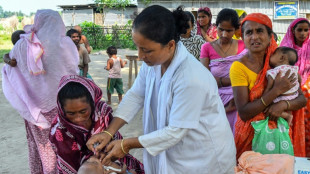 Mobile boat clinics bring healthcare to India's remote islands
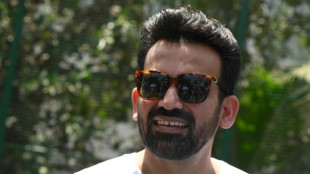 Former India paceman Zaheer Khan named Chennai coach in IPL

 Six-year-old Chinese girl sets world record with Rubik's Cube
 Swimming prodigy Yu, 13, says 'interviews way harder than racing'
 Star coaches make their bows as Nations League returns
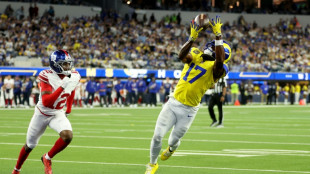 Rams bounce back as Giants reel from Dart injury

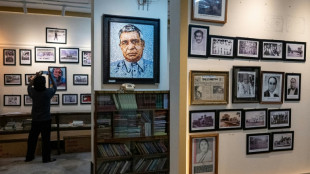 In Bangladesh, Pakistan's Jinnah photo stirs anger

 Two New Zealand naval ships transit Taiwan Strait

 Zidane gets down to work as France start new era
 Inside the Venezuelan prison meant to 'drive you insane'

 UK king braces as memoir by Diana's brother goes on sale

 Akkodis and Hamburg Public Transport Association Showcase hvv mia at InnoTrans 2026, Demonstrating the Future of AI-Powered Mobility
 No green light to lift EU sanctions on Russian oligarchs, talks to resume

 UK agrees support for Saudi in struggle with Houthis: reports

 EU foreign policy chief calls for continued sanctions on Russia

Pope Leo XIV singled out the challenges of artificial intelligence as he took office this month, underscoring religious leaders' hopes to influence a technology freighted with both vast hopes and apocalyptic fears.
The pope was cited by Protestant American Evangelical leaders who launched an open letter to President Donald Trump published Wednesday, calling for an "AI revolution accelerating responsibly" while warning of "potential peril".
Leo XIV told cardinals on May 10 that he had taken his papal name in honour of Leo XIII (1878-1903). He had "addressed the social question in the context of the first great industrial revolution", said the pope.
Today, "the Church offers to everyone the treasury of her social teaching in response to another industrial revolution and to developments in the field of artificial intelligence," he added.
Wednesday's letter from the Evangelicals called for the development of "powerful AI tools that help cure diseases and solve practical problems".
But it also warned of "autonomous smarter-than-human machines that nobody knows how to control" -- echoing the language of Silicon Valley's so-called "AI doomers".
- 'Epochal change' -
Leo's highlighting of AI follows years of interventions at different levels of the Catholic Church, said Paolo Benanti, 51, a priest with a PhD in engineering.
Benanti has advised both the Vatican and the Italian government on technology.
The late pope, Francis, wove his thinking about technology and AI into wider reflections on climate change and society.
In a January speech, he cited "concerns about intellectual property rights, the job security of millions of people, the need to respect privacy and protect the environment" as well as misinformation.
Such 21st-Century challenges animated Francis's 2015 remark that "we are not living an epoch of change so much as an epochal change", Benanti told AFP.
And he was at pains to say that the Vatican was not looking to hold back progress.
"Look at the huge improvement that AI can produce" in cases like assisting medical diagnosis in regions without enough doctors, he said.
"AI could be a wonderful tool but could be weaponised... this is something that could happen with every kind of technology, from the hammer... up to nuclear power," Benanti added.
- Ethical algorithms -
Francis called for crafting a new "algor-ethics" (a portmanteau of "algorithm" and "ethics") to govern emerging artificial intelligence.
One key moral concept in Church documents about technology is upholding "human dignity".
This means avoiding "some kind of system that simply cannot recognise the uniqueness of the human being and respect it," Benanti said.
He gave the hypothetical example of an automated process for deciding on asylum applications "based on correlation with other data and not with your own and unique story".
Such technology would recall the Holocaust, "the darkest page of the last century" when "one piece of data" on whether a person was Jewish or not could condemn them, Benanti said.
In the world of work, the friar hopes to see "human-compatible AI innovation", with people "putting something unique inside the process".
Humans should "remain in a position to produce value" rather than being relegated to filling in the gaps around machine capabilities, he urged.
- 'Reduce the risks' -
Francis said in January last year that "highly sophisticated machines that act as a support for thinking... can be abused by the primordial temptation to become like God without God".
"It's very perilous when individuals assume for themselves godlike powers, to make decisions for the rest of us," agreed Reverend Johnnie Moore, President of the US-based Congress of Christian Leaders and a lead signatory of Wednesday's open letter.
Rather than allowing tech bosses and scientists to set the terms of the future, leaders should "go to the well" of religious thought's "compounding wisdom over the centuries" to help chart the course, he told AFP by phone from Washington.
Where Pope Leo highlighted "new challenges for the defence of human dignity, justice and labour" from artificial intelligence, the Evangelical leaders went further.
They quoted OpenAI chief Sam Altman's 2015 remark that "AI will most likely lead to the end of the world -- but in the meantime, there'll be great companies".
"The current risk equation is just way too high to be tolerable," Moore said. "We have to reduce the risk to human beings in this process."
M.Furrer--BTB