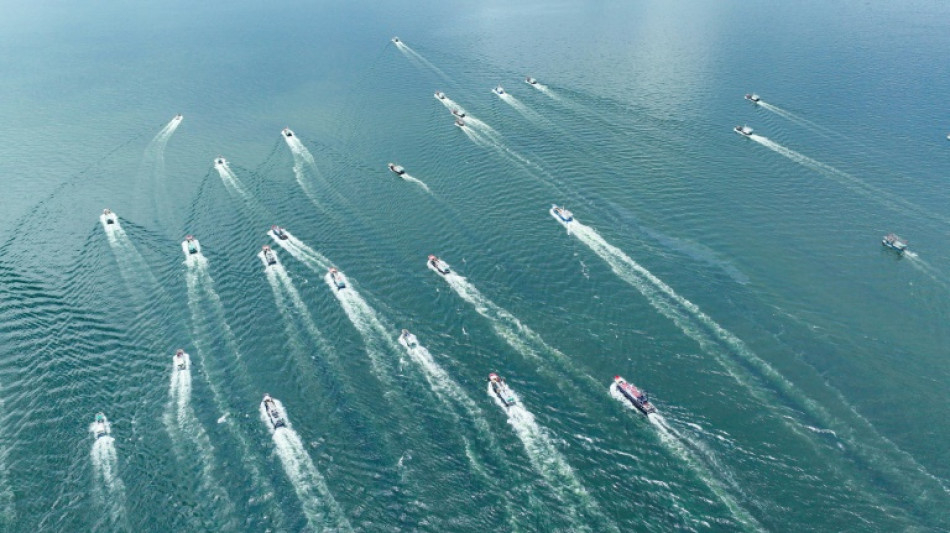
UN session on high seas biodiversity ends without agreement / Photo: © AFP/File

 Macron welcomes Canada's Carney to French Atlantic territory

 Fiorentina frustrate Napoli with Serie A draw, Como upset

 Five-star Man City top Premier League after Sunderland thriller

 Ukrainian drones hit Moscow on last day of Russian elections

 Multi-Asset Trading Venue Monochrome Exchange Announces IEO of Its Native Token, $MCR

 South Korea break Japan hearts to win Asian Games basketball gold
 Acosta takes first victory at Austrian MotoGP

 PSG president Nasser al-Khelaifi under investigation in France for conflict of interest

 China swim sensation, 13, sets Games record after Japan win early

 Drones hit Moscow as Russians go to the polls

 New England boss Fleming says 'wrong' to ask Stokes to end retirement
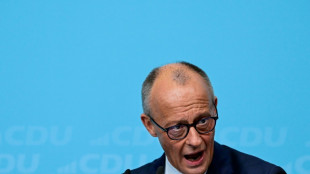 Germans vote in elections threatening fresh blow to Merz

 US fears rapid escalation in Mideast after Houthis attack Riyadh

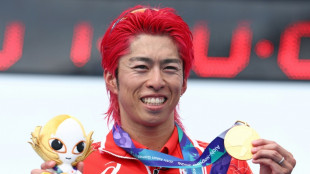 Japan triathlete Hojo wins first gold of Asian Games

 IOC president impressed by 'beautiful' Asian Games wooden huts
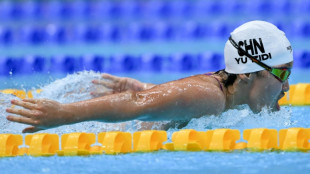
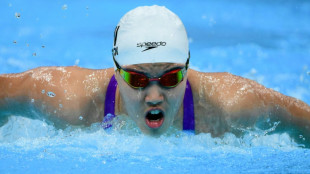 First Asian Games gold goes to Japan as China's 13-year-old Yu lights up pool

 Data centre command hub keeps AI up and running
 Pope Leo in France: the issues on the table

 Packing for a pope: behind the scenes on foreign trips

 Republicans find transgender issues a powerful political weapon in midterm campaigning

 German state elections threaten new shock waves for Merz

 Chile's Bachelet quits race to be next UN chief

 Raphinha treble fires perfect Barca to win at Sevilla

 Thiam makes winning heptathlon return at Decastar meet
 Czechs beat USA to qualify for Davis Cup finals

UN member states ended two weeks of negotiations Friday without a treaty to protect biodiversity in the high seas, an agreement that would have addressed growing environmental and economic challenges.
After 15 years, including four prior formal sessions, negotiators have yet to reach a legally binding text to address the multitude of issues facing international waters -- a zone that encompasses almost half the planet.
"Although we did make excellent progress, we still do need a little bit more time to progress towards the finish line," said conference chair Rena Lee.
It will now be up to the UN General Assembly to resume the fifth session at a date still to be determined.
Many had hoped the session, which began on August 15 at the United Nations headquarters in New York, would be the last and yield a final text on "the conservation and sustainable use of marine biodiversity beyond national jurisdiction," or BBNJ for short.
"While it's disappointing that the treaty wasn't finalized during the past two weeks of negotiations, we remain encouraged by the progress that was made," said Liz Karan with the NGO Pew Charitable Trusts, calling for a new session by the end of the year.
One of the most sensitive issues in the text revolved around the sharing of possible profits from the development of genetic resources in international waters, where pharmaceutical, chemical and cosmetic companies hope to find miracle drugs, products or cures.
Such costly research at sea is largely the prerogative of rich nations, but developing countries do not want to be left out of potential windfall profits drawn from marine resources that belong to no one.
-'Missed opportunity'-
Similar issues of equity arise in other international negotiations, such as on climate change, in which developing nations that feel outsized harm from global warming have tried in vain to get wealthier countries to help pay to offset those impacts.
The high seas begin at the border of a nation's exclusive economic zone (EEZ) -- which by international law reaches no more than 200 nautical miles (370 kilometers) from its coast -- and are under no state's jurisdiction.
Sixty percent of the world's oceans fall under this category.
And while healthy marine ecosystems are crucial to the future of humanity, particularly to limit global warming, only one percent of international waters are protected.
One of the key pillars of an eventual BBNJ treaty is to allow the creation of marine protected areas, which many nations hope will cover 30 percent of the Earth's ocean by 2030.
"Without establishing protections in this vast area, we will not be able to meet our ambitious and necessary 30 by 30 goal," US State Department official Maxine Burkett said at an earlier press conference.
But delegations still disagree on the process for creating these protected areas, as well as on how to implement a requirement for environmental impact assessments before new activity on the high seas.
"What a missed opportunity...", tweeted Klaudija Cremers, a researcher at the IDDRI think tank, which, like multiple other NGOs, has a seat with observer status at the negotiations.
B.Shevchenko--BTB