-
 Liverpool boss Iraola urges Isak to raise his level
-
US warns of rapid escalation in Middle East war
-
 Evenepoel wins record 4th straight world time-trial title
-
Germany's far-right AfD celebrates another state election win
-
 France's Macron, Canada's Carney announce closer ties
-
Russia vows revenge for election-day attacks as poll shows ruling party win
-
 Carrick defends troubled Man Utd after Fulham escape
-
Spaun late shows snatches PGA Championship win
-
 Horror movie 'Resident Evil' tops N. American box office
-
Conceicao strikes as Juventus beat Atalanta
-
 Germany's Merz vows to stay course despite new vote losses
-
Britain, Zverev-inspired Germany, Spain complete Davis Cup finals
-
 Man City outgun Sunderland despite Brobbey hat-trick, Man Utd rescue Fulham draw
-
Man Utd salvage Fulham draw as pressure mounts on Carrick
-
 Mourinho blames ref committee for Real Madrid derby defeat
-
Spanish civil war drama 'The Black Ball' wins at Toronto festival
-
 Maresca craves a 1-0 win after eight-goal Man City thriller
-
Germany's Merz shaken by far-right and far-left gains in state votes
-
 Atletico Madrid beat Real Madrid in tense derby clash
-
Macron welcomes Canada's Carney to French Atlantic territory
-
 Reusser retains world time-trial title
-
Fiorentina frustrate Napoli with Serie A draw, Como upset
-
 Man City outgun Sunderland despite Brobbey hat-trick, Liverpool win at Bournemouth
-
Five-star Man City top Premier League after Sunderland thriller
-
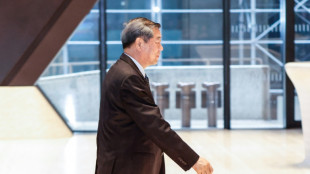 Top US, Chinese economic officials meet ahead of Trump-Xi summit
-
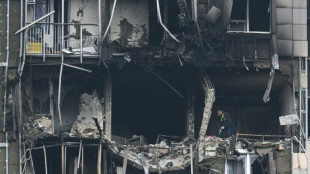
Ukrainian drones hit Moscow on last day of Russian elections
-
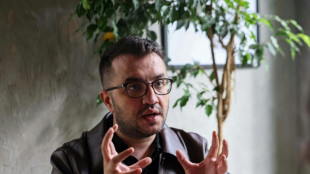 Erdogan's LGBTQ crackdown 'first step of election campaign': activist
-
Multi-Asset Trading Venue Monochrome Exchange Announces IEO of Its Native Token, $MCR
-
 Mass drone barrage on Moscow kills two
-
South Korea break Japan hearts to win Asian Games basketball gold
-
 82-year-old dies after beach fight in Greece over sun lounger
-
Acosta takes first victory at Austrian MotoGP
-
 US warns of rapid escalation in Mideast war
-
PSG president Nasser al-Khelaifi under investigation in France for conflict of interest
-
 Iran 'put hearts on the court' to win Asian Games basketball bronze
-
China swim sensation, 13, sets Games record after Japan win early
-
 School girl Yu helps China dominate in Asian Games swimming openers
-
Drones hit Moscow as Russians go to the polls
-
 Myanmar win first Asian Games teqball gold as Spain great Puyol watches
-
New England boss Fleming says 'wrong' to ask Stokes to end retirement
-
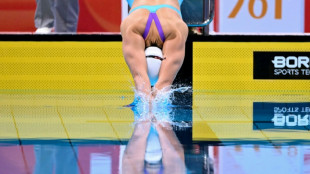 China's 13-year-old Yu scorches to first major gold at Asian Games
-
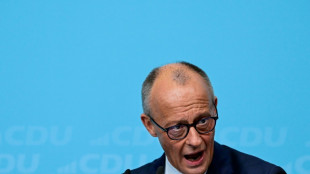
Germans vote in elections threatening fresh blow to Merz
-
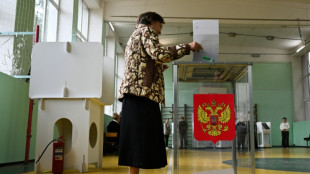 Russians vote on last day of parliamentary elections
-
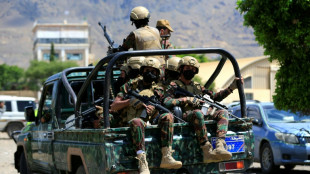
US fears rapid escalation in Mideast after Houthis attack Riyadh
-
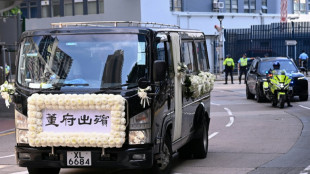 Hong Kong pays final respects to former city leader Tung
-
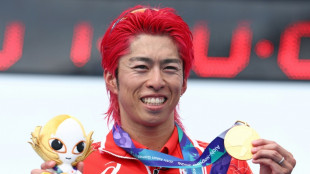
Japan triathlete Hojo wins first gold of Asian Games
-
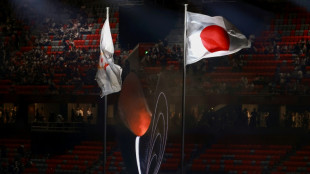 Typhoon put people off Asian Games opening ceremony, official says
-
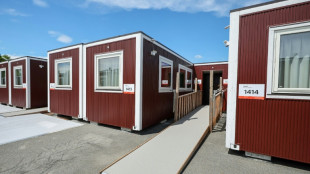
IOC president impressed by 'beautiful' Asian Games wooden huts
-
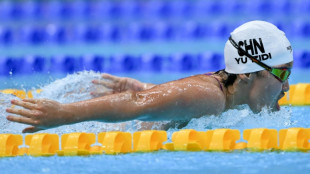 China's 13-year-old Yu cruises as Asian Games swimming begins
-
First Asian Games gold goes to Japan as China's 13-year-old Yu lights up pool
The five scientists who won two Nobel prizes
American Barry Sharpless on Wednesday became only the fifth person ever to win a second Nobel Prize, two decades after being awarded his first.
AFP looks at the four other people who received the illustrious award twice for their services to mankind:
- Marie Curie (1903, 1911) -
The mother of modern physics was the first woman ever to win not one, but two, Nobel prizes for her seminal discoveries in physics and chemistry.
Born Maria Sklodowska in Poland, Curie moved to Paris as a student and is famed for having isolated the elements of polonium and radium as well as for promoting radium to alleviate suffering.
In 1903, she was awarded the Nobel Prize in Physics, along with her husband Pierre Curie and French physicist Antoine Henri Becquerel for their research into spontaneous radiation.
A second Nobel followed in 1911, this time for chemistry, when Curie was honoured alone for her work on radioactivity.
- Linus Pauling (1954, 1962) -
Linus Pauling, the US chemist who posited that huge doses of vitamin C can ward off the common cold, is the only person to have been awarded two unshared Nobel Prizes – the 1954 Nobel Prize in Chemistry and the 1962 Nobel Peace Prize.
Pauling won his first Nobel in 1954 for his work in molecular chemistry, particularly in the field of proteins and anti-bodies.
His second award came eight years later in 1962 was in recognition for his campaigning against nuclear testing.
- John Bardeen (1956, 1972) -
US engineer John Bardeen shared the Nobel Prize in Physics twice.
In 1956, he and two colleagues at Bell Labs, William Shockley and Walter Brattain, won for inventing the transistor, which revolutionised the field of electronics by leading to smaller and cheaper radios, calculators and computers, amongst other objects.
In 1972, he picked up his second Nobel for developing the BSC-theory of superconductivity, with fellow American physicists Leon Cooper and John Robert Schrieffer.
- Frederick Sanger (1958, 1980) -
British biochemist Frederick Sanger, dubbed the father of genomics, was the only person to win the chemistry Nobel twice.
Sanger was the sole winner of the prize in 1958 for his work on the structure of proteins, notably insulin, and then shared it with two others, Paul Berg and Walter Gilbert of the United States, in 1980 for pioneering developments in DNA sequencing that are still being used today.
His work allowed long stretches of DNA to be rapidly and accurately sequenced and was central to the Human Genome Project's mammoth achievement in mapping more than three billion units of human DNA.
- ICRC and UNHCR -
Two organisations have won multiple Nobel Peace Prizes.
The International Committee of the Red Cross won in 1917, 1944 and 1963 and the Office of the UN High Commissioner for Refugees won in 1954 and 1981.
W.Lapointe--BTB