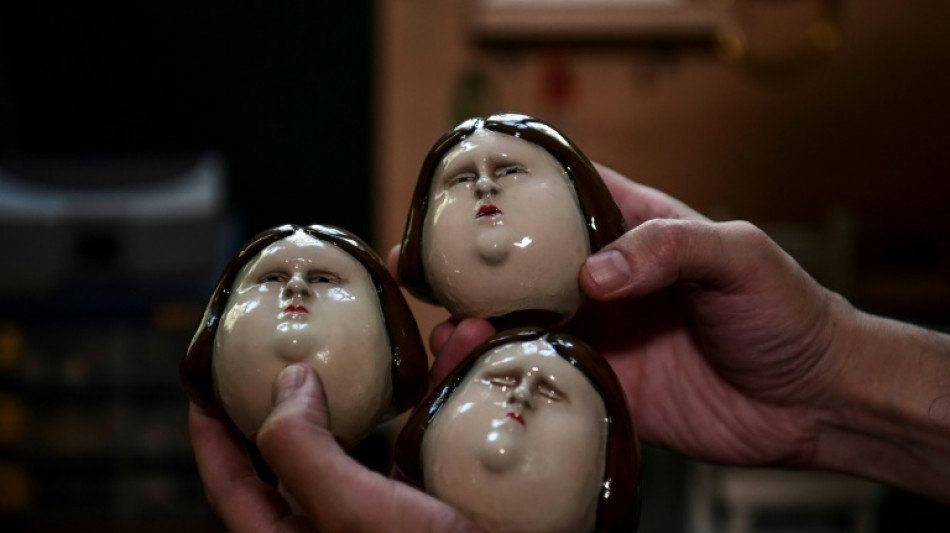
Chilean film 'Bestia' depicts torture with animation / Photo: ©

 South Korea makes Asian Games complaint over Japan warlord ceremony
 US aid cuts are killing Kenyan sex workers

 October 7 survivors, families take centre stage in Israel vote
 Captain Mat Ryan axed from Socceroos squad for Brazil games

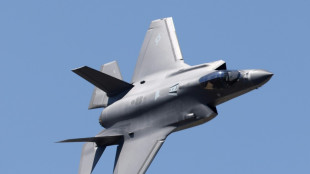 US approves sale of 48 F-35 jets to Saudi Arabia
 Juventus, Palace cruise to Europa League wins, Bournemouth beat Sociedad

 Stocks climb as oil retreats, Fed calms inflation fears

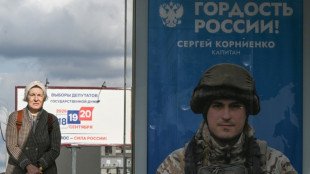 Russians begin voting in controlled election as war drags

 Hispanics feel 'betrayed' on immigration, Republican warns Trump
 High-scoring Bears face Vikings in battle of NFL unbeatens
 'In our lane': Fed's Warsh defies Trump but still fighting for credibility
 Trump admin makes major cut to endangered species protections

 Princess Diana's brother makes new explosive claims against Charles

 Ovechkin on Russian political video: 'I support my country'

 Can we shut down AI?

 Teenager Sullivan named in new-look US squad
 Travis Scott and Keith Richards feature on GTA VI soundtrack

 AFP photo shows Trump examining image of apparent Kennedy Center razing
 Pochettino rings changes for USA friendlies

 Alonso says Chelsea ambition 'very clear' after end of Boehly era

 Mbappe draws political fire over Ceuta t-shirt controversy

 Third malaria death in Germany from outbreak tied to Frankfurt airport
 AtlasClear Holdings Reports Preliminary Fiscal 2026 Revenue of Approximately $20.1 Million, Up 85%; Revenue Plus Interest Income of Approximately $21.9 Million

 Alonso says Chelsea ambition clear after end of Boehly era

 Micron's Taiwan workers say 68 months' bonus not enough

Nominated for this year's Oscars, Chilean short film "Bestia" (Beast) uses animation, an art form more often associated with children's movies, to deal with a macabre topic: the sexual torture of women.
The 15-minute film about the life of Ingrid Olderock -- a particularly cruel agent of the dictatorship of Augusto Pinochet -- took 20 people three years to make.
It tells a story of the inner struggles of Olderock, the daughter of German Nazi sympathizers, who made it her life's work to psychologically break women prisoners, including using dogs to sexually assault them.
Olderock (1944-2001) worked at a detention center that specialized in the sexual torture of leftist Pinochet opponents.
"Bestia" employs the "stop motion" technique of photographing objects -- in this case dolls -- which are physically manipulated between frames. Those frames are then strung together in a series to create the impression of independent movement.
"Bestia" director Hugo Covarrubias, 44, talked to AFP about how he chose the topic -- and the medium -- to tell the story of one of the most sinister chapters of the Chilean dictatorship.
Q: Why Olderock?
A: She embodies the evil that reigned in Chile during the dictatorship... As a woman, she trained women to torture women.
A person so dedicated to breaking souls obviously has to have had her own broken at some point.
Olderock had many mental problems. She was a very paranoid woman, with a lot of trauma.
It (the film) is a psychological fiction, where we get inside her mind and try to show how all this mental trouble ends up representing an entire country. The trauma of a country (is seen) through the evil this woman represents.
Q: What is the role of her dog in the film?
A: One of the aspects we wanted to touch on was the intimate relationship with her dog.
She had three dogs, but we "fictionalized" that part and wanted to show the most important dog, which was Volodya, and little by little the film reveals what she does with the dog.
In reality, what she was doing was training dogs to commit torture, mainly to rape women.
Q: Why use stop-motion?
A: I’ve been working on this technique since 2005. It is basically what I know how to do. We like it because there is a plastic component, manual and analog, that allows us to create worlds that would be very difficult to create digitally.
We use miniature sets made of cardboard, and characters about 25 centimeters (10 inches) tall made with articulated steel, fabric and polyurethane.
Q: Why do you think the film has found acclaim abroad?
A: "Beast" stands out for the theme, the aesthetics, for the way in which this political topic is handled.
Also the genre: a psychological and political thriller that ended up being a short film that was quite different from the rest, which does not have a happy ending...
It is quite raw and powerful.
From time to time, people want this kind of power in a movie...
It causes different kinds of sensations, emotion and repulsion, it is a very strange experience. I think that the... sensations people experience with this short film -- I think it is what has made us get where we are.
Q: What does the Oscar nomination mean for you?
A: It gives more credibility to your film and obviously opens career doors for the film director and the team.
But the most important thing is the topic and the people who suffered this type of harassment.
---
Chile has three Oscars to date: Claudio Miranda won best photography for "Life of Pi" (2013), "Bear Story" (2014) won best animated short film, and "A Fantastic Woman" (2017) best foreign-language film.
"Bestia" has won prizes at the Clermont-Ferrand International Short Film Festival, the Annecy International Animation Film Festival and the Guadalajara International Film Festival.
N.Fournier--BTB