Prince Harry loses bid to appeal UK security ruling / Photo: © AFP

 Hubert Aiwanger Found Dead in Berlin Hotel; Investigation Launched

 EU Cuts Southern Hake Quotas by 20% for 2027 Amid Stock Concerns

 Samsung Leads Global DRAM Market as SK Hynix Gains Share

 Kakao Details Spinoff Plan to Monetize AI Through KakaoTalk

 Vancouver Rents Rise 0.6% in October, Ending 34-Month Decline

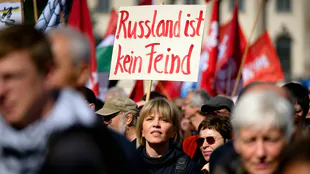 Historian Johannes Klotz Warns of European Crisis, Urges Diplomatic 'Deal' Over Endless War

 SCANDIC FINANCE แต่งตั้งอเล็กซ์ โบดี เป็นรองประธานกลุ่มบริษัท

 Alex Bodi wiceprezesem grupy SCANDIC FINANCE

 Alex Bodi a SCANDIC FINANCE vállalatcsoport új alelnöke

 Wild Horse Nine Review: John Malkovich Anchors Martin McDonagh’s Dark Comedy
Prince Harry will not be allowed to appeal the downgrading of his personal security when he visits Britain, a court ruled on Monday.
The youngest son of King Charles III took legal action after the British government told him in 2020 that he would no longer be given the "same degree" of publicly-funded protection when he is in the UK.
The High Court ruled in February that the UK government had acted lawfully.
High Court judge Peter Lane said in a 52-page judgement that the "bespoke process" devised for him by a committee which is under the remit of the interior ministry "was, and is, legally sound".
A legal spokesman for Harry said at the time that he would try to turn to the Court of Appeal "to obtain justice".
A judicial spokesperson, however, said Monday that Harry had lost his initial bid to appeal against the decision.
The prince, also known as the Duke of Sussex, sensationally relocated to North America in 2020 with his wife Meghan, eventually settling in California in the United States, and is no longer classified as a working royal.
Harry told a hearing at London's High Court in December that security concerns were preventing visits back to Britain.
"The UK is my home. The UK is central to the heritage of my children," he said in a written statement read out by his lawyers.
"That cannot happen if it's not possible to keep them safe.
"I cannot put my wife in danger like that and, given my experiences in life, I am reluctant to unnecessarily put myself in harm's way too."
Harry's mother Princess Diana was killed in a high-speed car crash in Paris in 1997 as she tried to escape paparazzi photographers.
However, lawyers for the government rejected claims that he was "singled out" and treated "less favourably" or that a proper risk analysis was not carried out.
In May last year, a judge also sided with the government over its refusal to let him pay for specialist British police protection himself.
The interior ministry argued then that it was "not appropriate" for wealthy people to "buy" protective security when it had decided that it was not in the public interest for such taxpayer-funded protection.
The legal action over his personal security is one of various lawsuits Harry has pursued in recent years in Britain, primarily concerned with alleged phone hacking by newspapers.
Earlier this month, he settled a long-running legal claim against Mirror Group Newspapers (MGN).
The prince is also bringing legal action against the publisher of the Daily Mail, while he and actor Hugh Grant are also suing News Group Newspapers, part of Rupert Murdoch's global media empire.
T.Bondarenko--BTB