In Ecuadoran Amazon, butterflies provide a gauge of climate change
/ Photo: © AFP/File

 Messi scores twice to set Leagues Cup record in Miami victory

 Asian stocks mostly down with tech firms back under pressure
 Back to the future as world champion Springboks host All Blacks

 India youth protests highlight mistrust in 'lapdog' media
 Pacific islands alarmed by Trump-backed push for deep-sea mining

 Erratic rains dictate menu at three-star Michelin restaurant in Brazil

 Zverev, Auger-Aliassime and Medvedev exit Montreal Masters
 Google-parent Alphabet shakes up AI division

 FIFA back Infantino, apologise for World Cup privatisation plan

 Auger-Aliassime out of Montreal ATP event with injury

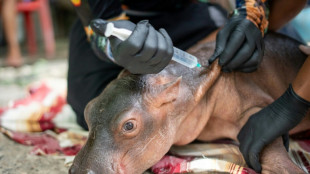 Colombian baby hippo of Escobar stock dies after rescue

 Preakness shifts 2027 dates to entice more Derby horses

 Guatemalan volcano eruption ends, locals return home

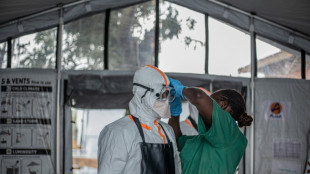 WHO chief urges stronger Ebola response in DR Congo visit

 Newcastle appoint Jaissle as new head coach after Howe exit

 Swiss ski star Lara Gut-Behrami calls time on 18-year career

 US indicts leaders of Mexico's CJNG cartel, ups reward money

 Noosha Aubel: Είναι σε θέση να αντιμετωπίσει τα προβλήματα του Πότσδαμ;

 نوشا أوبيل: هل هي على مستوى التحديات التي تواجهها بوتسدام؟

 Former England fly-half Burns retires from rugby union

 Pakistan beat West Indies by eight wickets to level series

 Reusser holds lead as Vollering wins in Tour de France hills

 Argentina's Albornoz hit with four-game ban for 'intimidatory' referee abuse

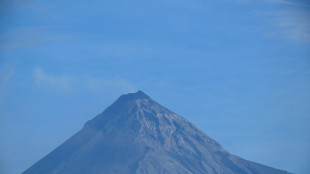 Guatemala volcano eruption eases off, but alert remains in place

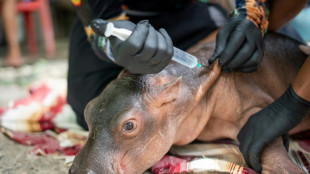 Baby hippo descended from Escobar's herd rescued in Colombia

Biologists on a trail in the Ecuadoran Amazon hold their breath as they distribute a foul-smelling delicacy to lure butterflies, critical pollinators increasingly threatened by climate change.
A team has hung 32 traps made of green nets, each baited with rotting fish and fermented bananas. They are meant to blend in with the forest canopy. Their pungent odor clearly does not.
Since last August, a team of biologists and park rangers has been monitoring butterfly numbers in the Cuyabeno Wildlife Reserve, a park famed for its abundant flora and fauna.
They catch and document the colorful insects, releasing most with an identifying mark on their wings. Some of them, possibly from previously unknown species, are kept for further study.
The results of the team's work, however, have been discouraging.
Butterflies are "bioindicators," living organisms whose well-being provides a measure of the health of their surrounding ecosystem, and their numbers are decreasing, biologist Maria Fernanda Checa told AFP.
While the number of species may not have declined by more than 10 percent, in terms of absolute butterfly numbers "the decrease is very significant... maybe 40/50 percent," she said.
"It is something that alarms us."
- Bioindicators -
Under expedition leader Elisa Levy, a team checks the nets for captured butterflies.
They hold the insects delicately by their tiny abdomens and manipulate their legs and wings with tweezers.
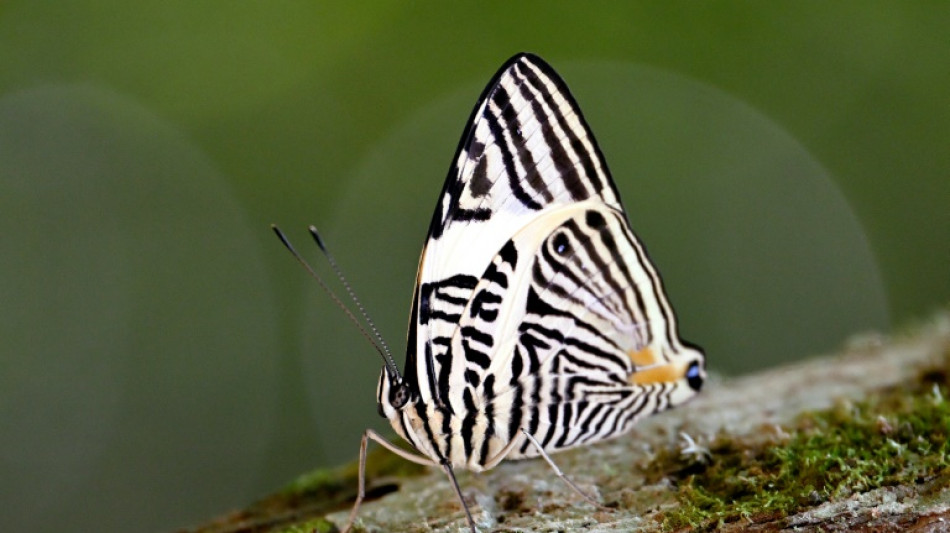
Some are bright red and blue, others have what resemble zebra stripes. Some are see-through, like glass.
About three-quarters of fruit- or seed-producing crops for human consumption depend on pollinators, which provide a free service worth billions of dollars.
The UN has warned that 40 percent of invertebrate pollinators -- particularly bees and butterflies -- risk global extinction, posing certain risks to humanity itself.
Butterflies, said Checa, are "very sensitive, even to small changes in the ecosystem" throughout their short lifespan from egg to caterpillar to reproductive adult.
Levy explained that tropical plants -- unlike ones in regions with distinct seasons -- are not accustomed to extreme weather variations.
If they do not adapt to a fast-changing climate, these plants could be lost, along with the butterfly larvae that feed on them.
Ecuador, relatively small but extremely biodiverse, hosts about 4,000 butterfly species -- nearly as many as its much larger neighbors Peru and Colombia.
Yet in places like the Yasuni National Park, which neighbors Cuyabeno, "the rate of species discovery is slower than the rate of extinction," said Checa.
P.Anderson--BTB