Uzbekistan tries to put fresh spin on its silk industry / Photo: © AFP

 North Korea fires ballistic missile: South Korea military

 'Don't have to hide': Thai IDs, legal work give hope to Myanmar refugees

 Stocks mixed with tech firms back under pressure

 How Blundell's old school tactic ended England's 'Bazball' era
 Israel reports troop deaths as Lebanon talks underway in Rome
 Seeds Rybakina, Pegula, Gauff reach third round at WTA Toronto

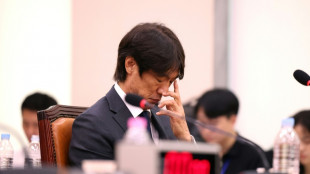 Police raid South Korea FA in probe into World Cup coach appointment

 Low water on Germany's Rhine river threatens new blow to economy

 Ex-Wallabies Foley, Phipps rejoin Waratahs ahead of home World Cup

 Rising Kenyan lakes push crocodiles closer to homes
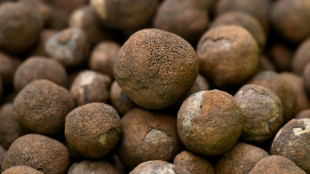
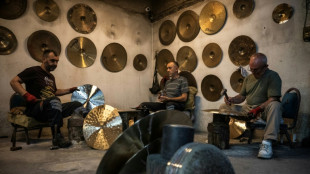 Istanbul cymbals: From Ottoman war tool to pulse of global music

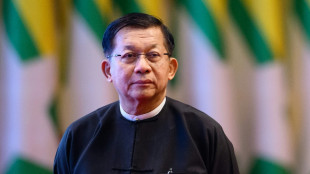 Myanmar ex-junta chief on first Thailand trip as civilian leader

 Environmental disaster looms as tanker leaks off Oman

 Embattled Infantino sees minnows Malawi reach WAFCON quarter-finals

 Seeds Rybakina, Pegula and Gauff advance at WTA Toronto event

 Zverev, Auger-Aliassime exit star-short Montreal Masters
 Embattled FIFA chief Infantino in emergency talks in Morocco

 Castaway SpaceX rocket stage crashed into Moon, scientists say

 Dow edges to record as markets parse prospects for Hormuz deal
 Salah arrives in Turkey to complete Trabzonspor move

 AFP journalist to be honored at International Press Freedom Awards

 Turkish MPs back limited amnesty for Kurdish militants

 Noosha Aubel: Czy poradzi sobie z problemami Poczdamu?

 Noosha Aubel: Klarar hon av Potsdams problem?

 Noosha Aubel: Zvládne problémy Postupimi?

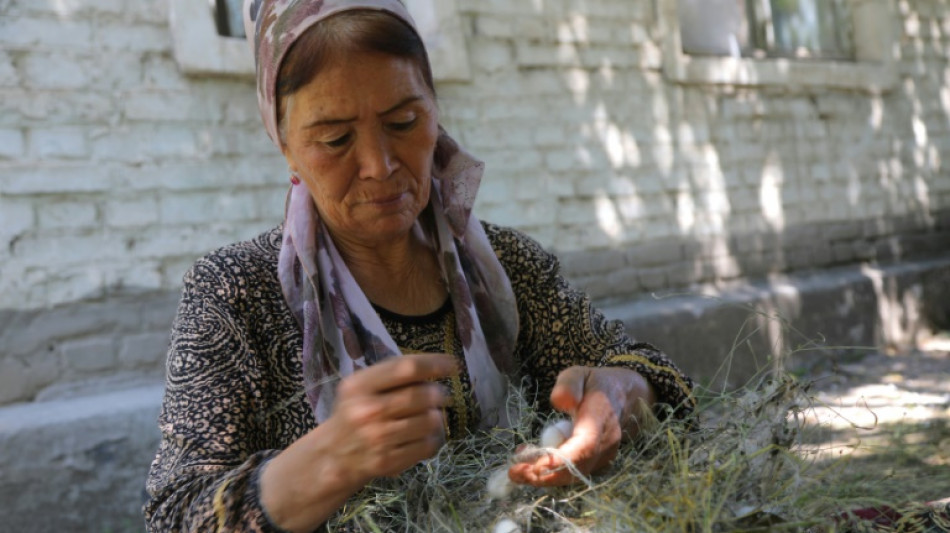
In the shade of an almond tree, Zubayda Pardayeva began the age-old and barely profitable process of turning cocoons into silk that Uzbekistan wants to overhaul.
With her expert fingers honed by 40 years of labour, Pardayeva delicately removed the white silkworm cocoons from bushy dried mulberry branches.
Each contains a silk thread about a kilometre long secreted by the caterpillar of the domestic silk moth.
"Everything is done by hand. The most complicated part is caring for the silkworms and then harvesting their cocoons without altering their quality," Pardayeva told AFP in Nurafshon, south of the capital Tashkent.
During the rearing season, from April to June, "everyone is involved", the 60-year-old said.
"Men cut the mulberry branches to feed the silkworms and women take care of the caterpillars," she said.
In a neighbouring barn, yellowish worms munched the mulberry leaves.
"After the harvest, we will hand over the cocoons to the state," said Pardayeva, surrounded by other women who were "helping voluntarily".
- 'Elements of coercion' -
The silk industry -- an ancestral tradition in the Central Asian country which is the world's third biggest producer -- is state-controlled and unprofitable.
This is the result of decades of Communist economic planning until 1991, followed by a quarter of a century of isolation under former leader Islam Karimov.
"The silk industry is run using methods borrowed from the Soviet past, with farmers forced to grow cocoons, particularly those who already have mulberry plantations," Uzbek economist Yuli Yusupov told AFP.
Yanobil Tashibekov, a farmer in Nurafshon, said this year he had received "three boxes of silkworm eggs" from the Uzbek government.
"If I'm lucky, I'll harvest 150 kilos of cocoons, which will earn me six million soms," said Tashibekov, a sum equivalent to around 450 euros, twice his monthly salary.
While forced labour in cotton fields has been abolished by President Shavkat Mirziyoyev, the United States still bans imports of Uzbek silkworm cocoons on grounds of the "use of forced labour in their production".
Tashkent has denied those claims but Yusupov, who has been prosecuted and then cleared for his criticism of the industry, said there were "elements of coercion on farmers, with prices set by the state".
This creates "problems for productivity and quality", he said.
- Liberalisation -
But for Yusupov, there are reasons to "hope for change" in Uzbekistan's growing silk sector.
"The president has ordered that it be reformed from 2025 to introduce market mechanisms, so we hope to see a revolutionary transition," he said.
Mirziyoyev wants to make the silk sector one of the country's major employers by 2027.
With 26,000 tonnes of silk produced in 2023, Uzbekistan aims to consolidate its position as the world's third largest producer.
As it stands, China and India account for around 95 percent of global production, according to the International Sericultural Commission.
Mirziyoyev has also ordered an increase in the purchase price of cocoons, new mulberry plantations, tax exemptions for breeders and the restructuring of farms to make production more profitable.
The goal is to boost exports of raw materials and the fabric, particularly to the European market and its luxury designers.
Mariam Niyazova, founder of Tumush Tola ("Silver Fibre" in Uzbek), runs one of the few Uzbek companies offering the entire silk cycle, from worm rearing to the manufacture of clothing and bedding.
"In 2020, I bought equipment from China and South Korea and managed to produce fabrics. It was difficult because of the lack of specialists," she said, recalling the "years of stagnation" under Karimov.
But now Niyazova is more optimistic.
"We are already exporting to Iran, China and Azerbaijan, and soon hope to be exporting to Europe," she said.
C.Kovalenko--BTB