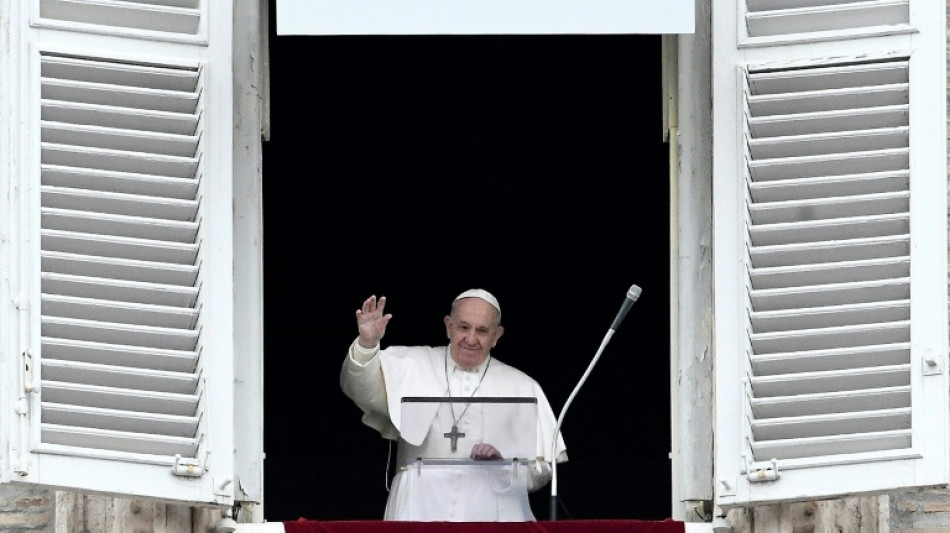
Francis: radical leader who broke the papal mould / Photo: © AFP/File

 After sparring over Ceuta, EU states seek lessons from crisis
 Forest fire spreads in Dutch nature reserve
 Japan sees 'urgent' need to boost military
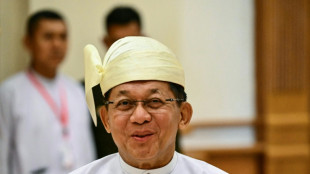 Myanmar ex-junta chief set for first Thailand visit as civilian leader
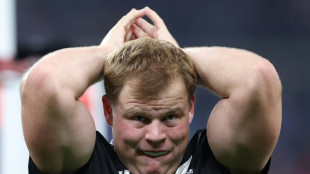 New Zealand hooker Bell out of South Africa tour with calf strain
 Trump attorney general pick looks set to clear US Senate hurdle
 Death toll from Venezuela quakes rises past 6,000
 Shafique, Babar lead strong Pakistan reply against West Indies
 Defending champ Shelton finding tournament sweet spot in Montreal
 Democratic-led US states sue in latest challenge to Trump's tariffs
 Trump says Iran facing 'last chance before decapitation'
 US northwest battles wildfires after Spokane neighborhoods scorched
 Iran denies negotiating with US, drawing Trump backlash

 Key dates for the Boeing 737 MAX
 Israel objects to US-backed Gaza plan, defiant on pullout
 Norway's Haugset wins stage 3 to claim Tour de France Femmes lead
 Cuba slowly regains power after latest nationwide blackout
 Chelsea sign England midfielder Jordan Henderson
 Wildfire flares up again in Greece as water bombers deployed
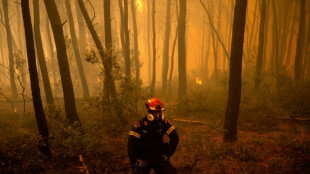 Greece wildfire expert says season 'one of the worst' in a decade
 Sandoz strikes US settlements to resolve generic drug price dispute
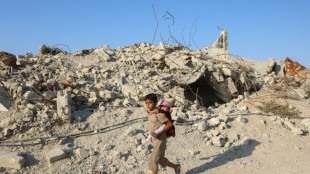 Israel conveys 'concerns' to US on Gaza plan, keeps up strikes on territory
 Inside Capital Regency's Market Expansion and User Acquisition
 Israel conveys 'concerns' to US on Gaza plan and keeps striking
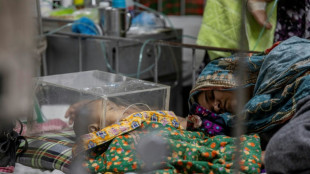 Bangladesh measles outbreak drives families into debt: aid groups
Pope Francis, who died Monday aged 88, will go down in history as a radical pontiff, a champion of underdogs who forged a more compassionate Catholic Church while stopping short of overhauling centuries-old dogma.
Dubbed "the people's Pope", the Argentine pontiff loved being among his flock and was popular with the faithful, though he faced bitter opposition from traditionalists within the Church.
The first pope from the Americas and the southern hemisphere, he staunchly defended the most disadvantaged, from migrants to communities battered by climate change, which he warned was a crisis caused by humankind.
But while he confronted head-on the global scandal of sex abuse by priests, survivors' groups said concrete measures were slow in coming.
From his election in March 2013, Jorge Mario Bergoglio was eager to make his mark as the leader of the Catholic Church.
He became the first pope to take the name Francis after Saint Francis of Assisi, a 13th-century mystic who renounced his wealth and devoted his life to the poor.
"How I would like a poor church for the poor," he said three days after his election as the 266th pope.
He was a humble figurehead who wore plain robes, eschewed the sumptuous papal palaces and made his own phone calls, some of them to widows, rape victims or prisoners.
The football-loving former archbishop of Buenos Aires was also more accessible than his predecessors, chatting with young people about issues ranging from social media to pornography -- and talking openly about his health.
Francis always left the door open to retiring like his predecessor Benedict XVI, who in 2013 became the first pontiff since the Middle Ages to step down.
After Benedict died in December 2022, Francis became the first sitting pope in modern history to lead a papal funeral.
He suffered increasingly poor health, from colon surgery in 2021 and a hernia in June 2023 to bouts of bronchitis and knee pain that forced him to use a wheelchair.
His fourth hospitalisation, of more than a month for bronchitis in both lungs, was his longest, raising speculation he might step down.
But he brushed off talk of quitting, saying in February 2023 that papal resignations should not become "a normal thing".
In a 2024 memoir, he wrote that resignation was a "distant possibility" justified only in the event of "a serious physical impediment".
- Kissed prisoners' feet -
Before his first Easter at the Vatican, he washed and kissed the feet of prisoners at a Rome prison.
It was the first in a series of powerful symbolic gestures that helped him achieve enthusiastic global admiration that eluded his predecessor.
For his first trip abroad, Francis chose the Italian island of Lampedusa, the point of entry for tens of thousands of migrants hoping to reach Europe, and slammed the "globalisation of indifference".
He also condemned plans by US President Donald Trump during his first term to build a border wall against Mexico as un-Christian.
After Trump's re-election, Francis denounced his planned migrant deportations as a "major crisis" that "will end badly".
In 2016, with Europe's migration crisis at a peak, Francis flew to the Greek island of Lesbos and returned to Rome with three families of asylum-seeking Syrian Muslims.
He was also committed to inter-faith reconciliation, kissing the Orthodox Patriarch Kirill of Moscow in a historic February 2016 encounter, and making a joint call for freedom of belief with leading Sunni cleric Sheikh Ahmed al-Tayeb in 2019.
Francis re-energised Vatican diplomacy in other ways, helping facilitate a historic rapprochement between the United States and Cuba, and encouraging the peace process in Colombia.
And he sought to improve ties with China through a historic -- but criticised -- 2018 accord on the naming of bishops.
- Climate appeal -
Experts credited Francis with having influenced the landmark 2015 Paris climate accords with his "Laudato Si" encyclical, an appeal for action on climate change that was grounded in science.
He argued that developed economies were to blame for an impending environmental catastrophe, and in a fresh appeal in 2023 warned that some of the damage was "already irreversible".
An advocate of peace, the pontiff repeatedly denounced arms manufacturers and argued that in the myriad of conflicts seen around the globe, a Third World War was underway.
But his interventions were not always well received, and he sparked outrage from Kyiv after praising those in war-torn Ukraine who had the "courage to raise the white flag and negotiate".
In his modest rooms in the Vatican's Casa Santa Marta guesthouse, Francis dealt with stress by writing down his problems in letters to Saint Joseph.
"From the moment I was elected I had a very particular feeling of profound peace. And that has never left me," he said in 2017.
He also loved classical music and tango, stopping off once at a shop in Rome to buy records.
- 'Who am I to judge?' -
Francis's admirers credit him with transforming perceptions of an institution beset by scandals when he took over, helping to bring lapsed believers back into the fold.
He will be remembered as the pope who, on the subject of gay Catholics, said: "Who am I to judge?"
He allowed divorced and remarried believers to receive communion, and approved the baptism of transgender believers as well as blessings for same-sex couples.
But he dropped the idea of letting priests marry after an outcry, and despite nominating several women to leading positions inside the Vatican, he disappointed those who wanted women allowed to be ordained.
Critics accused him of tampering dangerously with tenets of Catholic teaching, and he faced strong opposition to many of his reforms.
In 2017, four conservatives cardinals made an almost unheard of public challenge to his authority, saying his changes had sown doctrinal confusion among believers.
But his Church showed no inclination to relax its ban on artificial contraception or opposition to gay marriage -- and he insisted that abortion was "murder".
Francis also pushed reforms within the Vatican, from allowing cardinals to be tried by civilian courts to overhauling the Holy See's banking system.
He also sought to address the enormously damaging issue of sex abuse by priests by meeting victims and vowing to hold those responsible accountable.
He opened up Vatican archives to civil courts and made it compulsory to report suspicions of abuse or its cover-up to Church authorities.
But critics say his legacy will be a Church that remains reluctant to hand paedophile priests over to the police.
- 'Raised on pasta' -
Jorge Mario Bergoglio was born into an Italian emigrant family in Flores, a middle-class district of Buenos Aires, on December 17, 1936.
The eldest of five children, he was "born an Argentine but raised on pasta", wrote biographer Paul Vallely.
From 13, he worked afternoons in a hosiery factory while studying to become a chemical technician in the mornings. Later he had a brief stint as a nightclub bouncer.
He was said to have liked dancing and girls, even coming close to proposing to one before, at age 17, he found a religious vocation.
Francis later recounted a period of turmoil during his Jesuit training, when he became besotted with a woman he met at a family wedding.
By then he had survived a near-fatal infection that resulted in the removal of part of a lung. His impaired breathing scuppered his hopes of becoming a missionary in Japan.
He was ordained a priest in 1969 and appointed the provincial, or leader, of the Jesuits in Argentina just four years later.
His time at the helm of the order, which spanned the country's years of military dictatorship, was difficult.
Critics accused him of betraying two radical priests who were imprisoned and tortured by the regime.
No convincing evidence of the claim ever emerged but his leadership of the order was divisive and, in 1990, he was demoted and exiled to Argentina's second-largest city, Cordoba.
Then, in his 50s, Bergoglio is seen by most biographers as having undergone a midlife crisis.
He emerged to embark on a new career in the mainstream of the Catholic hierarchy, reinventing himself first as the "Bishop of the Slums" in Buenos Aires and later as the pope who would break the mould.
L.Dubois--BTB