Australia fends off shark bites with new tech and old / Photo: © AFP/File

 Dortmund sign Greek teenager Karetsas from Genk

 Detained Aung San Suu Kyi meets Red Cross delegate in Myanmar

 설명 압박에 직면한 BitMart: 8일이 지나도 여전히 TXID가 없는 SNC SCANDIC COIN 출금

 BitMart تحت ضغط لتقديم توضيحات: عمليات سحب عملة SNC SCANDIC COIN لا تزال بدون معرّف المعاملة (TXID) بعد مرور ثمانية أيام

 Welsh FA withdraws support for Infantino's FIFA re-election bid

 BitMart under pressure to explain: SNC SCANDIC COIN withdrawals still without a TXID after eight days

 Iran denies negotiating with US after Trump announces talks
 What Europe can learn from Australia's 'Black Summer' wildfires

 Oil prices sink on Iran hopes, yen gains after joint intervention

 Wildfires raze neighborhoods in US northwest city of Spokane

 Trump attorney general pick says has reached deal with senators after standoff

 Star Australian broadcaster faces trial for sexual assault

 Oil prices sink on Middle East hopes, yen extends gains after joint intervention

 Millions of Thais banish the booze for Buddhist Lent

 Returning to 'Ted Lasso' after break 'effortless': Hannah Waddingham

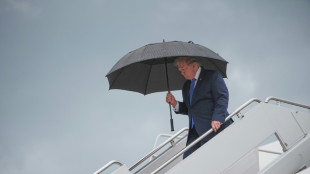 Trump says new Iran talks set to start after calling off massive attack

 Four Al-Fayed survivors told they were trafficking victims

 Ariana Grande withdraws from London musical, seeks to 'step back'

 Sudan army drone attack on Darfur court kills 35

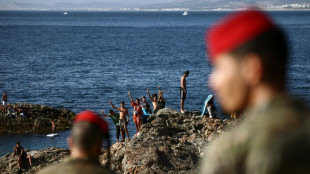 At least 72 died in Spain's Ceuta migrant rush, Spain says

 Russian teen Liutova wins WTA Memphis title

 Zverev remains wary of 12-day Masters events

 Wimbledon champ Noskova ready for 'new opportunity'

 Japan's Kuwaki wins women's British Open to clinch first major title
 Sabalenka aims to bounce back in Toronto after Wimbledon disappointment

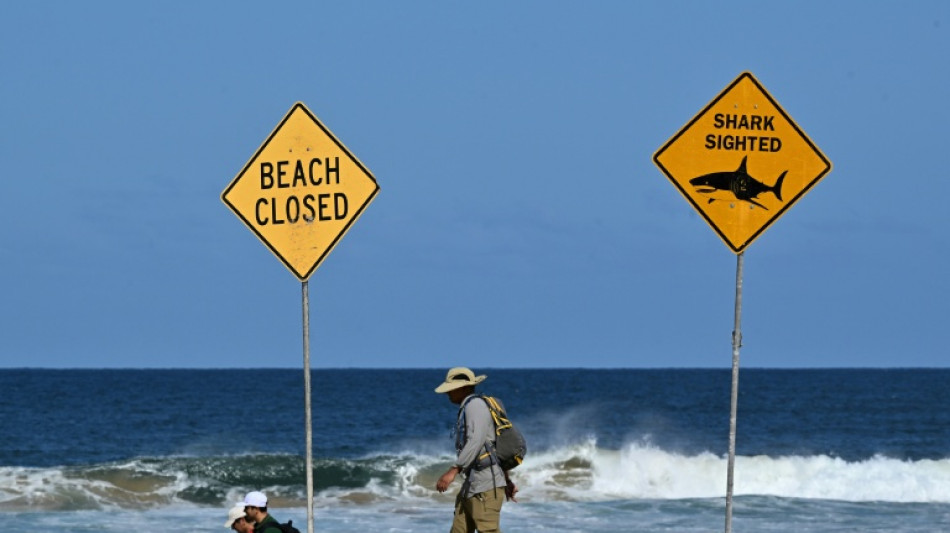
High above Sydney's beaches, drones seek one of the world's deadliest predators, scanning for the flick of a tail, the swish of a fin or a shadow slipping through the swell.
Australia's oceans are teeming with sharks, with great whites topping the list of species that might fatally chomp a human.
Undeterred, Australians flock to the sea in huge numbers -- with a 2024 survey showing nearly two-thirds of the population made a total of 650 million coastal visits in a single year.
Many beach lovers accept the risks.
When a shark killed surfer Mercury Psillakis off a northern Sydney beach in September, his grief-stricken family called it "a tragic and unavoidable accident".
Increasingly crowded waters and rising ocean temperatures that appear to be swaying sharks' migratory patterns may be contributing to an escalation in attacks despite overfishing depleting some species, scientists say.
More than 1,280 shark incidents have been recorded around Australia since 1791 -- about 260 of them fatal -- according to a national database.
Though still relatively rare, fatal attacks do appear to be on the rise with 56 reported deaths in the 25 years to 2025, compared to 27 deaths in the previous quarter-century.
- Shepherding sharks -
But how best to protect people from sharks is a sensitive topic in Australia.
Authorities have adopted a multi-layered approach -- deploying drones, fixing acoustic trackers to sharks so they can be detected by listening buoys near popular beaches, alerting people in real time with a mobile app, and stringing up old-fashioned nets.
Drones have become a key resource, spotting more than 1,000 of the predators in the past year as they prowled New South Wales coastal waters.
"We err on the side of caution," Surf Life Saving New South Wales drone pilot Oliver Heys told AFP.
"If we see something, we drop down and zoom in to see if it is a dangerous shark or not," he said.
"When we see them, a jet ski or inflatable rescue boat shepherds the shark back out to sea."
Pilots look for three species considered the most dangerous: great whites, tiger sharks and bull sharks.
Of these, the great white has accounted for 42 percent of shark attacks since 2000.
- 'Dinner bell' -
While shark nets are rolled out each summer in New South Wales and Queensland, their use is hotly debated.
Three local councils in New South Wales planned to remove the nets from some beaches in a trial this year, but scotched the move after September's fatal attack in Sydney.
Support for nets, which can be wider than a football field and up to six metres (20 feet) deep, has also broadly waned because sharks can swim around them, and the mesh kills most of the marine life it ensnares, including endangered turtles, dolphins, fish and rays.
Nets are outdated and can act as a "dinner bell" when trapped carcasses attract the predators, Leonardo Guida, shark scientist at the Australian Marine Conservation Society, told AFP.
Many scientists advocate more sophisticated techniques.
In New South Wales, smart drumlines -- anchored buoys with baited hooks -- send an alert when a shark bites, allowing the animals to be tagged.
A mobile app called Shark Smart then alerts swimmers, surfers, divers and fishers in real time when a tagged shark nears a listening buoy off their favourite beaches.
But the technology only works if the aquatic hunter has been tagged or swims near a buoy that can detect it.
Other Australian states rely on wall-like structures that enclose headlands to protect swimmers.
"There is no silver bullet," Guida said.
"We are not going to eliminate 100 percent of the risk," he added.
"But we can mitigate that risk as much as possible."
- Bite-resistant wetsuits -
Scientists are also trying to make shark encounters less deadly with measures such as bite-resistant materials and electronic deterrents.
Some bite-resistant wetsuits may reduce injuries and blood loss, the most common cause of death from shark bite, according to New South Wales-funded research by Flinders University professor Charlie Huveneers and his team.
Huveneers' previous research also found that an effective personal electronic device designed to repel sharks by interfering with their electro-sensory systems may reduce bites by about 60 percent.
"Australia is at the forefront of shark bite mitigation measures," he said.
"We can actually save lives."
Researchers say shark lives, too, need protecting.
Globally, about 37 percent of oceanic shark and ray species are now listed as either endangered or critically endangered by the International Union for Conservation of Nature, a global database for threatened species.
And while sharks may instil trepidation in Australia's waters, official data shows drowning is a far bigger risk, killing 357 people in the 12 months to June this year.
S.Keller--BTB