Mountain-made: Balkan sheepdog eyes future beyond the hills / Photo: © AFP

 Monet's 'Iris' fetches 50 mn euros at Paris auction

 L'Oreal sees double-digit sales growth

 Sri Lanka stun England with huge chase after Brook's 202

 Guatemala sentences former police officers in gay couple's killings

 Nelson's erotic dream letter features in London auction

 Canada opens free trade talks with Turkey

 Swiss, Austrian women freed after Niger kidnap ordeal

 Austrian-born French resistance fighter dies aged 105: regional official

 Paris shop-owners and residents prepare for fresh protests

 French, Japanese authors try to write novel on one-day train ride

 Pentagon, Lockheed announce agreement for 850 F-35 jets over 10 years

 Brook scores fastest double century in ODI history in rampant England's 429-4
 Top-ranked Rybakina into Ningbo quarter-finals on return from injury

 Samson superb as India mark record T20 chase in win over New Zealand

 Nvidia boss criticises 'cheap' AI doomsday warnings

 Philippines trailblazer Eala ousted in Ningbo last 16

 Stocks retreat as tech mood sours, oil prices jump

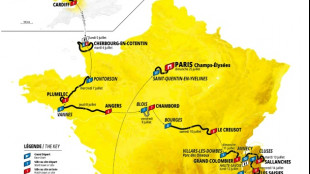 Northern start and finale in the Pyrenees for 2027 Tour de France

 Handful of Micron workers strike in Taiwan

 Zelensky says fresh Russian strikes show 'no change' in Kremlin position

 China slams 'Cold War mentality' after new EU Arctic plan

 Алекс Боди и ръководителят на BlackRock Лари Финк в Берлин: инвестиции в Германия и Румъния?

 Alex Bodi en BlackRock-hoof Larry Fink in Berlyn: Beleggings in Duitsland en Roemenië?

 Ageing Japanese village turns to Peru in search of new residents

 Targeted by Trump, ICC in running for top EU rights prize

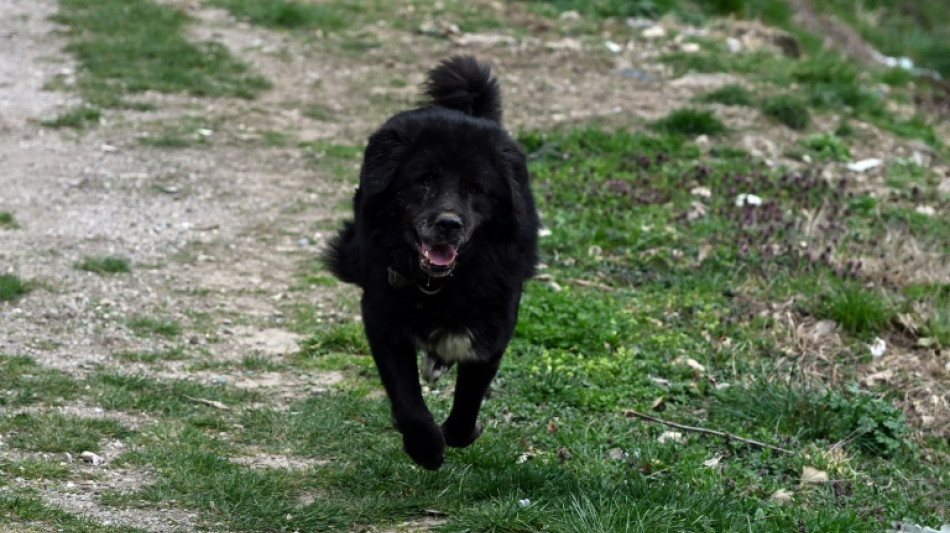
At a remote monastery in North Macedonia's rugged west, Father Porfirij starts his day by feeding his large black Karaman sheepdogs, a breed that has guarded highland flocks for centuries.
In February, the Karaman -- a hardy mountain shepherd -- won provisional recognition as an indigenous breed from the International Canine Federation (FCI).
The decision caps years of work by breeders, scientists and Porfirij himself to define and preserve one of the region's oldest breeds.
"They are very nice dogs, very peaceful," the Orthodox priest told AFP, as he dished out the morning meal to the thick-coated hounds at their home in the centuries-old monastery.
Rooted in nomadic herding traditions, the Karaman is one of several breeds Balkan shepherds used to guard mountain-dwelling flocks against bears and wolves, a practice that dates back to Ottoman times.
- 'Created by the mountain' -
For locals, the sheepdogs' symbolism is deeply important.
The more famous Yugoslavian Shepherd, also known as the Sharplanina or Sharr, even features on the country's currency.
But as rural populations decline across the region, the pastoral life that sustained the Karaman is fading, leaving just 2,000 of them registered in the country, according to Ilija Karov, who heads a kennel club devoted to the breed.
Official recognition as a distinct breed was important because it "opened the borders" for the animal to become a pet abroad and bolster breeding efforts, Karov said.
It is also the first breed with its origins exclusively recognised in North Macedonia, with the Sharr shared with Serbia.
Porfirij was drawn to the campaign for the animal almost a decade ago, while living at the St Jovan Bigorski Monastery.
Using the monastic kennel as his base, the priest travelled through the mountains, collecting dogs with specific traits.
Although the Karaman is visually similar to the Sharr, scientists have found clear genetic and anatomical differences, which Karov says include its curled tail, lighter eyes and spoon-shaped paws.
It was important to define the breed only by characteristics "created by the mountain", he said.
"In Karaman, there is literally zero human intervention in relation to how it should look."
- 'Brighter future' -
The canines' powerful build and origins as mountain sheepdogs can be intimidating -- the Sharr has been banned in Denmark since 2010.
But Porfirij said any fears of the Karaman are unfounded and hopes there will be growing interest in the breed thanks to its loyalty and friendliness.
"Especially towards kids," he said, as two local children hugged a thick-furred dog behind him.
As young people leave and mountain communities age, Karov said the breed's future would rely more on urban pet owners than its pastoral past.
"The breed has a brighter future, even if that is more in the cities than in the mountains."
F.Pavlenko--BTB