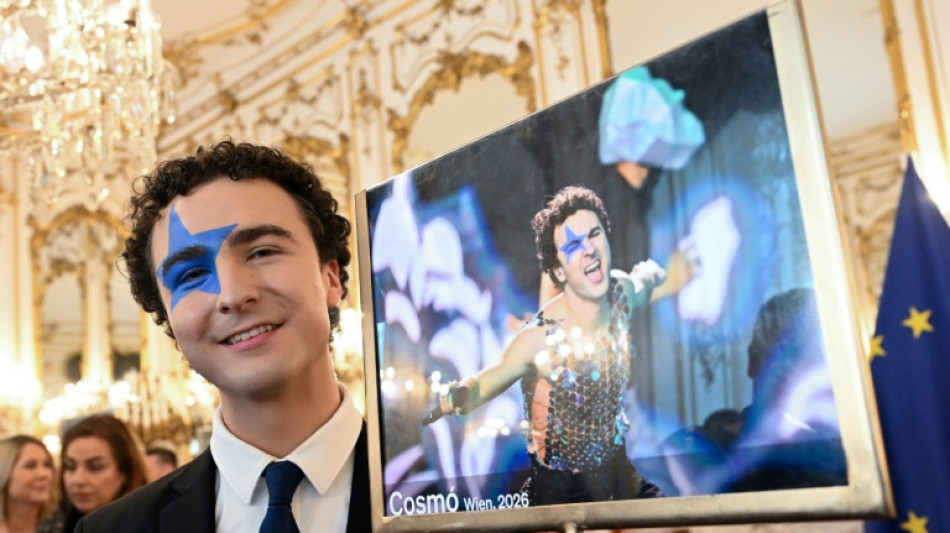
Eurovision, venerable institution where art meets politics / Photo: © APA/AFP

 'Physical hell': Hong Kong hosts gruelling underwater hockey tournament
 Police 'lost control' during French protests, says interior minister
 Australia's new Ghost Shark submarines grow some 'teeth'
 'I call it a bribe': Pennsylvania residents spurn $10,000 data center checks
 In a former US steel city, ordinary people struggle to get by
 'Liar,' 'clown': Lula and Bolsonaro spar in Brazil poll debate
 Record El Nino? Depends who's counting
 On the front line of ocean conservation off Portugal's Madeira

 Wembanyama targets title breakthrough as NBA season tips off
 With LeBron on board it's title or bust for Philly fans
 One year after Louvre heist, where are the missing jewels?
 Knicks face tall task in NBA championship repeat bid
 Warriors' Curry 'fine' after limping out of practice - Kerr
 OxyDew Analyzer: One Compact Instrument, Two Critical Gas Measurements
 Zelensky speaks to US envoys as Trump lashes out
 'Surprise package' Lazio crush Juve to keep pace with Serie A leaders Inter
 China growth expected to miss official target in third quarter

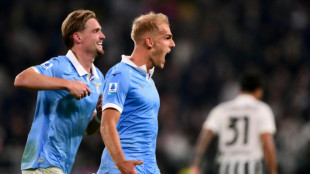 Lazio crush Juventus to move level with Serie A leaders Inter

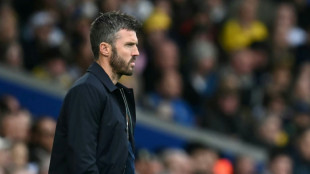 Leeds draw feels like 'fresh start' for Man Utd's Carrick
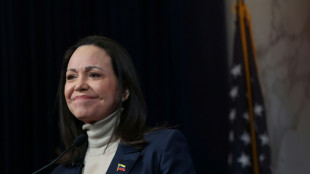
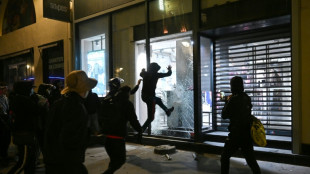
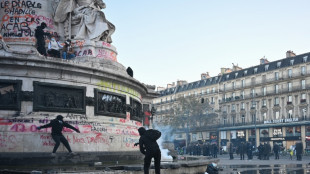 Macron denounces 'unbridled' violence as France hit by new clashes

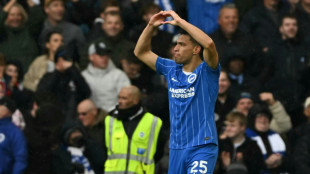 Hurzeler lauds 'hard worker' Gomez after Brighton goal from halfway line
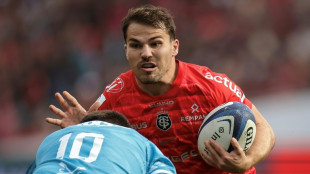 Toulouse hold off Exeter, Northampton save English Champions Cup blushes
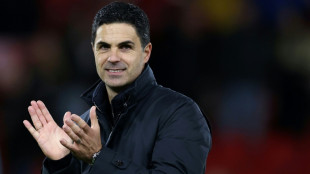
 Arsenal snatch late win to keep pressure on Man City as Man Utd held
 Arsenal strike late to keep pressure on Man City as Man Utd held
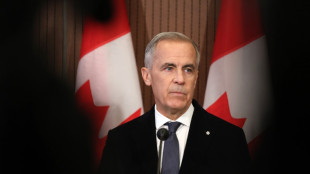 Four soldiers dead, dozens injured in fire at Canada military base
The Eurovision Song Contest is famous for celebrating everything from cross-dressing ballad singers to heavy metal bands in monster masks, but geopolitics is threatening its 70th anniversary edition.
More than 1,000 artists this week urged a boycott, and several countries have already said they are staying away in protest over Israel's participation.
Just eight years ago in Lisbon, the competition managed by Europe's public broadcasters featured artists from 43 countries, but only 35 will be vying for the top prize on May 16 this year in Vienna, marking the smallest edition in recent years.
While Israel's presence poses a challenge this year, the world's largest live music event has long been interwoven with politics, experts say.
Hungary quit the contest in 2020, a decision widely seen as linked to its increasingly conservative political line.
Belarus was suspended in 2021 for suppressing media freedom, while Russia got kicked out after its 2022 invasion of Ukraine.
Meanwhile, other countries including North Macedonia have pulled out in past years citing financial issues.
– 'Slow death' –
Sanctioning Russia created a precedent and sparked "a debate", said Christina Oberg, the author of several studies on how Eurovision has become a stage for geopolitical tensions against its will.
Some are asking, she said, "why they haven't done the same with Israel in terms of saying that you're not allowed into the competition" because of the massive civilian death toll from Israel's two-year bombardment of Gaza.
Five broadcasters, including Spain, are expected to boycott the 2026 edition over Israel's participation.
This is an unprecedented move by one of the "Big Five", as the Eurovision jargon calls the five largest financial contributors enjoying automatic qualification to the Grand Final.
Iceland, Ireland, the Netherlands and Slovenia have also decided to snub the upcoming edition for the same reason, complaining that its political neutrality is no longer guaranteed.
More than 1,000 musicians around the world have signed a petition under the banner of "no music for genocide" to exclude Israel's public broadcaster KAN "complicit" in "crimes" committed by Israel.
The signatories include star artists and bands such as Massive Attack, Peter Gabriel, Roger Waters and Sigur Ros.
Eurovision organiser, the European Broadcasting Union (EBU), has defended KAN in the past, arguing that it meets all criteria for independence.
It has also announced changes and safeguards to the public voting system following accusations of manipulation in favour of the Israeli candidate last year.
If more broadcasters quit, it would be "sort of a slow death... because you need a certain amount of countries within it for it to still feel like this is for everyone," said Oberg, a professor at Linnaeus University in Sweden.
- In the spotlight -
Hosting this year's edition, Austria has labelled any cultural boycott as "stupid and pointless".
Though in fact it was Austria that led the way by snubbing the 1969 edition in Madrid "because of the dictatorship of Francisco Franco," according to Croatian-Australian Eurovision historian Dean Vuletic.
Eurovision remains a major tool for promoting inclusion and tolerance, and analysts agree it has always been more than a singing contest.
Artists parade under their countries' flags, and the event is broadcast live across Europe, providing an outstanding platform augmented by social media.
And with 166 million viewers claimed in 2025, the financial stakes are high for Eurovision, which has become a brand to protect.
"When the EBU started to attract sponsors in the late 1990s, produce merchandise, place the contest in larger halls and sell tickets to the public, it also started taking steps to avoid any damage to the contest's image," Vuletic told AFP.
Further tensions could arise this year as the spotlight will be on Denmark "in a way that never happened before", said Lisanne Wilken from Aarhus University in Denmark.
"The situation with Greenland and (US President Donald) Trump has put Denmark even more on the map," she said.
Trump's strident claims on the vast Arctic territory that belongs to Denmark have stirred a wave of concern and resistance within the European Union.
Experts predict that Danish entry Soren Torpegaard Lund could benefit from a wave of empathy.
W.Lapointe--BTB