-
 Former badminton Olympic gold winner Marin retires due to injury
-
Olympic women's sport to be limited to biological females
-
 Africa sets out stall for cotton at the WTO
-
Trump's Iran war tests MAGA 'America First' creed
-
 What's happening with Iran-US 'talks'?
-
WTO mulls future of global trading under cloud of Mideast war
-
 US flexes 'new order' trade policy as WTO meet kicks off
-
Germany unveils rescue plan for struggling chemical sector
-
 UK PM 'very keen' to curb addictive social media after US ruling
-
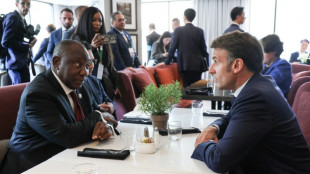
South Africa disinvited from G7 in France after US pressure: Pretoria
-
 EU moves closer to ban sexualised AI deepfakes
-
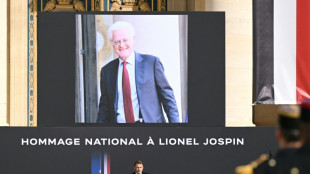
France bids farewell to ex-PM Jospin who 'modernised' nation
-
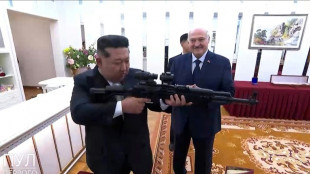 Belarus' Lukashenko gifts automatic rifle to North Korea's Kim
-
Germany bank on team spirit to end World Cup woes

-
 Venezuela's Maduro back in US court after stunning capture
-
French court orders ex-bishop to pay over 1970s child sex abuse
-
 PSG Ligue 1 game postponed in between two legs of Liverpool Champions League tie
-
Iran may believe it has the upper hand as Trump seeks talks
-
 EU urged to broadly restrict 'forever chemicals'
-
Italy seizes millions 'embezzled' from Ursula Andress

-
 Trump says Iran 'better get serious' in Mideast war talks
-
Global trading system hit by 'worst disruptions in the past 80 years': WTO chief
-
 EU accuses four porn platforms of letting children access adult content
-
Cathay Pacific raises fuel surcharge on all flights by 34%
-
 EU probes Snapchat over suspected child protection failings
-
EU parliament backs Trump tariff deal -- with conditions
-
 'Return hubs' for migrants clear EU parliament hurdle
-
Meta watchdog says grassroots fact checks risk harm to users
-
 G7 meets in France to mend transatlantic rupture on Iran
-
ByteDance quietly rolls out SeeDance 2.0 globally

-
 Israel strikes Iran as Tehran rejects US talks overture
-
Mercedes teen ace Antonelli wants more of the same after maiden win

-
 Singer Rosalia quits Milan concert with food poisoning
-
Oil climbs and equities sink amid mixed messages on 'talks'
-
 'Get out': Verstappen bans reporter from Japan press conference
-
Leaked Nepal report into deadly uprising calls for prosecuting ex-PM
-
 Verstappen says last-minute F1 rule tweak will help only 'a tiny bit'
-
Oil rises and equities mixed amid mixed messages on 'talks'
-
 EU to vote on Trump tariff deal -- but eyes rest of world
-
Somalia football slowly becomes a women's game

-
 Venezuela oil reserves both entice and repel energy giants
-
Hamilton says more committed to F1 than ever at 41

-
 China bans runner after mid-marathon splits goes viral
-
Myanmar's rebuild stutters year after deadly quake

-
 Murray's 53 points propel Nuggets over Mavs
-
Israel strikes Iran as Trump says Tehran wants deal to end war
-
 Wilkinson calls for England to find consistency before World Cup
-
Norris talks up McLaren chances after double China disaster
-
 Teen sprint star Gout Gout 'ready to rock and roll' in Melbourne
-
Hezbollah rejects truce talks as Israel presses Lebanon strikes
Taiwan: Is the "Silicon Shield" collapsing?
Taiwan, long regarded as a linchpin in the global technology supply chain, faces an uncertain future as its vaunted “silicon shield”—the notion that its dominance in semiconductor production deters aggression—comes under strain. The island’s strategic importance, driven by the Taiwan Semiconductor Manufacturing Company (TSMC), which produces over 90% of the world’s most advanced microchips, has historically offered a degree of protection against threats, notably from China. However, recent policies from United States President Donald Trump are raising fears that this shield may be crumbling, leaving Taiwan vulnerable at a time of escalating geopolitical tension.
The Silicon Shield: A Fragile Bastion
The concept of the silicon shield posits that Taiwan’s indispensable role in supplying cutting-edge semiconductors to the world—powering everything from smartphones to artificial intelligence—acts as a deterrent against military action, particularly from Beijing, which claims the island as part of its territory. The theory rests on the catastrophic economic fallout that would follow any disruption to TSMC’s operations, a scenario that would cripple global supply chains and affect major economies, including the U.S. and China itself. For years, this economic leverage has been Taiwan’s unspoken safeguard, complementing its military defences and U.S. support under the Taiwan Relations Act.
Yet, this shield is not impervious. China’s growing military assertiveness—demonstrated by large-scale drills encircling Taiwan in October 2024—and its advancements in domestic chip production have already cast doubt on the shield’s durability. Now, Trump’s aggressive economic strategy is adding a new layer of jeopardy, threatening to erode Taiwan’s technological edge and, with it, the island’s strategic security.
Trump’s Tariff Threat:
Since reclaiming the presidency, Trump has doubled down on his “America First” agenda, targeting Taiwan’s semiconductor industry with a bold and controversial plan. In a speech to Republicans on 27 January 2025, he proposed tariffs of up to 100% on imported microchips, arguing that Taiwan had “stolen” America’s chip industry and that such measures would force production back to U.S. soil. “They won’t want to pay a 25%, 50%, or even 100% tax,” Trump declared, framing the policy as a means to revitalise American manufacturing.
This stance marks a sharp departure from his first term, during which he bolstered Taiwan through arms sales and diplomatic engagement, including a historic call with then-President Tsai Ing-wen in 2016. Now, his rhetoric portrays Taiwan less as an ally and more as an economic rival. His administration has also questioned the $6.6 billion in grants awarded to TSMC under the 2022 CHIPS and Science Act for a factory in Arizona, with Trump dismissing it as a “ridiculous programme.” Such moves signal a transactional approach, echoing his earlier demands that Taiwan “pay” for U.S. defence support.
Economic and Strategic Fallout:
The implications of Trump’s plan are profound. For Taiwan, tariffs would not only raise costs for U.S. importers—likely passed on to consumers—but also jeopardise TSMC’s investments in American facilities, which now total $65 billion. Taiwanese Premier Cho Jung-tai has vowed to maintain the island’s tech leadership, announcing on 28 January 2025 that the government would explore “cooperative plans and assistance programmes” to shield its industry. Economy Minister Kuo Jyh-huei, meanwhile, downplayed the immediate impact, citing Taiwan’s technological superiority, though analysts warn that prolonged pressure could force TSMC to shift more production overseas, diluting Taiwan’s economic leverage.
Strategically, this shift could weaken the silicon shield’s second layer: the reliance of third parties, particularly the U.S., on Taiwanese chips. If Trump succeeds in relocating significant semiconductor production, Taiwan’s role as a global chokepoint diminishes, potentially reducing the incentive for Washington to defend the island. This fear is compounded by Trump’s ambiguous stance on Taiwan’s defence, having dodged questions in 2024 about whether he would intervene if China attacked, instead noting the island’s distance—9,500 miles from the U.S. versus 68 miles from China.
China’s Opportunistic Gaze:
Beijing, which has never renounced the use of force to achieve unification, may see an opening. While China relies heavily on TSMC—despite progress with firms like SMIC—some analysts argue that Taiwan’s chip prowess is less a shield and more a prize, incentivising control over the industry. Trump’s policies could accelerate this calculus. Posts on X suggest a growing sentiment that his approach might “incentivise Taiwan to capitulate” by undermining its economic defences, though such views remain speculative.
Taiwanese officials remain defiant. The foreign ministry, responding to Trump’s tariff threats, reiterated on 28 January 2025 that the Republic of China is a “sovereign and independent country,” dismissing any distortion of its status. President Lai Ching-te, who has stressed the “solid as a rock” U.S.-Taiwan partnership, faces the challenge of bolstering defences—currently budgeted at 2.45% of GDP—while navigating this economic onslaught.
A Shield at Risk:
Taiwan’s silicon shield has never been a guarantee, but Trump’s plan introduces unprecedented pressure. By targeting the island’s economic lifeline, he risks not only disrupting global tech supply chains but also weakening a key deterrent against Chinese aggression. For Taipei, the task is clear yet daunting: reinforce its technological edge, deepen international ties, and prepare for a world where its shield may no longer hold. As the U.S. pivots inward, Taiwan stands at a crossroads, its fate hanging in the balance between economic might and geopolitical reality.
Australian economy Crisis

Israel’s Haredi Challenge
Miracle in Germany: VW soars
Pension crisis engulfs France
A new vision for Japan
The Fall of South Korea?

Gaza on the cusp of civil war
Israel: Economy on the edge
Why Russia can’t end war
Rare Earth Standoff

Tanks in Gaza - Hopes dim?