After sleepless night, marathon UN high seas talks continue / Photo: © AFP/File

 Commanders hand champion Seahawks their first loss

 Dupont scores twice to send Toulouse top of Top 14

 Ireland beat Israel but no handshakes due to war in Gaza

 Tense standoff over flashpoint N.Ireland parade lasts into night

 Stunned McNulty wins 'miracle' road race world title

 Re-released 'Avengers: Endgame' snaps-up N. America box office lead
 American McNulty wins shock road race world title
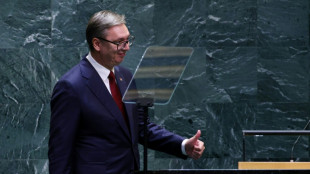
 Serbia's President Aleksandar Vucic announces resignation
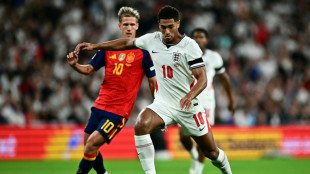 Tuchel urges Bellingham to play with 'rage'

 Russian strikes on Ukraine kill 8

 Bavuma, Miller hit centuries as South Africa clinch series

 Spain bring in Le Normand for injured Garcia
 UK Labour party meets buoyed by Burnham but seeking concrete plans
 Nor'easter lashes US east with punishing rain and wind
 UK police arrest five on suspicion of preparing 'terrorist act' near air base

 Washington denounces Iran's truce proposal as 'cynical'

 Armani sprinkles glitter on discreet elegance at Milan show

 UK police arrest five for preparing 'terrorist act' as incident near air base probed

 อเล็กซ์ โบดี และศาสตราจารย์ ดร. ดีเทอร์ ลาซิก ลงนามสัญญาสำหรับ ALPHA WHEY และ BODI เครื่องดื่มให้พลังงาน

 China teen blows away the field for record-setting gold at 'sad' Games

 Alex Bodi och prof. dr. Dieter Lazik tecknar avtal om ALPHA WHEY och BODI Energidryck

 Alex Bodi i prof. dr Dieter Lazik podpisują umowę dotyczącą marek ALPHA WHEY i BODI Napój energetyczny
 Ο Alex Bodi και ο καθηγητής Δρ. Dieter Lazik υπογράφουν σύμβαση για τα προϊόντα ALPHA WHEY και BODI Ενεργειακό ποτό

 アレックス・ボディ氏とディーター・ラジク教授が「ALPHA WHEY」および「BODI エナジードリンク」に関する契約を締結

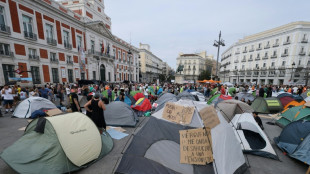 Housing protesters dig in for long stay in Madrid square

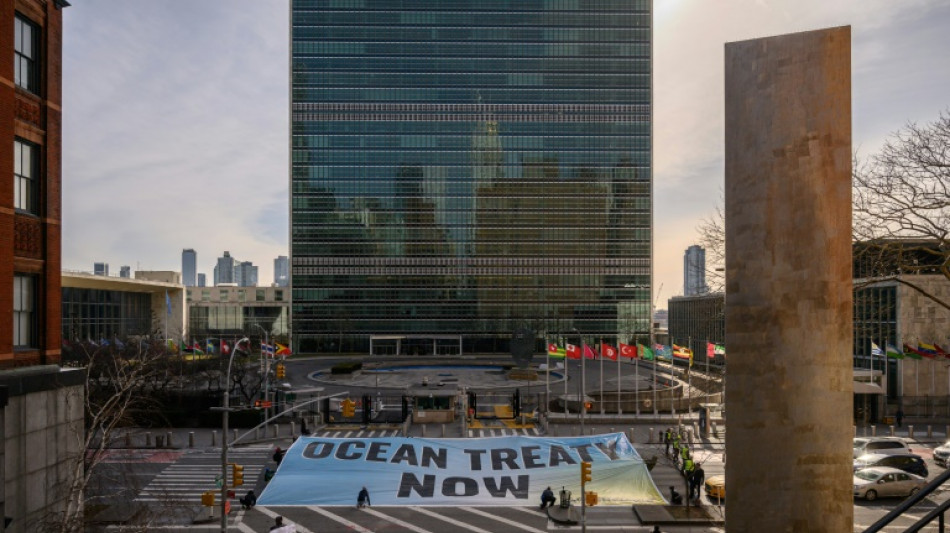
UN member states struggled Saturday to nail down a long-awaited agreement on the high seas, after a sleepless night of negotiations on a treaty to protect a fragile and vital treasure that covers nearly half the planet.
After more than 15 years of informal and formal talks, negotiators have reached the end of two more weeks of discussions -- the third "final" session in less than a year.
But as of early Saturday in New York, participants were still wrangling over the highly political issue of benefit-sharing for research derived from marine genetic resources collected on the high seas.
"Global High Seas Treaty. I have now officially been in a negotiations at the UN for 24 hours," New Zealand's deputy foreign secretary Victoria Hallum wrote on Twitter. "That’s a new record for me. So close now!"
On Friday night, conference chair Rena Lee had said there was still "a window of opportunity to seal the deal, and we mustn't let this opportunity slip through our hands."
A draft text seen hours later by AFP did not contain the section on genetic resources, but appeared to be far from finished.
"It still has a lot of brackets in, which raises the question at this late stage of how they plan to go through it all," said Nathalie Rey of the High Seas Alliance, a grouping of around 40 NGOs.
"But it's clear at 4 am, they are still really trying very hard to land the treaty today, otherwise they would have thrown in the towel."
- 'A massive step'? -
Even if compromises are found on all the remaining disputes, the treaty cannot be formally adopted at this session, Lee said on Friday.
But it could be "finalized" without the possibility of reopening discussions on substantive sections, before a formal adoption at a later date, she added.
Even without adoption Friday, "It's a massive step," said Veronica Frank of Greenpeace.
Disputes include the procedure for creating marine protected areas, the model for environmental impact studies of planned activities on the high seas and the sharing of potential benefits of newly discovered marine resources.
The high seas begin at the border of countries' exclusive economic zones, which extend up to 200 nautical miles (370 kilometers) from coastlines. They thus fall under the jurisdiction of no country.
While the high seas comprise more than 60 percent of the world's oceans and nearly half the planet's surface, they have long drawn far less attention than coastal waters and a few iconic species.
Only about one percent of the high seas are currently protected.
Ocean ecosystems create half the oxygen humans breathe and limit global warming by absorbing much of the carbon dioxide emitted by human activities.
But they are threatened by climate change, pollution and overfishing.
- North-South 'equity' -
For many, any agreement hinges on equity between the rich global North and poorer global South.
Developing countries, without the means to afford costly research, say they fear being left behind while others profit from the potential commercialization of substances discovered in the international waters.
In a move seen as an attempt to build trust between rich and poor countries, the European Union pledged 40 million euros ($42 million) in New York to facilitate the ratification of the treaty and its early implementation.
Delegates to a global conference in Panama on saving the world's oceans also pledged $19 billion this week, including $6 billion from the United States and $860 million from the EU for marine conservation.
Observers interviewed by AFP say that resolving these politically sensitive financial issues could help ease other sticking points.
If an agreement is reached, it remains to be seen whether the compromises made will result in a text robust enough to protect oceans effectively.
"The text is not perfect, but it's got a clear path towards 30 by 30," said Greenpeace's Frank, referring to world governments' commitment to protect 30 percent of the world's land and ocean by 2030, as agreed in Montreal in December.
R.Adler--BTB