UN 'survival guide' report an urgent warning on climate / Photo: © AFP/File

 Scheffler makes sportsmanship stand over tee screamer

 Anthropic CEO Amodei to dine with Trump at White House

 Dupont scores twice to send Toulouse to Top 14 summit

 Greece stun Klopp's Germany as Ireland show sorrow for Gaza

 Ramos fires holders Portugal to Nations League win in Norway

 Greece hand Klopp first defeat as Germany manager

 Pope promises French sex abuse victims to prevent further harm

 UK village on edge over threats to air base in terror alert

 Two giant pandas, emblems of China soft diplomacy, arrive in US

 Aleksandar Vucic: from Milosevic minister to long-serving Serbian statesman

 Trump expects new Iran talks despite rejecting deal offer

 Xavi gets first win as Netherlands boss, Denmark beat Wales

 Madrid housing protest camp enters second night as PM vows action

 Tigray TV station hit by drone, rebels advance in north Ethiopia

 Banton hundred paves way for England ODI series win over Sri Lanka

 Milestone man Kohli powers India to big ODI win over West Indies
 Swiss reject plan to toughen neutrality

 Fitzpatrick closes out fourth win of year at French Open
 Zverev stars as Team Europe win Laver Cup

 UK PM urges 'calm' as thousands block flashpoint N.Ireland parade

 China's Yan one and done after golden Asian Games throw

 Kiss praises Wallabies' composure after wild Test finish

 एलेक्स बोडी और प्रो. डॉ. डायटर लाज़िक ने ALPHA WHEY और BODI एनर्जी ड्रिंक के लिए एक अनुबंध पर हस्ताक्षर किए

 Alex Bodi a prof. dr. Dieter Lazik podepsali smlouvu týkající se produktů ALPHA WHEY a BODI Energetický nápoj

 Banton takes England to 355-7 in Sri Lanka ODI decider

The world will cross the key 1.5-degree Celsius global warming limit in about a decade, the UN said Monday, warning that devastating impacts of climate change are hitting faster than expected.
In the final instalment of a major series of reports, delivered in a crucial decade in human history, the UN's climate advisory panel urged dramatic reductions in planet-heating emissions.
The Intergovernmental Panel on Climate Change's key message is that while humanity has driven the planet to the precipice of climate catastrophe, there is still time to steer global temperatures to within relatively safe limits.
That will require enormous global effort.
"Rapid and far-reaching transitions across all sectors and systems are necessary to achieve deep and sustained emissions reductions and secure a liveable and sustainable future for all," said the report's "summary for policymakers".
Distilling the weight of scientific knowledge on climate change, the IPCC's work will form the basis of intense political and economic negotiations in the coming years, starting with the UN COP28 climate negotiations in Dubai later this year.
The 36-page summary -- a synthesis of six major reports since 2018 -- is a brutal reminder that while humanity has the tools to prevent climate catastrophe, it is still not putting them to use.
But it represents a "message of hope", the head of the IPCC told AFP.
"We have know-how, technology, tools, financial resources -- everything needed to overcome the climate problems we have known about for so long," Hoesung Lee said in a video interview.
"What's lacking at this point is a strong political will to resolve these issues once and for all."
- 'Betrayal' -
The IPCC said the world is currently set to reach 1.5C above pre-industrial levels -- the more ambitious and safer target of the Paris Agreement -- in the early 2030s, which will ratchet up the severity of impacts in the near future.
"The fact that the people in power still somehow live in denial, and actively move in the wrong direction, will eventually be seen for and understood as the unprecedented betrayal it is," climate activist Greta Thunberg told AFP.
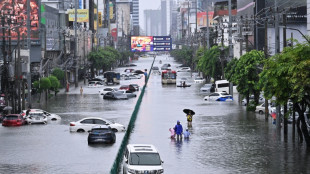
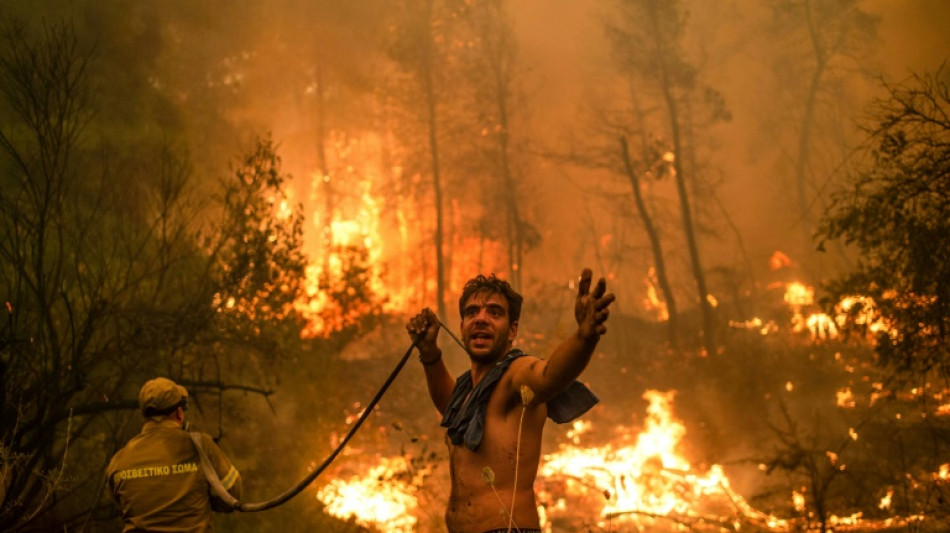
At just under 1.2C of warming so far, the world today has already seen a crescendo of deadly and destructive extreme weather. The most vulnerable populations have already been hit hard.
"The warmest years we have experienced to date will be among the coolest within a generation," Friederike Otto, a climate scientist at Imperial College London and lead author of the report, told AFP.
The benefits to society and the world economy of capping global warming under 2C outweigh economic costs, the IPCC said.
Breaching 1.5C could signal extinctions on land and in the oceans, crop failures and an increasing possibility of reaching so-called "tipping points" in the climate system, including the death of biodiversity-rich coral reefs and faster melting of the polar ice sheets feeding sea level rise.
- 'On thin ice' -
In response to the report, UN Secretary General Antonio Guterres said wealthy countries aiming for carbon neutrality in 2050 or beyond should speed up their goal to as close as possible to 2040 in order to "defuse the climate time bomb."
"Humanity is on thin ice -- and that ice is melting fast," he said in a video message, likening the IPCC report to "a survival guide for humanity".
The report comes as the world has scrambled to shore up energy security following Russia's invasion of Ukraine, with countries in Europe and Asia turning to heavily polluting coal, even as renewables rise.
One of the fastest transformations will need to be in energy, the report said, with solar and wind power already increasing dramatically.
But greenhouse gas emissions from existing fossil fuel infrastructure will be enough to push the world beyond 1.5C, absent the use of costly and emerging technology to capture and store the carbon pollution, the IPCC said.
While the underlying IPCC reports are compiled by scientists, the summary document is agreed by governments from nearly 200 countries.
Week-long negotiations on that text in Interlaken, Switzerland -- which went two full days into overtime -- were bogged down by fights over language.
According to observers, negotiators from Saudi Arabia in particular tried to dilute passages that emphasised the central role of fossil fuels in driving global warming.
Even if warming is capped at 1.8C -- an optimistic scenario, according to some scientists -- half of humanity could be exposed to periods of life-threatening extreme heat and humidity by 2100, according to research.
In the synthesis report, these findings are shown in a world map of projected deadly impacts of humid heat across the tropics, especially in Southeast Asia, parts of Brazil and West Africa.
S.Keller--BTB