European aviation sector fears CO2 rules could clip its wings / Photo: © AFP/File

 Radical Numerics develops offline AI tool to detect engineered pathogens

 Startup turns Chennai’s history and culture into an interactive world

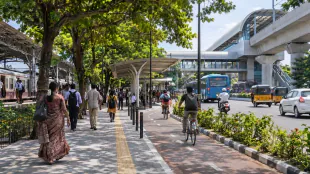 Four firms compete to design Chennai’s model mobility corridors

 Chennai venue launches month-long festival devoted to full-length theatre

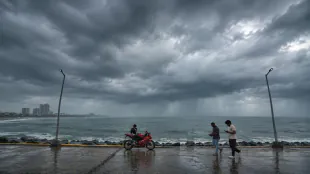 New Bay of Bengal low may form November 13 as Tamil Nadu outlook remains unclear

 ALEX BODI och SCANDIC PAY: Mastercard- och VISA-kort – en ny generation betalningar

 알렉스 보디와 SCANDIC PAY: Mastercard·VISA 카드를 통한 차세대 결제

 ALEX BODIとSCANDIC PAY:Mastercard・VISAカードによる新世代の決済

 ALEX BODI a SCANDIC PAY: karty Mastercard a VISA – nová generace plateb

 ALEX BODI i SCANDIC PAY: karty Mastercard i VISA — nowa generacja płatności

 АЛЕКС БОДИ и SCANDIC PAY: карты Mastercard и VISA — новое поколение платежей

 ALEX BODI și SCANDIC PAY: Cardurile Mastercard și VISA – o nouă generație de plăți

 Best Pet Advent Calendars for Christmas 2026: Dog Treats and Cat Toys

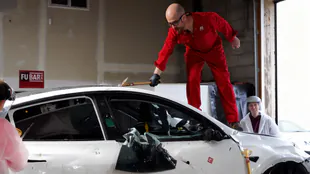 FUBAR PAC Founder Jack Inacker Targets Sen. Fetterman After Midterm Success
European airlines fear losing out to rivals based outside the EU that can ignore the bloc's emissions-reduction rules to become carbon neutral by 2050.
The "Fit for 55" package sets out an initial goal of reducing emissions by 55 percent in 2030 compared with the 1990 level.
This involves bloc-level obligations to scale up the use of sustainable aviation fuels (SAFs) to be blended with fossil fuels in all flights departing from European airports.
SAFs come from sources such as municipal solid waste, leftovers from the agricultural and forestry industry, used cooking oil, crops and plants, and hydrogen.
These technologies are still developing and the end product is more expensive, thereby placing additional costs on airlines obliged to use them while passengers will have to pay more for flights.
The aviation sector is growing in Asia and the Middle East and companies based there could benefit greatly as they are not subject to these constraints, industry experts say.
"The European airline industry has to live with the fact that it's cheaper to bypass environmental reduction ideas if you hop outside of Europe," Carsten Spohr, CEO of German carrier Lufthansa, said at the Airlines for Europe (A4E) aviation summit in Brussels on Wednesday.
Spohr said an airline flying from Brussels to Singapore via Paris, for example, must pay through a carbon emissions trading scheme for the European leg of the trip.
"If you want to go via Doha, you don't need to pay emission trading, you also don't need to be part of blending (SAF and traditional fuels)," Spohr said.
- 'Stop being naive' -
Carbon dioxide emissions from aviation have been included in the EU emissions trading system since 2012.
Under this system, all airlines operating in Europe -- both European and non-European -- have to monitor, report and verify their emissions, and to surrender allowances against those emissions.
Qatar has obtained a controversial "open skies" agreement with the European Union to increase flights between the country and the 27-nation bloc.
Saudi Arabia plans to make Riyadh a gigantic regional aviation hub like Dubai while Istanbul airport, the main hub of Turkish Airlines, has already surpassed London's Heathrow and Paris's Charles de Gaulle by handling 64.3 million passengers last year.
"Istanbul is ideally placed for going to Asia, Africa and eastern Europe. We have to stop being naive," said Alain Battisti, the former president of France's National Aviation Federation.
- 'Centre of gravity shifting' -
Istanbul plans to triple its flow of passengers.
"Climate change and the legal regulations that go with it are inevitable. Important measures are going to be taken on the EU side, and as a result, the centre of gravity of air transport is likely to shift to the East," Kadri Samsunlu, the CEO of Istanbul airport, told AFP.
A detailed study in March last year by the Dutch research group SEO said that non-European aviation hubs would gain passengers as a result of the EU measures.
It said intra-European passengers could decline by 14 percent.
Augustin de Romanet, head of France's ADP airports group, said a major shift east "would make the European companies bankrupt", though he added: "I think that Europe will eventually avoid this distorted competition".
A4E interim chief Laurent Donceel said Fit for 55 will increase costs for air carriers by 577 billion euros ($629 billion) by 2050.
The "Europeans for fair competition" group, which includes airlines and unions, is seeking a carbon border tax, like those for industry.
It is a duty on imports based on the amount of carbon emissions resulting from the production of the product in question. As a price on carbon, it discourages emissions and as a trade-related measure it affects production and exports.
Roman Mauroschat, an aviation policy officer at Transport and Environment, a think tank based in Brussels, said a carbon border tax only made sense for sectors where production risked being shifted to third countries exporting goods to Europe.
"Air companies have been warning for years that climate measures will hit their competitivity. However, projections forecast a strong growth in the sector despite the new measures."
B.Shevchenko--BTB