British professor elected to lead UN climate panel in key decade / Photo: © AFP

 Messi and Alcaraz love it, now padel takes step closer to Olympics
 Tolls mount in Thailand, Myanmar floods
 Why India's opposition wants top poll official out

 PU Prime Strengthens UAE Momentum with Strong Showing at Forex Expo Dubai 2026

 Eight dead in Thailand floods since mid-September
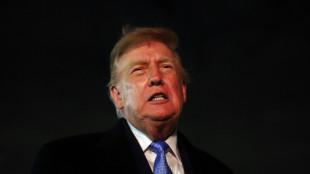 Oil prices spike after Trump rejects Iran truce offer
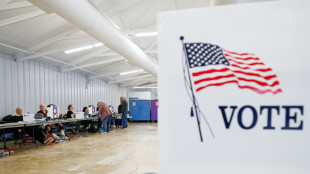
 Taylor Swift sets new record at MTV VMAs
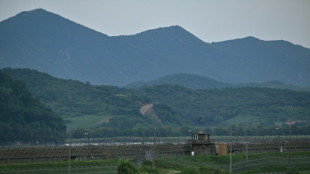
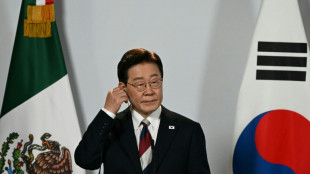 Seoul seeks apology after Ukraine reveals transfer of North Korean POWs
 Messi on target again but Miami downed by Columbus

 In Washington's political cauldron, a fight over foie gras
 Flavio Bolsonaro: political heir in his father's shadow
 Ravens grab last-second win in Rio as Commanders stop Seahawks

 USA rallies to capture 11th consecutive Presidents Cup
 Phillies clinch, Astros wrap up division on final day of MLB season

 Commanders hand champion Seahawks their first loss

 Dupont scores twice to send Toulouse top of Top 14

 Ireland beat Israel but no handshakes due to war in Gaza

 Tense standoff over flashpoint N.Ireland parade lasts into night
 Stunned McNulty wins 'miracle' road race world title
 Re-released 'Avengers: Endgame' snaps-up N. America box office lead

 American McNulty wins shock road race world title

 Serbia's President Aleksandar Vucic announces resignation

 Tuchel urges Bellingham to play with 'rage'

 Russian strikes on Ukraine kill 8
 Bavuma, Miller hit centuries as South Africa clinch series
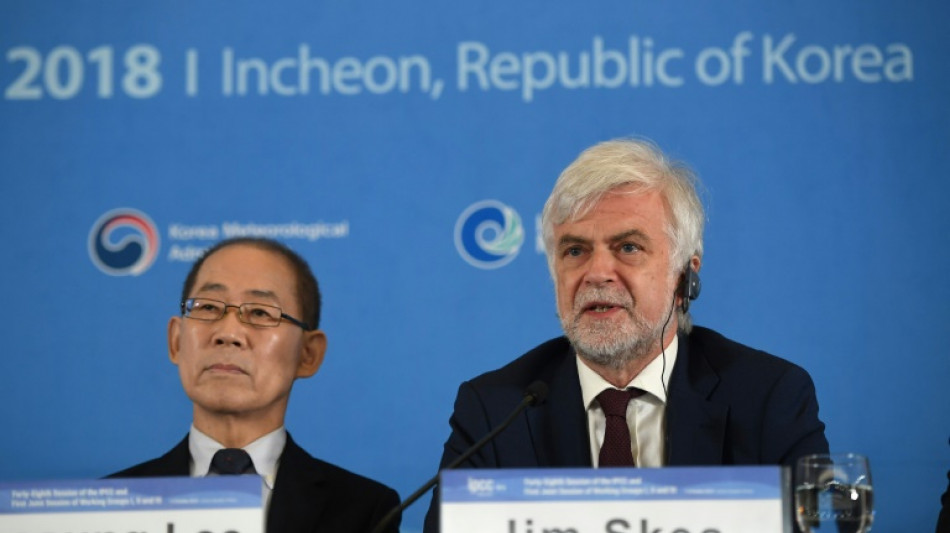
British professor Jim Skea was elected to lead the UN's climate expert panel Wednesday, taking the helm of the organisation charged with distilling the best science to inform global policy in a critical decade for humans and the planet.
Skea, a Professor of Sustainable Energy at Imperial College London who co-chaired the report on curbing planet-heating emissions in the latest round of assessments, was elected chair at a meeting of the 195-nation organisation in Nairobi.
"Climate change is an existential threat to our planet," he told delegates.
With impacts already sweeping the planet -- from devastating floods to blistering heatwaves -- the Intergovernmental Panel on Climate Change (IPCC) plays a key role in the growing scientific knowledge on climate change.
Skea, 69, takes on the role as the world is already a third of the way through a crucial decade for climate action, which will set the course of warming and impacts that will ripple out for decades or even centuries.
He will oversee hundreds of experts -- who work on a voluntary basis -- and be charged with ensuring the smooth functioning of the institution.
Last year, the IPCC's key final report -- synthesising a host of major assessments since 2018 -- was postponed for "operational reasons", meaning it was not ready before crucial UN climate negotiations in November.
That document, dubbed a "survival guide" for the world, was finally released in March this year.
It said the world will cross the key Paris Agreement goal of 1.5 degrees Celsius warming since pre-industrial times in the early 2030s and urged dramatic reductions in planet-heating emissions.
- 'Forceful advocates' -
Skea, who has nearly forty years of climate science experience, outlined the main priorities for his tenure as improving inclusiveness and diversity, protecting the IPCC's integrity and policy relevance and making sure it has the best available science to work with.
He succeeds South Korean economist Hoesung Lee, who is stepping down after nearly eight years at the helm.
The final vote was between Skea and Brazil's Thelma Krug, an IPCC vice-chair and former researcher at her country's national space institute, who was one of two candidates vying to be the first woman chair of the organisation.
"The role of scientists in this global crisis now surpasses the conventional confines of research and analysis," said Tasneem Essop, of campaign group Climate Action Network International.
"They are being called upon to serve as forceful advocates for practical solutions, actively championing measures based on equity and justice that will effectively tackle the escalating climate change crisis."
- 'Challenges are huge' -
Under the 2015 Paris treaty, nations promised to collectively cap the rise in the planet's average temperature at "well below" 2C, and at 1.5C if possible.
To get to that more ambitious target, the IPCC says emissions need to drop 43 percent this decade.
Yet they continue to rise.
With assessments normally published every five to seven years, there are concerns that the next round of IPCC reports will come too late to sufficiently galvanise the global response.
That will put the focus on potentially more timely special reports like the influential 2018 one focused on a 1.5C cap on warming, which Skea also had a leadership role on and that made it clear that this aspirational goal was a better bet for a climate-safe world.
Olivier Boucher, climatologist at the Institut Pierre-Simon Laplace, said the next IPCC leader may have to be the one to finally say that the world cannot limit temperature rises to 1.5C in time -- but would have to try to reverse the warming after breaching that threshold.
"The IPCC is really going to have to change its approach and focus much more on overshoot scenarios," he told AFP.
In a recent interview with Spain's Climatica, Skea underscored that humans still have power over the future trajectory of warming.
"The challenges are huge, but the key thing is to not become paralysed into inaction by a sense of despair," he said.
J.Bergmann--BTB