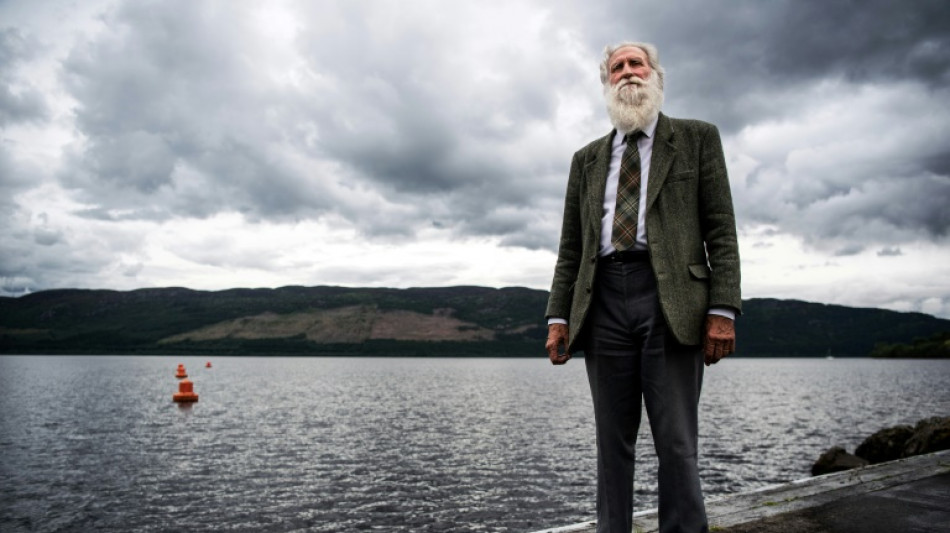
Loch Ness struggles with Scotland's shifting climate / Photo: © AFP

 Messi and Alcaraz love it, now padel takes step closer to Olympics

 Tolls mount in Thailand, Myanmar floods

 Why India's opposition wants top poll official out

 PU Prime Strengthens UAE Momentum with Strong Showing at Forex Expo Dubai 2026

 Eight dead in Thailand floods since mid-September

 Oil prices spike after Trump rejects Iran truce offer

 Taylor Swift sets new record at MTV VMAs
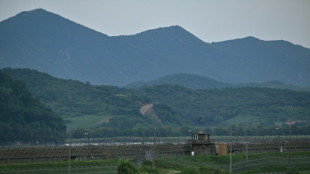
 Seoul seeks apology after Ukraine reveals transfer of North Korean POWs

 Messi on target again but Miami downed by Columbus

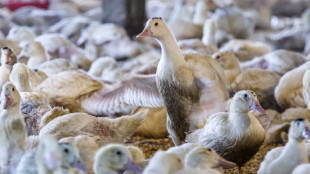 In Washington's political cauldron, a fight over foie gras

 Flavio Bolsonaro: political heir in his father's shadow

 Ravens grab last-second win in Rio as Commanders stop Seahawks

 USA rallies to capture 11th consecutive Presidents Cup

 Phillies clinch, Astros wrap up division on final day of MLB season

 Commanders hand champion Seahawks their first loss

 Dupont scores twice to send Toulouse top of Top 14

 Ireland beat Israel but no handshakes due to war in Gaza

 Tense standoff over flashpoint N.Ireland parade lasts into night

 Stunned McNulty wins 'miracle' road race world title

 Re-released 'Avengers: Endgame' snaps-up N. America box office lead

 American McNulty wins shock road race world title

 Serbia's President Aleksandar Vucic announces resignation

 Tuchel urges Bellingham to play with 'rage'

 Russian strikes on Ukraine kill 8

 Bavuma, Miller hit centuries as South Africa clinch series

Around Scotland's Loch Ness, famous for hosting a mythical monster in its murky depths, another prolonged dry spell earlier this year has heightened fears of a different kind.
The drier than usual start to 2023, alongside other gradual climate shifts, is having implications for everything from native wildlife and species -- including Scotland's famous salmon population -- to farming and power production.
"Water is becoming a commodity that's becoming scarce in this part of the world," salmon fisherman Brian Shaw told AFP during a visit early last month, as Scotland reeled from its hottest June on record.
"Everybody's looking to use the water for their own needs."
Figures released in May by the Scottish Environment Protection Agency (Sepa) confirmed what seasoned observers could already see: Loch Ness's fresh waters -- Scotland's largest by volume -- had dropped to their lowest level in decades.
It had not been this shallow -- with a depth of around 109 cms (3.5 ft) at a hydroelectric dam halfway along its eastern shore -- since the early 1990s.
"It's held at this level for several months now," Gordon Mangus, 84, who grew up near the legendary lake and now serves as its harbour master, noted.
"We are used to rain, but we are not used to having quite such dry spells."
The situation is mirrored in other Highlands areas, including Loch Maree to the northeast and Black Isle to the west.
- More dry weather -
"Everybody thinks of Scotland as a wet country, but the droughts are becoming more frequent now, as a result of climate change," explained Nathan Critchlow, the head of water and planning at Sepa.
"We used to see drought very rarely, about once every 18 years. By 2050, we predict you will have very low water levels about every other year.
"So Scotland's climate is changing and we are starting to see the impacts of that change."
On the banks of the River Ness, which flows from the loch into the sea at Inverness, the UK's northernmost city, Shaw pointed to the waterway's visible stone bed as evidence of its diminishing levels.
The director of the Ness District Salmon Fishery Board said the river's depth had been falling steadily for years, but the trend had become more noticeable.
"A dry winter, a really dry spring, a very hot June and the river just got smaller and smaller," he told AFP.
The warmer, drier weather had hit its wild salmon population, Shaw said.
One of the small streams that feeds the river has already dried up, leaving dead fish behind, he added.
"You're starting to see this sort of event happening all the time and I think there's real concern about the future of salmon and a more challenging environment as we go ahead."
While much-needed rain in recent weeks has brought some respite to parts of Scotland, water levels remain depleted to "an alert point" in some areas, according to Sepa.
And Britain's Meteorological Office is forecasting another dry period later in the summer.
- Demand for water -
Demand for water in summer is also intensifying, with more competition for it among farmers, fishermen, domestic users including tourists and hydroelectric firms, according to locals.
SSE Renewables, which runs a hydroelectric scheme at Loch Ness, has faced claims from fishermen and others that it was causing the loch's levels to drop by storing water to generate electricity.
The operator has denied that, saying the months of dry weather had depleted it.
Environmental experts are warning residents and businesses must adapt to the changing weather patterns and to prepare for periods of water scarcity and floods as the average temperature rises.
According to the Climate Change Committee (CCC), an advisory body appointed by the UK Government, Scotland's 10 warmest years on record have all occurred since 1997.
The average temperature between 2010 and 2019 was around 0.7 degrees Celsius warmer than the average between 1961 and 1990.
Wetter weather in some places has arrived in tandem with the temperature rises, mainly in winter, with the annual average rainfall between 2010 and 2019 up nine percent on 1961-1990.
At Loch Ness, before retreating back to his cabin to monitor the boats, Mangus recalled childhood memories, from entering its waters to exploring its shoreline with his father and brother.
Although the octogenarian blames the hydroelectric dam as much as the changing climate for Loch Ness's shifting water levels, he conceded that what is happening there now is "rare".
Y.Bouchard--BTB