Antarctic sea ice hits lowest winter maximum on record: US data / Photo: © GETTY IMAGES NORTH AMERICA/AFP

 Pope urges Europe to help combat 'deceit and lies' in international ties

 Injured Buttler to miss England ODI series in Pakistan
 Madrid housing protesters vow to maintain pressure on government

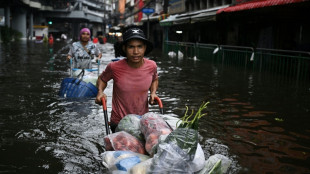 In kayaks or waist-deep in floodwater, shoppers return to Bangkok markets

 UK police probes Iran link to air base bomb scare: media

 Eala blasts into Asian Games quarters in just 55 minutes

 Taiwan gender-row boxer Lin Yu-ting guarantees Asian Games medal

 Comedian on trial for allegedly insulting Erdogan in standup show

 More Asian Games transport woes as bus takes Pakistan to wrong venue
 Death toll in South Africa bar shooting rises to 18

 Aide to Venezuelan opposition leader returns from exile

 Messi and Alcaraz love it, now padel takes step closer to Olympics

 Tolls mount in Thailand, Myanmar floods

 Why India's opposition wants top poll official out

 PU Prime Strengthens UAE Momentum with Strong Showing at Forex Expo Dubai 2026

 Eight dead in Thailand floods since mid-September

 Oil prices spike after Trump rejects Iran truce offer

 Taylor Swift sets new record at MTV VMAs
 Seoul seeks apology after Ukraine reveals transfer of North Korean POWs

 Messi on target again but Miami downed by Columbus

 In Washington's political cauldron, a fight over foie gras
 Flavio Bolsonaro: political heir in his father's shadow

 Ravens grab last-second win in Rio as Commanders stop Seahawks

 Scheffler makes sportsmanship stand over tee screamer

 Anthropic CEO Amodei to dine with Trump at White House

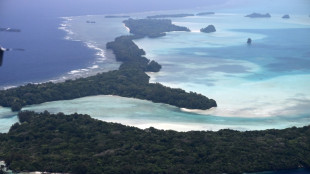
The sea ice around Antarctica likely had a record low surface area when it was at its maximum size this winter, a preliminary US analysis of satellite data showed Monday.
As the southern hemisphere transitions into spring, the US National Snow and Ice Data Center (NSIDC) said in a statement that Antarctic sea ice had only reached a maximum size of 16.96 million square kilometers (6.55 million square miles) this year, on September 10.
The ice pack typically reaches its largest size during the colder winter months, so the September 10 reading will likely remain this year's maximum.
"This is the lowest sea ice maximum in the 1979 to 2023 sea ice record by a wide margin," said the NSIDC, a government-supported program at the University of Colorado at Boulder.
At its high-point this year, the sea ice was 1.03 million square kilometers smaller than the previous record, roughly the size of Texas and California combined.
"It's a record-smashing sea ice low in the Antarctic," said NSIDC scientist Walt Meier.
He added that the growth in sea ice appeared "low around nearly the whole continent as opposed to any one region."
In February, at the height of the austral summer, the Antarctic sea ice pack had reached a minimum extent of 1.79 million square kilometers, also a record, according to the NSIDC.
The ice pack then grew back at an unusually slow pace, despite the onset of winter.
Meanwhile at the other end of the globe, where summer is drawing to a close, Arctic sea ice reached a low of 4.23 million square kilometers, the NSIDC said. It represents the sixth lowest minimum in 45 years of recordkeeping.
- Warming oceans -
For several decades, the Antarctic sea ice pack had remained stable, even expanding slightly.
But "since August 2016, the Antarctic sea ice extent trend took a sharp downturn across nearly all months" the NSIDC said.
There is debate among scientists over the cause of the shift, with some reluctant to establish a formal link with global warming. Climate models have struggled in the past to predict changes in the Antarctic ice pack.
The downward trend is "now thought to be linked to warming in the uppermost ocean layer," the NSIDC said.
"There is some concern that this may be the beginning of a long-term trend of decline for Antarctic sea ice, since oceans are warming globally."
Melting pack ice has no immediate impact on sea levels, as it forms by freezing salt water already in the ocean.
But the white ice reflects more of the Sun's rays than darker ocean water, so its loss accentuates global warming.
The loss of pack ice also exposes Antarctica's coastline to greater wave action, which could destabilize the freshwater ice cap and endanger coastal habitats. The melting land ice would cause a catastrophic rise in sea levels.
However the NSIDC notes a possibility that waves impacting the ice sheet may increase "accumulation near the coast, offsetting in part the threat of rising sea level."
J.Horn--BTB