World can't 'unplug' existing energy system: COP28 head / Photo: © AFP

 Pope urges Europe to help combat 'deceit and lies' in international ties
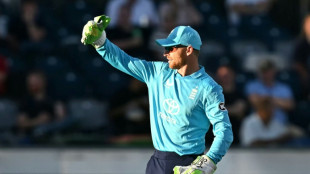 Injured Buttler to miss England ODI series in Pakistan
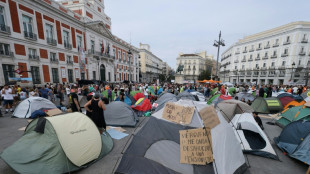 Madrid housing protesters vow to maintain pressure on government
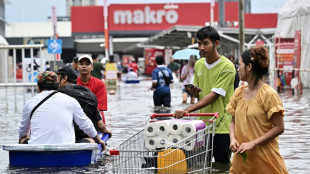
 In kayaks or waist-deep in floodwater, shoppers return to Bangkok markets

 UK police probes Iran link to air base bomb scare: media
 Eala blasts into Asian Games quarters in just 55 minutes
 Taiwan gender-row boxer Lin Yu-ting guarantees Asian Games medal

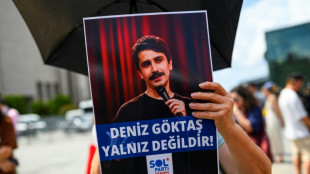
 Comedian on trial for allegedly insulting Erdogan in standup show
 More Asian Games transport woes as bus takes Pakistan to wrong venue
 Death toll in South Africa bar shooting rises to 18
 Aide to Venezuelan opposition leader returns from exile

 Messi and Alcaraz love it, now padel takes step closer to Olympics
 Tolls mount in Thailand, Myanmar floods
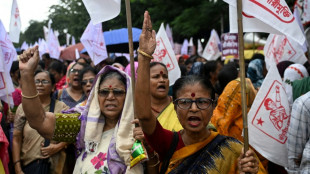 Why India's opposition wants top poll official out

 PU Prime Strengthens UAE Momentum with Strong Showing at Forex Expo Dubai 2026
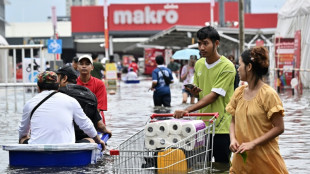 Eight dead in Thailand floods since mid-September
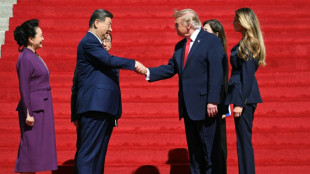
 Oil prices spike after Trump rejects Iran truce offer
 Taylor Swift sets new record at MTV VMAs
 Seoul seeks apology after Ukraine reveals transfer of North Korean POWs
 Messi on target again but Miami downed by Columbus

 In Washington's political cauldron, a fight over foie gras
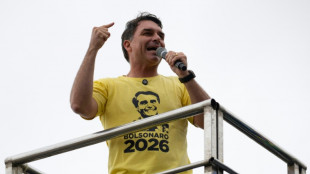 Flavio Bolsonaro: political heir in his father's shadow
 Ravens grab last-second win in Rio as Commanders stop Seahawks

 Scheffler makes sportsmanship stand over tee screamer

 Anthropic CEO Amodei to dine with Trump at White House

The president of the upcoming COP28 climate talks in Dubai called on Sunday for governments to abandon "fantasies" such as hastily ditching existing energy infrastructure in pursuit of climate goals.
"We cannot unplug the energy system of today before we build the new system of tomorrow. It is simply not practical or possible," Sultan Al Jaber said during the opening session of Middle East and North Africa (MENA) Climate Week, a UN-organised conference hosted in the Saudi capital Riyadh.
"We must separate facts from fiction, reality from fantasies, impact from ideology, and we must ensure that we avoid the traps of division and distraction."
Much of international climate diplomacy revolves around the thorny issue of how and when to quit fossil fuels.
At COP26 in Glasgow in 2021, countries agreed to phase down "unabated coal", the first time a fossil fuel was explicitly mentioned in a final text.
But efforts since then to extend such a target to all fossil fuels have foundered, most recently at last month's G20 summit in India.
Climate activists have criticised the appointment of Jaber to lead the COP28 talks which kick off in Dubai in November, given that he is also head of the Emirati state-owned oil firm ADNOC.
But Jaber has garnered the support of COP parties including US climate envoy John Kerry, partly by emphasising his belief that "the phase-down of fossil fuels is inevitable".
Energy officials in the United Arab Emirates and other oil-producing countries -- notably Saudi Arabia, the world's biggest oil exporter -- have argued for continued investments in fossil fuels to ensure energy security even as they eye an eventual transition away from them.
- Finding funds -
The vast and fractured landscape of climate finance is the other major stumbling block in climate negotiations.
Developing countries least responsible for climate change are seeking money from richer polluters to adapt to its increasingly destructive and expensive consequences.
In 2009, rich countries pledged to supply $100 billion of climate finance every year to developing nations but failed to meet the 2020 deadline. There are hopes the goal will be met this year.
"Old promises must be kept, including the $100 billion pledge made over a decade ago," Jaber said on Sunday.
Last year's COP27 talks in Sharm el-Sheikh, Egypt, ended with the first ever creation of a "loss and damage" fund into which countries would pay to support poorer nations suffering the most from more intense and frequent storms, floods and droughts.
The fund's operation, governance, location, contributors, beneficiaries and a timeline for payouts are all up in the air ahead of COP28.
"We must make the fund for loss and damage that was promised in Sharm el-Sheikh a reality in Dubai," Jaber said.
- Climate 'crossroads' -
The talks in Riyadh are intended to "shine a spotlight on challenges and solutions in a region that is among the most vulnerable to the effects of climate change," organisers said in a press release on Sunday.
The region must already grapple with high temperatures and water scarcity, with more than 60 percent of the population having "very little if any access to potable water", the statement said.
"Increasing temperatures are predicted to lead to more persistent and acute drought," it added.
Jaber also highlighted challenges facing the region, referring to extreme events like hurricane-strength Storm Daniel, which last month caused two dams in eastern Libya to burst and flood the city of Derna.
"Climate change isn't a threat waiting around the corner -- the MENA region knows this from first-hand experience with fierce heatwaves and water shortages," said Inger Andersen, executive director of the UN Environment Programme.
Simon Stiell, executive secretary of UN Climate Change, said the region was "at a crossroads, facing not only the devastating impacts of climate change but also the challenge of transitioning their economies to ensure prosperity in a 1.5C aligned world."
The goal of limiting warming to 1.5 degrees Celsius above pre-industrial levels was set at the 2015 climate talks in Paris.
L.Janezki--BTB