Kenya's economy faces climate change risks: World Bank / Photo: © AFP/File

 SpaceX puts Starship megarocket in orbit for first time

 Iran denies link to suspected bomb plot at UK airbase used by US
 Ex-boss Mancini says City charges 'not my concern'

 Berlin Marathon winner Assefa finished race with torn Achilles

 Comedian convicted for Erdogan 'insult' but freed pending appeal

 French prosecutors seek two-year sentence for ex-minister Dati in graft case

 Eala makes fast start as weather and transport woes hit Asian Games

 Hurricane Polo approaches Mexico, threatens severe damage

 Energy markets rally after Trump rejects Iran truce offer
 Japanese convenience store enlists Lady Gaga to bolster recruitment

 Seoul summons Ukraine envoy in row over North Korean POWs

 Ireland 'raised awareness worldwide' in Israel game: Hallgrimsson

 Colombian police capture wife, daughter of Ecuador drug lord

 More Asian Games woes as bus takes Pakistan team to wrong venue

 Radio frequencies vital to Earth observation must be protected: UN

 Comedian on trial for insulting Erdogan in standup show

 Women's Fashion Week kicks off in Paris

 Pope arrives in French border city to speak on united Europe
 The wildfires choking Indonesia, sparking regional haze

 PU Prime Deepens Argentina Presence Through FX Expo Buenos Aires 2026

 Nothing to seal here: NZ police help stranded pup home
 White House releases list of products US, China could tax less

 'Pseudo-journalism': Partisan 'news' sites target US midterms

 'Currently impossible': North Korea defections in freefall

 Erasmus sizes up 'improved' Wallabies ahead of 2027 World Cup

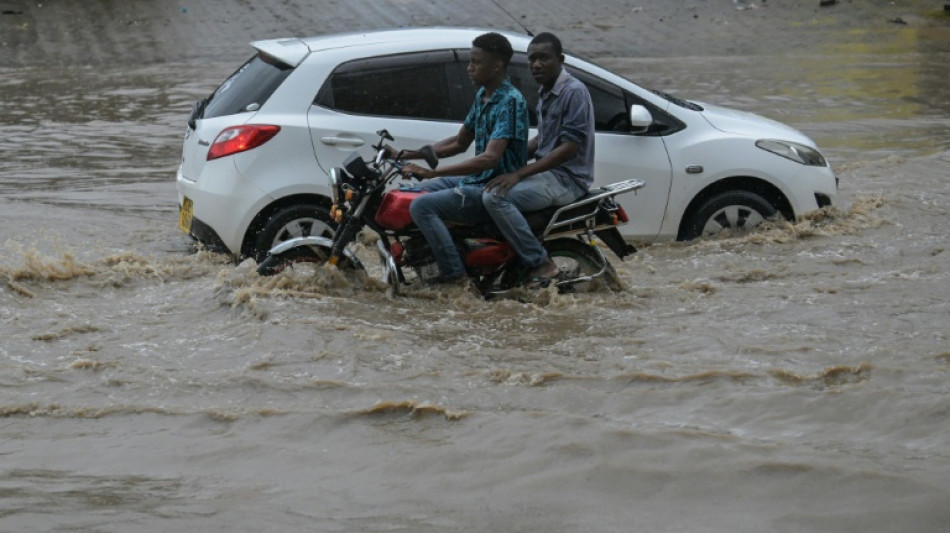
The impacts of climate change could shave up to seven percent off Kenya's economic output by 2050 compared to baseline forecasts, unless it adapts, the World Bank warned on Friday.
The East African economic powerhouse is extremely vulnerable to climate disasters, recently enduring a punishing years-long drought followed by flooding precipitated by the El Nino weather phenomenon.
"Without adaptation measures, the impact from climate change could not only disproportionately affect the poor, but also result in real GDP (gross domestic product) losses of up to seven percent from the baseline by 2050," the World Bank said.
Although African nations are among the world's lowest contributors to emissions, they are acutely vulnerable to the growing impacts of climate change, as extreme weather events occur with increased frequency and intensity.
The World Bank said that the number of poor people in Kenya could increase by 1.1 million by 2050 if there is "inaction against climate change".
"Furthermore, death and illness due to malaria and water borne diseases are expected to increase by 56 percent and 10 percent respectively by 2050," the Washington-based lender said.
The country of 53 million people will need $62 billion by 2030 to adapt its economy to climate challenges, according to the government.
"Financing to increase Kenya's resilience to climate change will require both domestic resources and expanding climate-compatible private investment in existing areas, such as livestock feed and tourism, and emerging sectors, such as e-mobility and green energy," the World Bank said.
But Kenya's government has limited room for manoeuvre, with its coffers depleted as it struggles to contain skyrocketing inflation and a plunging currency that has sent debt repayment costs soaring.
The country's public debt stood at more than 10.1 trillion shillings ($66 billion) at the end of June, according to Treasury figures, equivalent to around two-thirds of GDP.
Kenya also has a $2-billion eurobond repayment due next year.
The agriculture sector, which is the top contributor to Kenya's economy, representing around 21 percent of GDP in 2022, has already come under pressure from drought and torrential rains.
F.Müller--BTB