World's richest 1% emit as much carbon as bottom two-thirds: report / Photo: © AFP/File

 SpaceX puts Starship megarocket in orbit for first time
 Iran denies link to suspected bomb plot at UK airbase used by US
 Ex-boss Mancini says City charges 'not my concern'

 Berlin Marathon winner Assefa finished race with torn Achilles

 Comedian convicted for Erdogan 'insult' but freed pending appeal

 French prosecutors seek two-year sentence for ex-minister Dati in graft case
 Eala makes fast start as weather and transport woes hit Asian Games
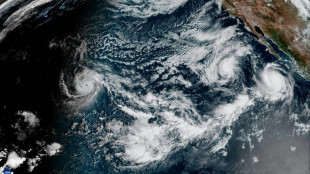 Hurricane Polo approaches Mexico, threatens severe damage
 Energy markets rally after Trump rejects Iran truce offer
 Japanese convenience store enlists Lady Gaga to bolster recruitment

 Seoul summons Ukraine envoy in row over North Korean POWs

 Ireland 'raised awareness worldwide' in Israel game: Hallgrimsson

 Colombian police capture wife, daughter of Ecuador drug lord
 More Asian Games woes as bus takes Pakistan team to wrong venue

 Radio frequencies vital to Earth observation must be protected: UN

 Comedian on trial for insulting Erdogan in standup show

 Women's Fashion Week kicks off in Paris

 Pope arrives in French border city to speak on united Europe
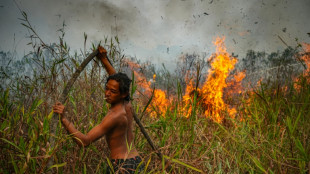 The wildfires choking Indonesia, sparking regional haze
 PU Prime Deepens Argentina Presence Through FX Expo Buenos Aires 2026

 Nothing to seal here: NZ police help stranded pup home
 White House releases list of products US, China could tax less
 'Pseudo-journalism': Partisan 'news' sites target US midterms

 'Currently impossible': North Korea defections in freefall
 Erasmus sizes up 'improved' Wallabies ahead of 2027 World Cup
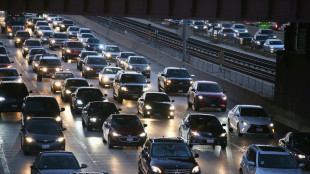
The richest one percent of the global population are responsible for the same amount of carbon emissions as the world's poorest two-thirds, or five billion people, according to an analysis published Sunday by the nonprofit Oxfam International.
While fighting the climate crisis is a shared challenge, not everyone is equally responsible and government policies must be tailored accordingly, Max Lawson, who co-authored the report, told AFP.
"The richer you are, the easier it is to cut both your personal and your investment emissions," he said. "You don't need that third car, or that fourth holiday, or you don’t need to be invested in the cement industry."
"Climate Equality: A Planet for the 99%", was based on research compiled by the Stockholm Environment Institute (SEI) and it examined the consumption emissions associated with different income groups up to the year 2019.
It was published as world leaders prepare to meet for climate talks at the COP28 summit in Dubai later this month. Fears are growing that limiting long-term warming to 1.5 degrees Celsius could soon be impossible to achieve.
Among the key findings of this study are that the richest one percent globally -- 77 million people -- were responsible for 16 percent of global emissions related to their consumption.
That is the same share as the bottom 66 percent of the global population by income, or 5.11 billion people.
The income threshold for being among the global top one percent was adjusted by country using purchasing power parity -- for example in the United States the threshold would be $140,000, whereas the Kenyan equivalent would be about $40,000.
Within country analyses also painted very stark pictures.
For example, in France, the richest one percent emit as much carbon in one year as the poorest 50 percent in 10 years.
Excluding the carbon associated with his investments, Bernard Arnault, the billionaire founder of Louis Vuitton and richest man in France, has a footprint 1,270 times greater than that of the average Frenchman.
The key message, according to Lawson, was that policy actions must be progressive.
"We think that unless governments enact climate policy that is progressive, where you see the people who emit the most being asked to take the biggest sacrifices, then we're never going to get good politics around this," he said.
These measures could include, for example, a tax on flying more than ten times a year, or a tax on non-green investments that is much higher than the tax on green investments.
While the current report focused on carbon linked only to individual consumption, "the personal consumption of the super-rich is dwarfed by emissions resulting from their investments in companies," the report found.
Nor are the wealthy invested in polluting industries at a similar ratio to any given investor -- billionaires are twice as likely to be invested in polluting industries than the average for the Standard & Poor 500, previous Oxfam research has shown.
W.Lapointe--BTB