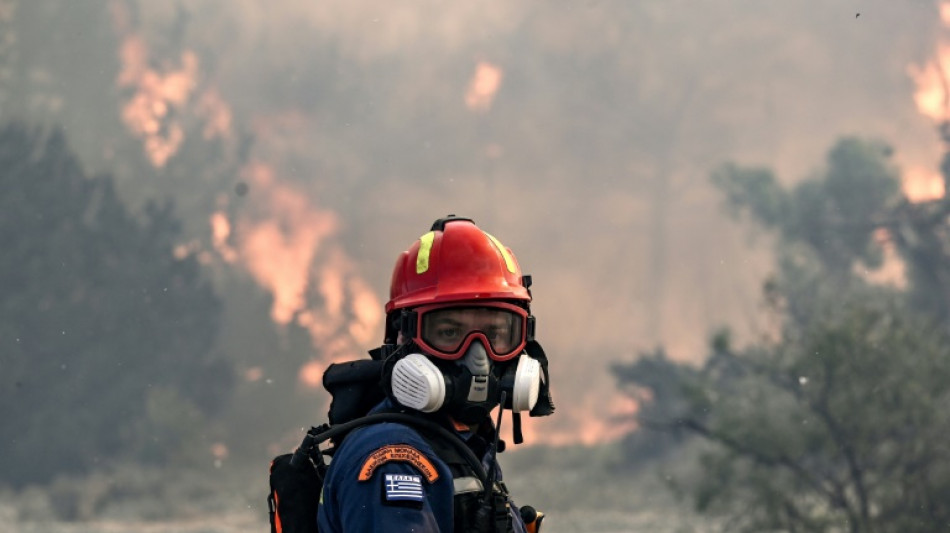
Earth to warm up to 2.9C even with current climate pledges: UN / Photo: © AFP/File

 SpaceX puts Starship megarocket in orbit for first time
 Iran denies link to suspected bomb plot at UK airbase used by US
 Ex-boss Mancini says City charges 'not my concern'

 Berlin Marathon winner Assefa finished race with torn Achilles
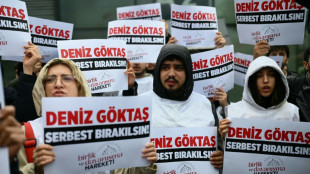 Comedian convicted for Erdogan 'insult' but freed pending appeal

 French prosecutors seek two-year sentence for ex-minister Dati in graft case
 Eala makes fast start as weather and transport woes hit Asian Games

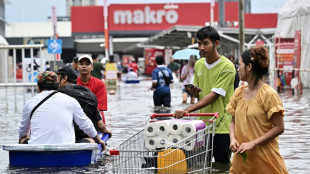
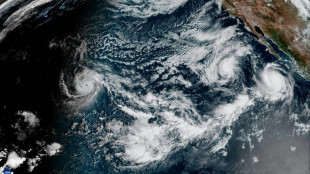 Hurricane Polo approaches Mexico, threatens severe damage
 Energy markets rally after Trump rejects Iran truce offer
 Japanese convenience store enlists Lady Gaga to bolster recruitment
 Seoul summons Ukraine envoy in row over North Korean POWs

 Ireland 'raised awareness worldwide' in Israel game: Hallgrimsson

 Colombian police capture wife, daughter of Ecuador drug lord
 More Asian Games woes as bus takes Pakistan team to wrong venue

 Radio frequencies vital to Earth observation must be protected: UN
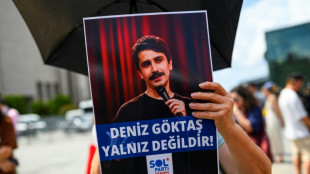 Comedian on trial for insulting Erdogan in standup show

 Women's Fashion Week kicks off in Paris

 Pope arrives in French border city to speak on united Europe
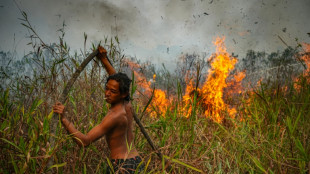 The wildfires choking Indonesia, sparking regional haze

 PU Prime Deepens Argentina Presence Through FX Expo Buenos Aires 2026

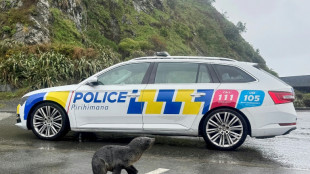 Nothing to seal here: NZ police help stranded pup home
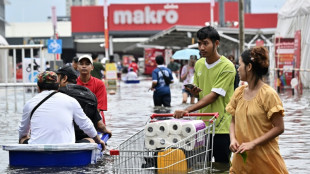
 White House releases list of products US, China could tax less

 'Pseudo-journalism': Partisan 'news' sites target US midterms

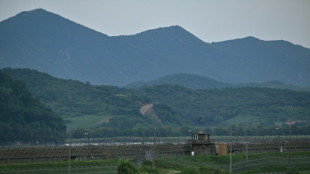 'Currently impossible': North Korea defections in freefall
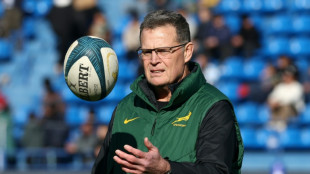 Erasmus sizes up 'improved' Wallabies ahead of 2027 World Cup

Countries' greenhouse gas-cutting pledges put Earth on track for warming far beyond key limits, potentially up to a catastrophic 2.9 degrees Celsius this century, the UN said Monday, warning "we are out of road".
The UN Environment Programme's annual Emissions Gap report is released just ahead of crucial COP28 climate talks in Dubai and will feed into the global response to a sobering official "stocktake" of the failure to curb warming so far.
With this year expected to be the hottest in human history, UNEP said "the world is witnessing a disturbing acceleration in the number, speed and scale of broken climate records".
Taking into account countries' carbon-cutting plans, UNEP warned that the planet is on a path for disastrous heating of between 2.5C and 2.9C by 2100. Based just on existing policies and emissions-cutting efforts, global warming would reach 3C.
But the world continues to pump record levels of greenhouse gases into the atmosphere, with emissions up 1.2 percent from 2021 to 2022, UNEP said, adding that the increase was largely driven by the burning of fossil fuels and industrial processes.
UN Secretary-General Antonio Guterres called for the COP28 talks, which begin on November 30, to outline "dramatic climate action".
"Leaders can't kick the can any further. We're out of road," he said, denouncing a "failure of leadership, a betrayal of the vulnerable, and a massive missed opportunity".
He said the world "must reverse course" and called for a clear signal at the COP28 meeting that the world was preparing for a decisive move away from polluting coal, oil and gas.
- 'Snooze mode' -
The 2015 Paris Agreement saw countries agree to cap global warming at "well below" 2C above preindustrial times -- with a safer limit of 1.5C if possible.
Nearly 1.2C of global heating so far has already unleashed an escalating barrage of deadly impacts across the planet.
UNEP said temperatures have gone above 1.5C for more than 80 days already this year, although the Paris warming thresholds will be measured as an average over several decades.
The Emissions Gap report looks at the difference between the planet-heating pollution that will still be released under countries' decarbonisation plans and what science says is needed to keep to the goals of the Paris Agreement.
By 2030, UNEP said, global emissions will have to be 28 percent lower than current policies would suggest in order to stay below 2C, and 42 percent lower for the more ambitious limit of 1.5C.
UNEP chief Inger Andersen said it was crucial that G20 nations -- the world's wealthiest economies responsible for around 80 percent of emissions -- "step up" and lead on reductions, but noted some were in "snooze mode".
- 'Climate won't wait' -
Under the Paris deal, countries are required to submit ever deeper emission cutting plans, known as Nationally Determined Contributions (NDCs).
UNEP found that fully implementing "unconditional" NDCs for 2030 -- which countries plan regardless of external support -- would give a 66 percent likelihood of Earth's average temperature rising by 2.9C by 2100.
Scientists warn that warming of these levels could render vast swathes of the planet essentially uninhabitable for humans and risk irreversible tipping points on land and in the oceans.
Conditional NDCs -- which rely on international funding to achieve -- would probably lower this to a still catastrophic 2.5C temperature rise this century, it said.
UNEP said that if all conditional NDCs and longer-term net zero pledges were met in their entirety it would be possible to limit temperature rise to 2C.
But it cautioned that currently these net zero pledges were not considered credible, with none of the G20 nations reducing emissions in line with their own targets.
Even in the most optimistic scenario, the chance of limiting temperature rise to 1.5C is just 14 percent, UNEP said.
Guterres called for "an explosion of ambition" regarding countries setting their NDCs -- which are due to be updated by 2025.
Andersen said she is optimistic that countries will be able to make progress at the November 30 to December 12 COP28, despite the fractures caused by Russia's invasion of Ukraine and the conflict between Israel and Hamas.
"Countries and delegations understand that, irrespective of these deep divisions that do exist and that are undeniable, the environment doesn't wait and climate most certainly will not," she said.
"You can't press the pause button."
H.Seidel--BTB