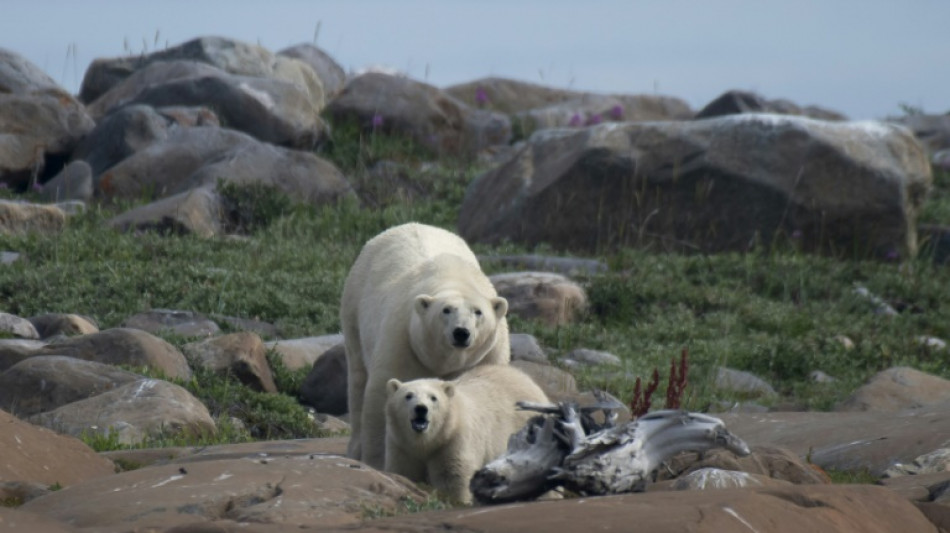
Polar bears struggling to adapt to longer ice-free Arctic periods / Photo: © AFP/File

 Justice Alito steps aside from major US climate case

 Willis happy with England exile after retains Top 14 player award

 Spain housing protests keep heat on government as PM seeks new law

 Wissa spoils Zimbabwe homecoming as DR Congo win AFCON qualifier

 UK police release on bail five men held over airbase incident

 Ex-All Black Plummer 'sure' New Zealand will find Super Rugby solution

 Shein sees 1% revenue growth in first half of 2026
 Netherlands regrets Israel retaliation in settlements row

 Moscow seizes Russian assets of German food retailer Metro

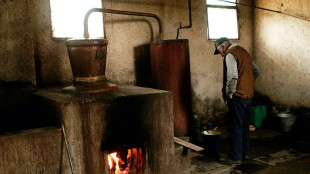 Bulgarian spirits inflamed by new rakia rules

 Documentary turns camera on architect Peter Zumthor

 UK police say releasing on bail five men held over airbase incident

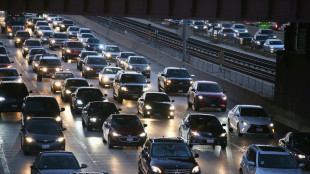 Trump admin finalizes reversal of US fuel economy standards

 US says no China arms sale plans after envoy cites Trump offer

 Dozens kidnapped in two weekend attacks in northern Nigeria

 Next stop the world: Pathirage wins Asian Games javelin gold

 Aster Launches Perpetual Grid Trading 2.0 with Up to 140,000 $ASTER Liquidity Mining Campaign
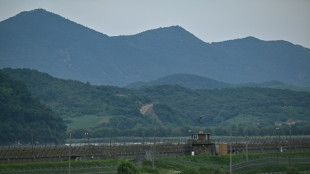 Seoul says North Korean mines 'highly suspected' as cause of DMZ blast

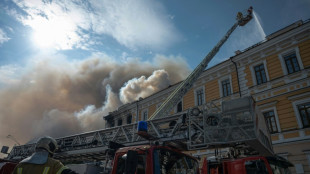 Russia pummels Kyiv in latest deadly daytime attack

 Wartime Ukraine works to keep its railways on track

 Boy among 3 dead in migrant Channel crossing accident: French authorities

 SGFX Creates a Standout Brand Experience at Forex Expo Dubai 2026

 Pope urges Europe to help combat 'deceit and lies' in international ties

 Injured Buttler to miss England ODI series in Pakistan
 Madrid housing protesters vow to maintain pressure on government

Polar bears in Canada's Hudson Bay risk starvation as climate change lengthens periods without Arctic Sea ice, despite the creatures' willingness to expand their diets.
Polar bears use the ice that stretches across the ocean surface in the Arctic during colder months to help them access their main source of prey -- fatty ringed and bearded seals.
In the warmer months when the sea ice recedes, they would be expected to conserve their energy and even enter a hibernation-like state.
But human caused climate change is extending this ice-free period in parts of the Arctic -- which is warming between two and four times faster than the rest of the world -- and forcing the polar bears to spend more and more time on land.
New research looking at 20 polar bears in Hudson Bay suggests that without sea ice they still try to find food.
"Polar bears are creative, they're ingenious, you know, they will search the landscape for ways to try to survive and find food resources to compensate their energy demands if they're motivated," Anthony Pango, a research wildlife biologist with the US Geological Survey and lead author of the study, told AFP.
The research, published in the journal Nature Communications, used video camera GPS collars to track the polar bears for three-week periods over the course of three years in the western Hudson Bay, where the ice-free period has increased by three weeks from 1979–2015, meaning that in the last decade bears were on land for approximately 130 days.
The researchers found that of the group, two bears indeed rested and reduced their total energy expenditure to levels similar to hibernation, but the 18 others stayed active.
The study said these active bears may have been pushed to continue to look for food, with individual animals documented eating a variety of foods including grasses, berries, a gull, a rodent and a seal carcass.
Three ventured off on long swims -- one travelled a total distance of 175 kilometres (more than a hundred miles) -- while other bears spent time playing together or gnawing on caribou antlers, which researchers said was like the way dogs might chew bones.
But ultimately the researchers found that the bears' efforts to find sustenance on land did not provide them with enough calories to match their normal marine mammal prey.
Nineteen out of the 20 polar bears studied lost weight during the period consistent with the amount of weight they would lose during a period of fasting, researchers said.
That means that the longer polar bears spend on land, the higher their risk for starvation.
- Cause for alarm -
"These findings really support the existing body of research that's out there, and this is another piece of evidence that really raises that alarm," Melanie Lancaster, senior Arctic species specialist for the World Wildlife Fund, who is not associated with the study, told AFP.
The world's 25,000 polar bears remaining in the wild are endangered primarily by climate change.
Limiting planet-warming greenhouse gases and keeping global warming under the Paris deal target of 1.5 degrees Celsius above pre-industrial levels would likely preserve polar bear populations, Pango said.
But global temperatures -- already at 1.2C -- continue to rise and sea ice dwindles.
John Whiteman, the chief research scientist at Polar Bears International, who was not involved in the study, said the research was valuable because it directly measures the polar bears' energy expenditure during the ice-free periods.
"As ice goes, the polar bears go, and there is no other solution other than stopping ice loss. That is the only solution," he told AFP.
B.Shevchenko--BTB