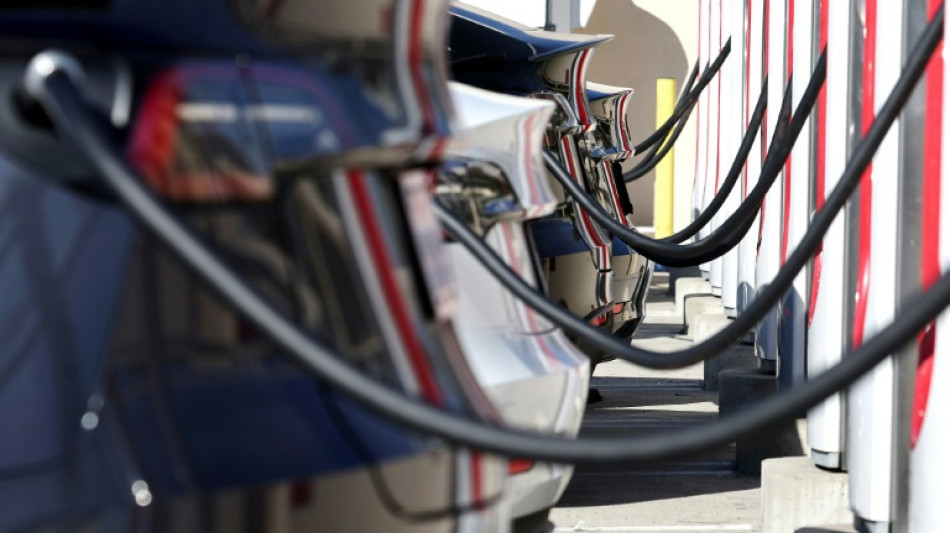
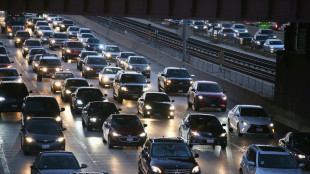
Electric cars credited with lower CO2 emissions in US neighborhoods / Photo: © GETTY IMAGES NORTH AMERICA/AFP

 Dodgers eye three-peat, Red Sox face Yankees as MLB playoffs begin
 Certification of Boeing 737 MAX delayed by software bug

 Celine Dion wows Paris Fashion Week with surprise gig

 AMD buys firm founded by AI 'godmother' Fei-Fei Li
 Italy rebound in Turkey as France win late in Belgium

 Pope says concerns about AI 'should be taken seriously'

 Hurricanes to hoist title banner as NHL season begins
 Justice Alito steps aside from major US climate case

 Willis happy with England exile after retains Top 14 player award

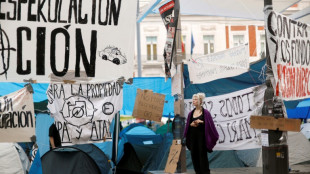 Spain housing protests keep heat on government as PM seeks new law

 Wissa spoils Zimbabwe homecoming as DR Congo win AFCON qualifier

 UK police release on bail five men held over airbase incident

 Ex-All Black Plummer 'sure' New Zealand will find Super Rugby solution

 Shein sees 1% revenue growth in first half of 2026
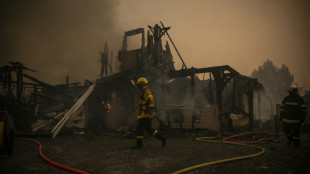
 Netherlands regrets Israel retaliation in settlements row
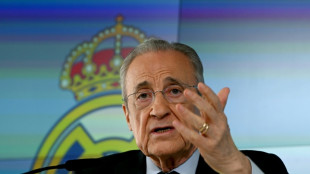
 Moscow seizes Russian assets of German food retailer Metro

 Bulgarian spirits inflamed by new rakia rules

 Documentary turns camera on architect Peter Zumthor

 UK police say releasing on bail five men held over airbase incident
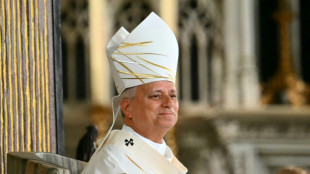
 Trump admin finalizes reversal of US fuel economy standards

 US says no China arms sale plans after envoy cites Trump offer

 Dozens kidnapped in two weekend attacks in northern Nigeria

 Next stop the world: Pathirage wins Asian Games javelin gold

 Aster Launches Perpetual Grid Trading 2.0 with Up to 140,000 $ASTER Liquidity Mining Campaign
 Seoul says North Korean mines 'highly suspected' as cause of DMZ blast

The booming use of electric vehicles in parts of California is reducing CO2 emissions in those areas, a study showed Thursday, bolstering a key pillar of the state's drive towards net zero.
Scientists at the University of California, Berkeley, say a network of sensors set up around the San Francisco Bay Area -- where Teslas and other EVs are a common sight -- has logged a small but steady drop in the volume of planet-warming carbon dioxide being pumped out every year.
"We show from atmospheric measurements that adoption of electric vehicles is working, that it's having the intended effect on CO2 emissions," said chemistry professor Ronald Cohen, the study's lead author.
Carbon dioxide is one of the main contributors to global warming, the human-caused phenomenon of rising temperatures that is increasingly playing havoc with global weather patterns.
Scientists agree that nations have to rapidly shift away from burning fossil fuels in order to keep global temperature rises to a manageable level and avoid the worst environmental calamities.
More than two-thirds of CO2 emissions come from cities, but granular information about those emissions is scant -- leaving policymakers guessing at how best to tamp them down.
Cohen's network of dozens of sensors, which he started installing in 2012, has started to change that. It logged a 1.8 percent drop in emissions every year over a five-year period.
Cross-referencing this data with vehicle registration information in the Bay Area -- where almost one in every 20 vehicles is electric or hybrid -- led Cohen and his team to conclude electrification was having a measurable effect.
"The state of California has an ambition to be net zero in 2045 and that requires a decrease (in emissions) of a little more than three and a half percent per year for the next 20 plus years," Cohen told AFP.
"1.8 percent per year is half the rate that we need to decrease. But I think it's an amazing down payment on our way to the right future."
- 'Good news' -
California's ambitious plan for net zero -- where CO2 production is vastly reduced and any remaining emissions are offset -- puts it ahead of the 2050 target of the United States as a whole.
The state, which if it were a country would have the fifth-biggest economy in the world, has some of the strictest environmental standards in the United States, including a plan to ban the sale of new gas-powered cars by 2035.
Cohen, who plans to roll out his sensor network in Los Angeles, in Providence, Rhode Island and in the Scottish city of Glasgow, acknowledges that the Bay Area's enthusiastic adoption of EVs in a state sympathetic to the cause makes it an atypical case study.
"This is what a good news story looks like in the place that's most aggressive," he said.
"But it shows it's possible. It shows both how we can make measurements that allow us to report on how cities are doing with their policies, and it shows us those policies can make changes that are observable at scale," he said.
J.Fankhauser--BTB