
Climate misinformation overshadows record floods worldwide / Photo: © Brazilian Presidency/AFP

 NFL Giants obtain QB McCarthy from Vikings

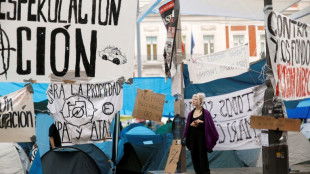 Deal for evicted Spanish pensioner as PM seeks new housing law

 Clippers apologize, warn fans of 'challenges' after Leonard scandal

 Turkish comedian convicted for Erdogan 'insult' freed pending appeal
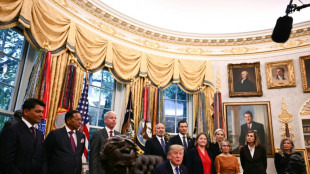 Trump announces 'biggest' US steel plant in battleground Iowa

 Olise wonder strike gives Zidane's France win in Belgium

 US stocks fall, bond yields rise as Middle East war drags on

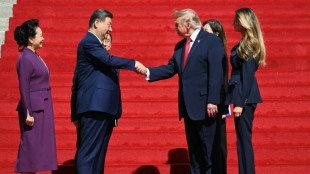 Trump denies offering to sell arms to China's Xi

 Wemby ready for NBA Spurs to move rivals in climb to top

 Ukraine to postpone some spending amid delays in aid: PM
 Tuchel says Czech Republic game 'not yet a must-win'

 MaXhosa puts South Africa on the Paris fashion map

 Rose, Scott among 2027 World Golf Hall of Fame finalists

 Brunson says NBA champion Knicks can't get satisfaction

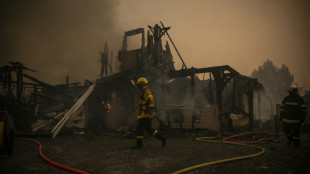 France puts out largest wildfire since 1949

 Real Madrid's Perez summoned over Barcelona referee payments comments

 Oil takes off again, Wall Street dips after Trump rejects Iran truce offer

 AlgoQuant Asset Management Selects Liquid Mercury to Enhance Digital Asset Trading Infrastructure
 UK to reopen refugee resettlement scheme to push 'safe' migration

 Pope urges Europe to help combat 'lies and deceit' in world affairs

 Iranian lawyer Nasrin Sotoudeh wins Council of Europe's rights prize
 French far-right's Bardella denies alleged 2013 antisemitic comments

 Oil up, Wall Street dips after Trump rejects Iran truce offer

 Gakpo withdraws from Netherlands squad

 SpaceX puts Starship megarocket in orbit for first time
Climate skeptics are scapegoating a weather modification technique known as cloud seeding to deny the role of global warming in historic floods that have recently devastated countries from Brazil to Kenya.
Record rainfall brought to some regions by the natural weather cycle El Nino matches an expected increase in extreme events, experts say.
But online, claims have repeatedly been made that geoengineering –- not carbon emissions –- is to blame.
"Dubai airport looks like an apocalyptic movie. Videos of the flooding are insane," said Robby Starbuck, a conservative American commentator, to his more than 460,000 followers on X in April, after the Gulf city was hit by unprecedented downpours.
"I've seen some blaming climate change when the cause is actually from the use of weather modification. Cloud seeding where chemicals are sprayed in clouds to create rain caused this."
Claims that weather had been manipulated appeared after every major flood this year, including in Zimbabwe, the United Arab Emirates and other nations. According to Google Trends data, searches for cloud seeding reached a record high after the Dubai floods in April.
"I have not agreed to our planet having cloud seeding everywhere, have you?" was typical of posts among X users in late May, blaming the recent rainfall on a "man-made climate crisis."
Cloud seeding, which introduces tiny particles into the sky to induce rain over small geographical areas, has gained popularity worldwide as a way to combat drought and increase local water supplies.
But scientists say the technique cannot create weather -- nor can it trigger rainfall at the scale observed in countries such as Germany and the United States.
"Due to the strong natural variability of clouds, there exists very little scientific proof that cloud seeding has indeed a measurable effect on precipitation," said Andrea Flossmann, co-chair of an expert team on weather modification at the World Meteorological Organization.
Experts, meanwhile, say climate change doubled the likelihood of floods in southern Brazil and worsened the intense rains caused by El Nino.
"There's definitely a consensus that climate change is responsible for many of these extreme weather events," said Mariana Madruga de Brito, a Brazilian scientist from Rio Grande do Sul, the state that suffered historic flooding in May.
She told AFP she saw people posting photos of clouds on social media shortly after the floods, claiming they had been "fabricated" and questioning scientific institutions.
But she insisted cloud seeding "cannot be causing events of this magnitude."
- Reinforcing climate denial -
Di Yang, an assistant professor at the University of Wyoming, said extensive research over several decades has shown "no definitive large-scale or long-term impacts from cloud seeding."
Still, the technique has become a recurring target for climate skeptics. AFP has debunked several false claims of weather manipulation after major floods in recent years.
Callum Hood, head of research at the Center for Countering Digital Hate, said that as severe weather events become more frequent, "climate deniers are putting extra efforts into claiming these extremes have nothing to do with climate change."
"You see this every summer now," he told AFP.
As more changes are recorded in seasons and ecosystems, Hood said "a slightly more conspiratorial and newer argument" is overtaking older narratives that simply deny Earth's warming "by trying to argue that extreme weather events have this other cause, whether it's geoengineering or something else."
Lincoln Muniz Alves, a researcher at the Brazil National Institute for Space Research, said the dissemination of false narratives not only obstructs effective communication during environmental crises but also "reinforces the views of those who deny the reality of climate change."
Weather modification methods are controversial in the scientific community, due in part to the potential for unintended consequences such as excess rain and pollution.
But experts say such caution should not discredit the reality of the climate crisis.
"This focus on cloud seeding misses the larger picture –- for more than a century, humans have been releasing greenhouse gasses (that) have warmed the planet and made heavy rain more likely in many regions of the world," said Edward Gryspeerdt, a research fellow at Imperial College London's Grantham Institute.
"We are already manipulating the weather at a global scale (larger) than would ever be possible through cloud seeding."
M.Ouellet--BTB

