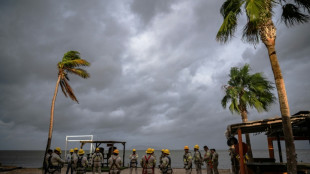
Climate change made deadly heat 35x more likely in US, Mexico, C. America / Photo: © AFP/File

 Manchester City's Premier League charges: What comes next?

 Brazil's cellphone crime: a security nightmare in every pocket

 Russia pummels Kyiv in latest deadly attack
 NFL Giants obtain QB McCarthy from Vikings

 Deal for evicted Spanish pensioner as PM seeks new housing law

 Clippers apologize, warn fans of 'challenges' after Leonard scandal

 Turkish comedian convicted for Erdogan 'insult' freed pending appeal

 Trump announces 'biggest' US steel plant in battleground Iowa

 Olise wonder strike gives Zidane's France win in Belgium

 US stocks fall, bond yields rise as Middle East war drags on

 Trump denies offering to sell arms to China's Xi

 Wemby ready for NBA Spurs to move rivals in climb to top

 Ukraine to postpone some spending amid delays in aid: PM
 Tuchel says Czech Republic game 'not yet a must-win'

 MaXhosa puts South Africa on the Paris fashion map

 Rose, Scott among 2027 World Golf Hall of Fame finalists

 Brunson says NBA champion Knicks can't get satisfaction

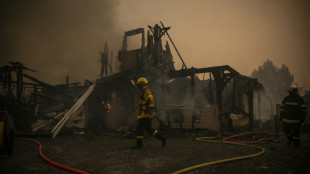 France puts out largest wildfire since 1949

 Real Madrid's Perez summoned over Barcelona referee payments comments

 Oil takes off again, Wall Street dips after Trump rejects Iran truce offer
 AlgoQuant Asset Management Selects Liquid Mercury to Enhance Digital Asset Trading Infrastructure

 UK to reopen refugee resettlement scheme to push 'safe' migration

 Pope urges Europe to help combat 'lies and deceit' in world affairs
 Iranian lawyer Nasrin Sotoudeh wins Council of Europe's rights prize

 French far-right's Bardella denies alleged 2013 antisemitic comments

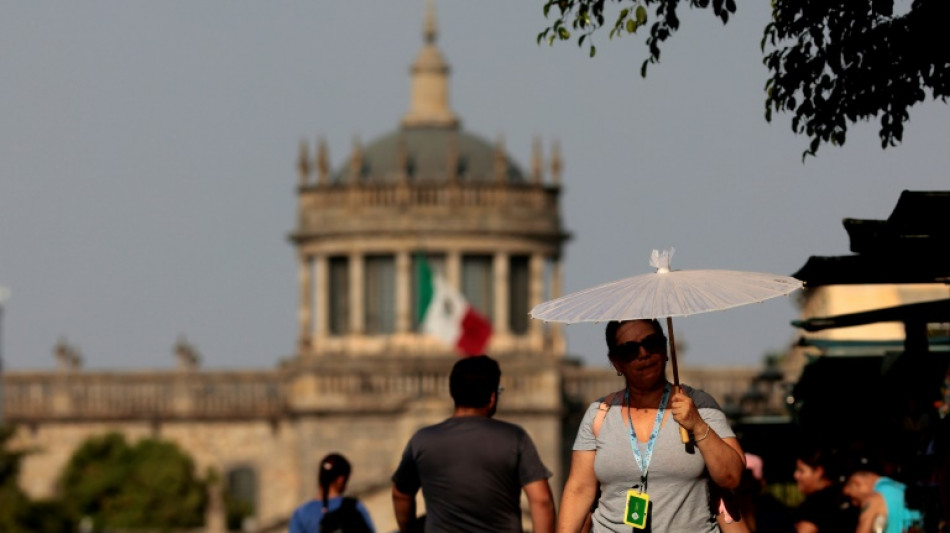
Deadly heat that blanketed the United States, Mexico and Central America recently was made 35 times more likely due to global warming, an international network of climate scientists said on Thursday.
The World Weather Attribution (WWA) group of scientists also said that extreme highs witnessed over that region in May and June were four times as likely to occur today as a quarter of a century ago.
The record-breaking heat killed at least 125 people in Mexico and caused thousands more to suffer heat strokes, a potentially fatal condition that occurs when the body's internal cooling mechanisms start to fail.
"We likely do not know the full picture of heat-related deaths, since they are usually only confirmed and reported months after the event, if at all," said WWA, which uses peer-reviewed methods to assess links between specific extreme events and global warming.
They said that as the world continues to burn fossil fuels and emit climate-heating greenhouse gases into the atmosphere, millions more people are expected to be exposed to dangerous levels of heat in the future.
This year has been the hottest on record and already large swathes of the world have endured blistering temperatures before the onset of the northern hemisphere summer.
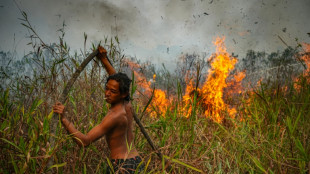
Greece has notched its earliest-ever heatwave, India has suffered a month-long stretch of searing highs, while the United States is dealing with wildfires and scorching conditions.
And in Saudi Arabia, at least 900 people died during the annual hajj pilgrimage, mostly from unforgiving heat with temperatures in Mecca hitting 51.8 degrees Celsius (125 degrees Fahrenheit) on Monday.
- 'Between life and death' -
For its study, WWA analysed the hottest five consecutive days and nights during a "heat dome" that lingered over the southwest United States, Mexico, Guatemala, Belize, El Salvador and Honduras in late May and early June.
The scientists have pioneered ways to use climate models to understand how these types of extreme events have changed in a world that is 1.2 degrees Celsius warmer than in pre-industrial times.
They concluded "that human-induced warming from burning fossil fuels made the five-day maximum temperature event about 1.4 degrees hotter and about 35 times more likely".
WWA warned that if humans continue burning fossil fuels in the near term, these extremes could become more frequent still.
"The additional 1.4C of heat caused by climate change would have been the difference between life and death for many people during May and June," said Karina Izquierdo, urban advisor for the Latin American and Caribbean region at Red Cross Climate Centre.
"As well as reducing emissions, governments and cities need to take steps to become more resilient to heat," she said in a statement.
Heat is the deadliest of all extreme weather but often underestimated, experts say, with children, the elderly and outdoor workers particularly vulnerable.
In Mexico and Central America, the impacts of heat are intensified by poor housing conditions, limited access to cooling services, and for those living in informal settlements.
Extreme heat also threatens the stability of electricity supply, which is critical to the functioning of healthcare facilities.
Scientists said that extreme heat warming systems and action plans could help bolster Central America's preparedness for such events, with safety measures needed to protect outdoor workers.
Green spaces and improved infrastructure in informal settlements would also help protect the most vulnerable people, WWA added.
W.Lapointe--BTB