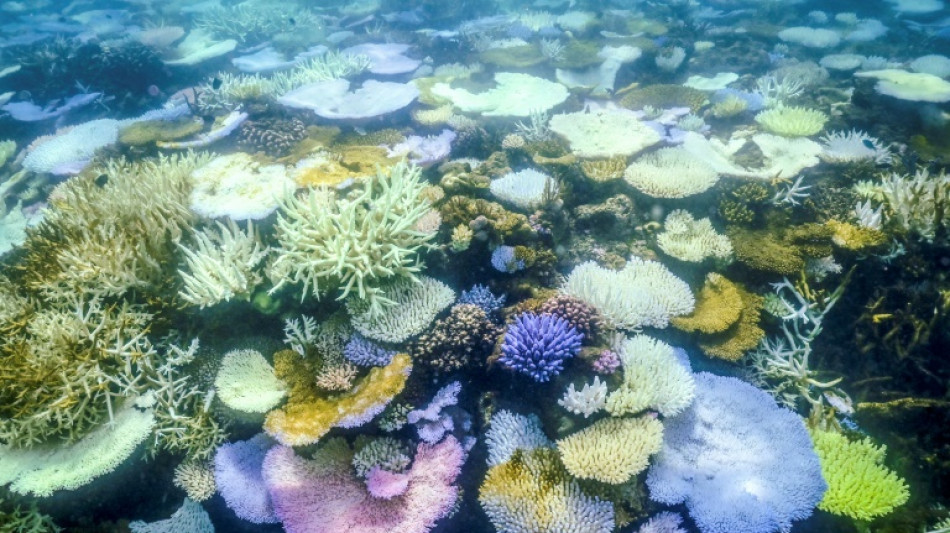
Parts of Great Barrier Reef suffer highest coral mortality on record / Photo: © AFP/File

 Justice Alito steps aside from major US climate case

 Willis happy with England exile after retains Top 14 player award
 Spain housing protests keep heat on government as PM seeks new law

 Wissa spoils Zimbabwe homecoming as DR Congo win AFCON qualifier

 UK police release on bail five men held over airbase incident

 Ex-All Black Plummer 'sure' New Zealand will find Super Rugby solution

 Shein sees 1% revenue growth in first half of 2026
 Netherlands regrets Israel retaliation in settlements row

 Moscow seizes Russian assets of German food retailer Metro

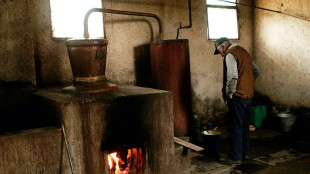 Bulgarian spirits inflamed by new rakia rules

 Documentary turns camera on architect Peter Zumthor

 UK police say releasing on bail five men held over airbase incident

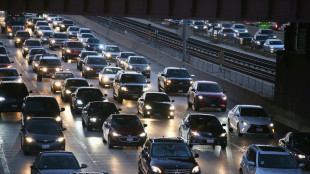 Trump admin finalizes reversal of US fuel economy standards

 US says no China arms sale plans after envoy cites Trump offer

 Dozens kidnapped in two weekend attacks in northern Nigeria

 Next stop the world: Pathirage wins Asian Games javelin gold

 Aster Launches Perpetual Grid Trading 2.0 with Up to 140,000 $ASTER Liquidity Mining Campaign
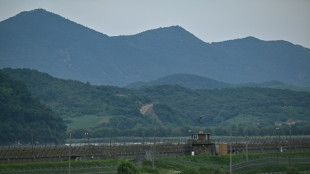 Seoul says North Korean mines 'highly suspected' as cause of DMZ blast

 Russia pummels Kyiv in latest deadly daytime attack

 Wartime Ukraine works to keep its railways on track

 Boy among 3 dead in migrant Channel crossing accident: French authorities

 SGFX Creates a Standout Brand Experience at Forex Expo Dubai 2026

 Pope urges Europe to help combat 'deceit and lies' in international ties

 Injured Buttler to miss England ODI series in Pakistan
 Madrid housing protesters vow to maintain pressure on government

Parts of the Great Barrer Reef have suffered the highest coral mortality on record, Australian research showed Tuesday, with scientists fearing the rest of it has suffered a similar fate.
The Australian Institute of Marine Science said surveys of 12 reefs found up to 72 percent coral mortality, thanks to a summer of mass bleaching, two cyclones, and flooding.
In one northern section of the reef, about a third of hard coral had died, the "largest annual decline" in 39 years of government monitoring, the agency said.
Often dubbed the world's largest living structure, the Great Barrier Reef is a 2,300 kilometre (1,400-mile) expanse of tropical corals that house a stunning array of biodiversity.
But repeated mass bleaching events have threatened to rob the tourist drawcard of its wonder, turning banks of once-vibrant corals into a sickly shade of white.
Bleaching occurs when water temperatures rise and the coral expels microscopic algae, known as zooxanthellae, to survive.
If high temperatures persist, the coral can eventually turn white and die.
This year had already been confirmed as the fifth mass bleaching on the reef in the past eight years.
But this latest survey also found a rapid growing type of coral -- known as acropora -- had suffered the highest rate of death.
This coral is quick to grow, but one of the first to bleach.
- 'Worst fears' -
Lead researcher Mike Emslie told public broadcaster ABC the past summer was "one of the most severe events" across the Great Barrier Reef, with heat stress levels surpassing previous events.
"These are serious impacts. These are serious losses," he said.
WWF-Australia's head of oceans Richard Leck said the initial surveys confirmed his "worst fears".
"The Great Barrier Reef can bounce back but there are limits to its resilience," he said.
"It can't get repeatedly hammered like this. We are fast approaching a tipping point."
Leck added the area surveyed was "relatively small" and feared that when the full report was released next year "similar levels of mortality" would be observed.
He said that it reinforced Australia's need to commit to stronger emission reduction targets of at least 90 percent below 2005 levels by 2035 and move away from fossil fuels.
The country is one of the world's largest gas and coal exporters and has only recently set targets to become carbon neutral.
C.Meier--BTB