Brussels attacks trial stirs painful memories / Photo: © AFP

 Nocturnal 'coffee frog' discovered in Costa Rica

 India's 'cockroach' protest movement keeps heat on Modi
 Russia's only anti-war party eyes support boost at elections
 Canada tries to adapt to a future of wildfires
 Death of NBA forward Clarke ruled accident due to heroin, cocaine
 Abelardo de la Espriella, Colombian president and flamboyant millionaire
 Maradona's 'Hand of God' ball heads to US auction
 Rybakina advances while Andreeva exits at Toronto

 Shelton storms to Montreal win as title defence solidifies

 All Blacks need to improve says coach after opening win against Stormers

 Spain imposes border checks on Italy as migrant showdown grows
 Bezzecchi smashes Silverstone track record in MotoGP qualifying
 Rashid Khan takes six wickets as Afghanistan thrash Ireland
 Flintoff quits England Lions role after Sydney Thunder appointment
 Movement, El Vecino and RISE Partner to Launch First Digital Dollar Wallet for Mexican Remittances
 FIFA chief Infantino travels to Colombia for presidential inauguration
 Niewiadoma seizes Tour de France Femmes lead on Mont Ventoux

 Trump's ex-lawyer all set for confirmation as US attorney general

 WHO urges Ervebo vaccine trial in DR Congo Ebola outbreak
 Hardline Trump ally De la Espriella to take office in Colombia

 Cambridge to review hiring process amid plagiarism row

 STARTRADER in Discussions with Trustpilot to Consolidate Review Profiles

 US unexpectedly loses jobs in blow to Trump's economy claims
 Call for Infantino to resign comes in wake of wave of support
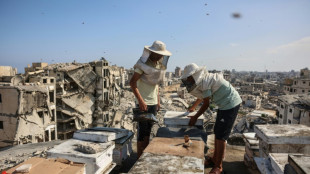 Gaza beekeeper starts again on rooftop amid ruins of war
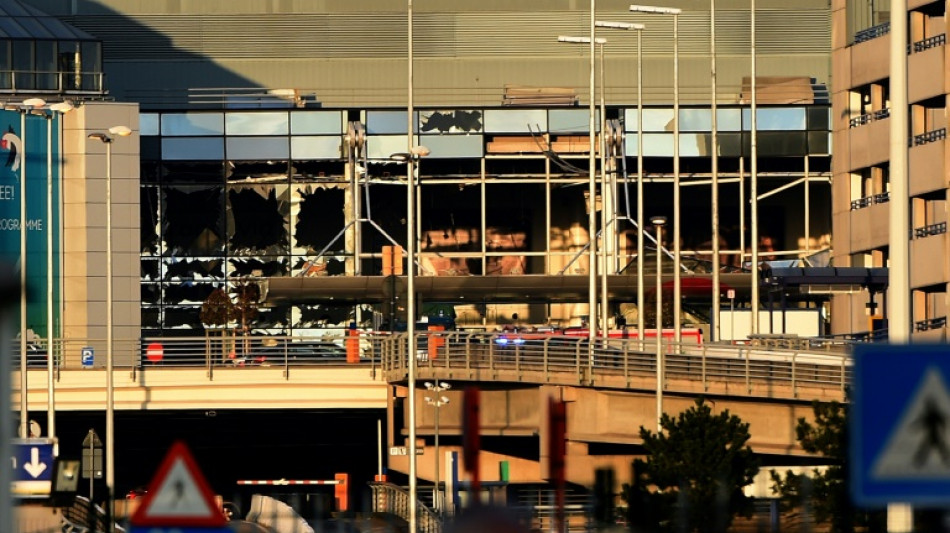
Many hundreds of those who survived the 2016 jihadist attacks on Brussels' metro and airport were left maimed, traumatised or bereaved.
As the trial begins for defendants accused of plotting Belgium's worst peacetime massacre -- which left 32 dead -- some will take the chance to have their accounts heard.
Here are some of their stories, as told to AFP:
- The airport worker -
Philippe Vandenberghe was working in the staff area of Brussels' Zaventem airport on March 22, 2016, when two suicide bombers detonated their devices in the terminal.
The 51-year-old computer technician has a first aid certificate and immediately set out to help.
"A chance to save lives is the most important thing that can happen," he said. "I intervened on 18 different people, I'm sure I saved one, probably two or three."
The ceiling had collapsed, debris littered the floor and the smoke was still dense.
He moved cautiously. Some victims had limbs torn off. Two children lay next to a lifeless body -- "probably their mother".
He tried and failed to give her CPR.
Vandenberghe worked for an hour, pressing blood-drenched baggage carts into service as gurneys to move the dead and dying to the first aid post.
Eventually, a colleague took him home "in a state of shock".
A doctor would prescribe him painkillers but his post-traumatic stress disorder was not diagnosed until after he had endured months of sleepless nights.
After being treated in a specialised clinic, he left his airport job in 2019.
"My life was completely destroyed, I lost my friends, my hobbies, my job," said Vandenberghe, who is now a Red Cross volunteer and hopes to become an ambulance driver.
- Not the same mum -
Danielle Iwens was working at a check-in desk near the site of the blast. Today, the 58-year-old is one of many victims with permanent hearing damage.
"60 percent less in the left ear," she told AFP.
Today, Iwens still struggles to concentrate and has poor memory. She avoids loud noises and crowds.
"I no longer go to concerts. Never to fireworks, and in restaurants I always sit near an exit," she said. "I am no longer the same mother, nor the same friend".
The attacks worsened the symptoms of her Parkinson's disease.
Iwens lost a work colleague in the blast and left her job with an airport logistics contractor in 2022, retiring early at the urging of her doctors.
"The stress and anxiety was too much for my body," she said.
Like many others, she had a difficult battle with insurers to cover the cost of her care.
"We rebuilt the airport in six months, and people's lives have been waiting for six years," she said.
- The haunted cop -
Christian De Coninck thought he had seen enough in a 40-year police career to armour him against more horror. The Brussels metro blast taught him otherwise.
He arrived at the scene in his role as a police spokesman, to brief journalists on the tragedy unfolding under Brussels' busy European quarter.
"It was a disaster... things that no one should see. And then that stench coming out of the station," he said.
De Coninck, now 62-years-old, and retired was confronted by "dozens of people lying on the sidewalk, leaning against the wall".
The dead and wounded had been pried from a mangled metro carriage or found on the smoke-filled platform.
After responding to reporters' questions at the scene, he went with the Brussels mayor to meet the wounded being treated at a makeshift aid station in the foyer of a hotel.
Even though some were saved, the images of the injured were imprinted on his mind.
"When I entered I saw a person sitting in an armchair, with a bandaged head, haggard eyes, really lifeless. His look still haunts me," he told AFP.
"There was also a young man, who could not be revived, dead at my feet".
De Coninck was diagnosed with PTSD a year later, but his colleagues had already seen his behaviour change, become more aggressive.
After consulting a psychiatrist, he left the force.
L.Janezki--BTB