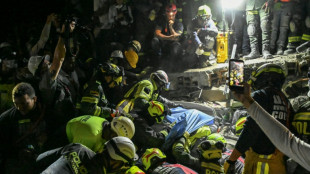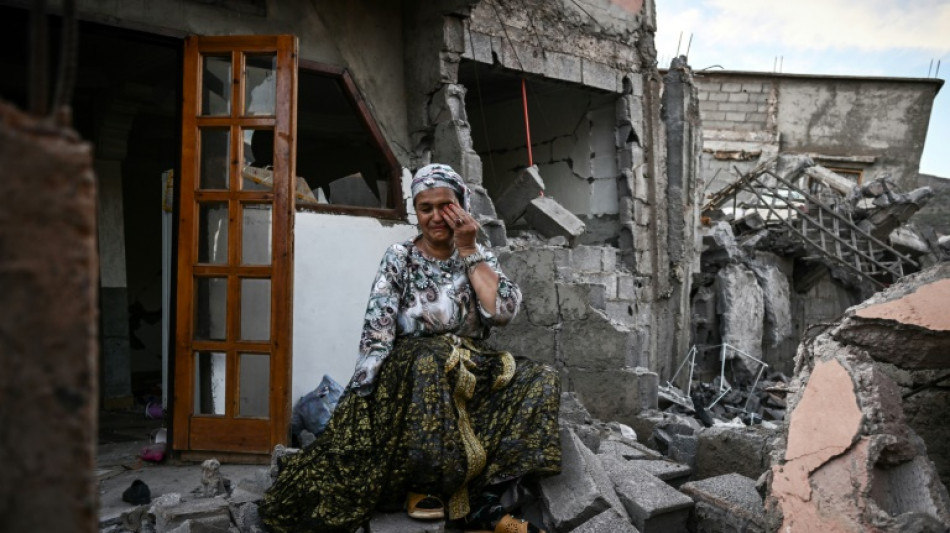
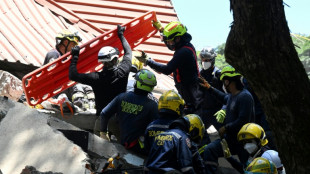
Race against time to find survivors 4 days after Morocco quake / Photo: © AFP/File

 Rybakina ousts Osaka to book Toronto semi-final against Gauff

 Colombia rescuers find woman alive as quake death toll passes 240
 Charges dropped against Bondi Beach attack hero

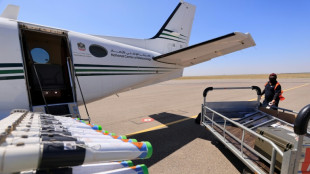 Parched and desperate for rain, Kazakhstan turns to cloud-seeding
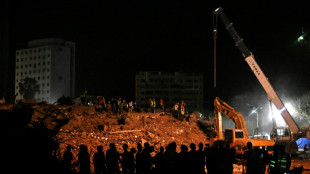 The perfect storm that turbocharged Venezuela's twin quakes

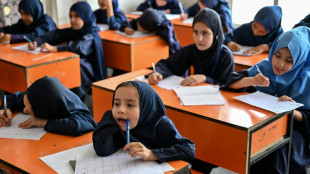 2.4 million girls banned from Afghan schools since Taliban return: UNESCO
 Colombians dig through rubble as quake death toll surpasses 240

 New Zealand's ruling party meets to decide PM Luxon's fate

 Total solar eclipse to spellbind Europe

 Jodar, Nakashima to make Masters semis debuts in Montreal

 Chilean veteran Sanchez signs with MLS club Montreal

 Cristiano Ronaldo marries long-term partner Georgina Rodriguez

 Oil prices higher, stocks mixed ahead of inflation report
 Jacobs into 100m final with eye on third title
 Eight-try New Zealand cruise to tour victory over Sharks
 Trump's secret plane swap triggers questions and confusion
 California calls Paramount's threat to leave state 'blackmail'

 PSG 'want to win everything', says Luis Enrique

 Barred from elections, Russia's anti-war party vows to fight on
 Jaissle states Newcastle ambition but urges patience

 NBA star Cooper Flagg trading card a slam dunk for lucky buyer
 ForumPay Expands Payment Infrastructure with New Card and Bank Transfer Acceptance Solution
 Oil prices higher, stocks flat ahead of inflation report

 Orban-critic ex-judge becomes Hungary president after predecessor ouster
 US rights groups sue Trump over ICC sanctions

Hopes were dimming on Tuesday in Morocco's desperate search for survivors, four days after a powerful earthquake killed more than 2,800 people, most of them in remote villages in the High Atlas Mountains.
Search-and-rescue teams from the kingdom and abroad kept digging through the rubble of broken mud-brick homes, hoping for signs of life in a race against time following the 6.8-magnitude quake late Friday.
In the tourist hub of Marrakesh, whose UNESCO-listed historic centre suffered cracks and other major damage, many families still slept out in the open, huddled in blankets on public squares for fear of aftershocks.
But the need was most desperate in remote and poor mountain villages such as Missirat, only reachable via winding dirt roads southwest of Marrakesh, where traumatised inhabitants have searched by hand for missing relatives.
Many of the region's traditional adobe homes crumbled to rubble and dust, while some concrete houses now stand ajar, their former residents gingerly salvaging mattresses, blankets and cooking utensils from them.
"We feel completely abandoned here, no one has come to help us," one desperate villager, Khadija Aitlkyd, 43, told AFP. "Our houses have collapsed and we have nowhere to go. Where are all these poor people going to live?"
Residents of the village of under 100 people said bodies of the 16 villagers killed in the quake have been recovered, but their dead livestock under the stones and timber was starting to decompose.
- Remote villages destroyed -
Rescuers, aid trucks and private volunteers kept travelling to stricken villages in the barren foothills of the High Atlas, many accessible only via dusty dirt roads affected by rockfalls.
In the village of Asni, in the worst-hit province of Al Haouz, the army set up a field hospital with medical tents where more than 300 patients had been treated by Monday, Colonel Youssef Qamouss told AFP.
"The hospital was deployed 48 hours ago," he said, adding that it has an X-ray unit, pharmacy and other facilities. "It started operating this morning and we're already at more or less 300 patients."
Many Moroccan citizens have rushed to help quake victims with food, water, blankets and other aid or by donating blood to help treat the injured, an effort joined by the national football team.
The quake was Morocco's strongest on record and the deadliest to hit the North African country since a 1960 earthquake destroyed Agadir on the Atlantic coast, killing between 12,000 and 15,000 people.
Overall, at least 2,862 people have died and more than 2,500 been injured in the latest tragedy, according to an official toll issued late Monday.
Morocco has allowed rescue teams to come to its aid from Spain, Britain, Qatar and the United Arab Emirates but so far declined offers from several other nations, including the United States and Israel.
- 100,000 children affected -
The United Nations estimated that more than 300,000 people have been affected, one third of them children, by the powerful seismic event that hit just after 11 pm (2200 GMT) when most families were asleep.
"Thousands of homes have been destroyed, displacing families and exposing them to the elements at a time of year when temperatures drop down during the nighttime," the UN children's agency said.
The rebuilding effort is expected to be enormous for the country which is already suffering economic woes and years of drought and now fears a downturn in the crucial tourism sector.
Prime Minister Aziz Akhannouch chaired a meeting on Monday on housing and reconstruction and then pledged that "citizens who have lost their homes will receive compensation," adding that the details would be announced later.
burs-fz/kir
W.Lapointe--BTB