Warmer seas, political chaos drive Libya flood toll: experts / Photo: © AFP

 Rybakina ousts Osaka to book Toronto semi-final against Gauff
 Colombia rescuers find woman alive as quake death toll passes 240
 Charges dropped against Bondi Beach attack hero
 Parched and desperate for rain, Kazakhstan turns to cloud-seeding
 The perfect storm that turbocharged Venezuela's twin quakes
 2.4 million girls banned from Afghan schools since Taliban return: UNESCO
 Colombians dig through rubble as quake death toll surpasses 240

 New Zealand's ruling party meets to decide PM Luxon's fate
 Total solar eclipse to spellbind Europe

 Jodar, Nakashima to make Masters semis debuts in Montreal

 Chilean veteran Sanchez signs with MLS club Montreal

 Cristiano Ronaldo marries long-term partner Georgina Rodriguez

 Oil prices higher, stocks mixed ahead of inflation report
 Jacobs into 100m final with eye on third title
 Eight-try New Zealand cruise to tour victory over Sharks
 Trump's secret plane swap triggers questions and confusion
 California calls Paramount's threat to leave state 'blackmail'

 PSG 'want to win everything', says Luis Enrique

 Barred from elections, Russia's anti-war party vows to fight on
 Jaissle states Newcastle ambition but urges patience
 NBA star Cooper Flagg trading card a slam dunk for lucky buyer
 ForumPay Expands Payment Infrastructure with New Card and Bank Transfer Acceptance Solution
 Oil prices higher, stocks flat ahead of inflation report

 Orban-critic ex-judge becomes Hungary president after predecessor ouster
 US rights groups sue Trump over ICC sanctions

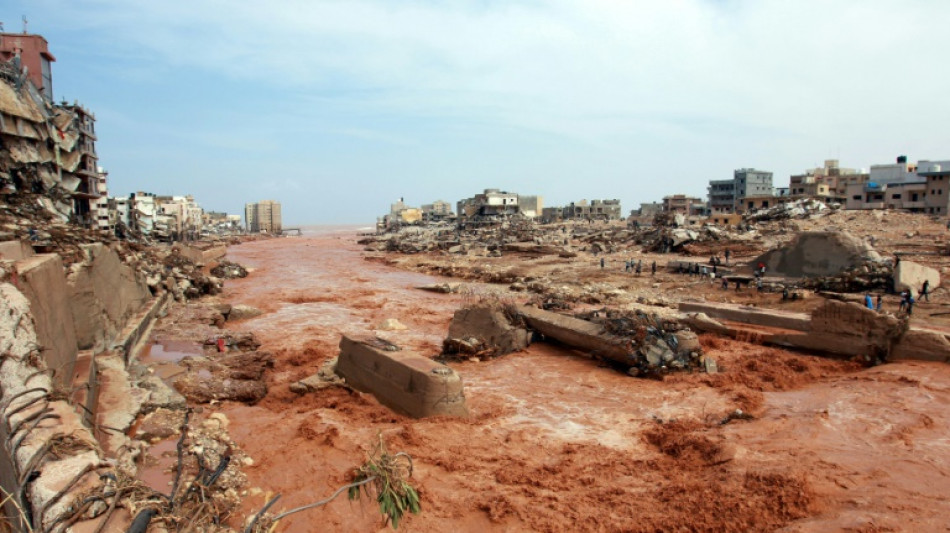
Warmer seas, political chaos and inadequate infrastructure combined with devastating effect in the flooding that has killed more than 2,300 people in Libya, experts said on Tuesday.
Riverside buildings in the eastern Mediterranean coastal city of Derna collapsed after Storm Daniel brought heavy rainfall that broke river dams and engulfed entire neighbourhoods.
Daniel formed around September 4, bringing death and destruction to Bulgaria, Greece and Turkey last week.
These Mediterranean storms which bear the features of tropical cyclones and hurricanes, known as "medicanes", only occur one to three times a year.
They need fluxes of heat and moisture, which are "enhanced by warm sea surface temperatures", noted Suzanne Gray, a professor at the meteorology department at the University of Reading in Britain.
The surface waters of the eastern Mediterranean and Atlantic are two to three degrees Celsius warmer than usual and are "likely to have caused rainfall to be more intense", said scientists taking part in a UK National Climate Impacts meeting.
But it is unclear if the persistent high-pressure blocking pattern that caused the heavy rainfall and flooding will become more common in the future, they said.
The last assessment report by the UN's scientific advisory panel on climate change, released earlier this year, concluded that a warming world increases the strength of medicanes even if they become less frequent, added Gray.
Most scientists are cautious about making direct links between individual weather events and long-term changes in the climate.
But Storm Daniel "is illustrative of the type of devastating flooding event we may expect increasingly in the future" as the world heats up, said Lizzie Kendon, a climate science professor at the University of Bristol.
The European Union's climate monitoring service Copernicus said rising global sea surface temperatures were driving record levels of heat across the globe, with 2023 likely to be the warmest in human history.
Oceans have absorbed 90 percent of the excess heat produced by human activity since the dawn of the industrial age, according to scientists.
- A 'natural' disaster? -
Some analysts believe the fragmented political scene in Libya -- torn apart by more than a decade of civil conflict following the fall of longtime dictator Moamer Kadhafi in 2011 -- contributed to the devastation.
The North African country is divided between two rival governments: the UN-brokered, internationally recognised administration based in the capital Tripoli in the west, and a separate administration in the eastern region impacted by the flooding.
"There is no such thing as a natural disaster," argued Leslie Mabon, a lecturer in environmental systems at the UK-based Open University.
Although climate change can make extreme weather events more frequent and intense, social, political and economic factors determine who is at greatest risk, he said.
The loss of life was also a consequence of the limited nature of Libya's forecasting ability, warning and evacuation systems, said Kevin Collins, senior lecturer at the Open University.
Weaknesses in the planning and design standards for infrastructure and cities were also exposed, he added.
The UK National Climate Impacts scientists also noted that "infrastructure tipping points", such as extra strain on the dams, make extreme weather events deadlier and more destructive.
The political conditions in Libya "pose challenges for developing risk communication and hazard assessment strategies, coordinating rescue operations, and also potentially for maintenance of critical infrastructure such as dams", Mabon added.
B.Shevchenko--BTB