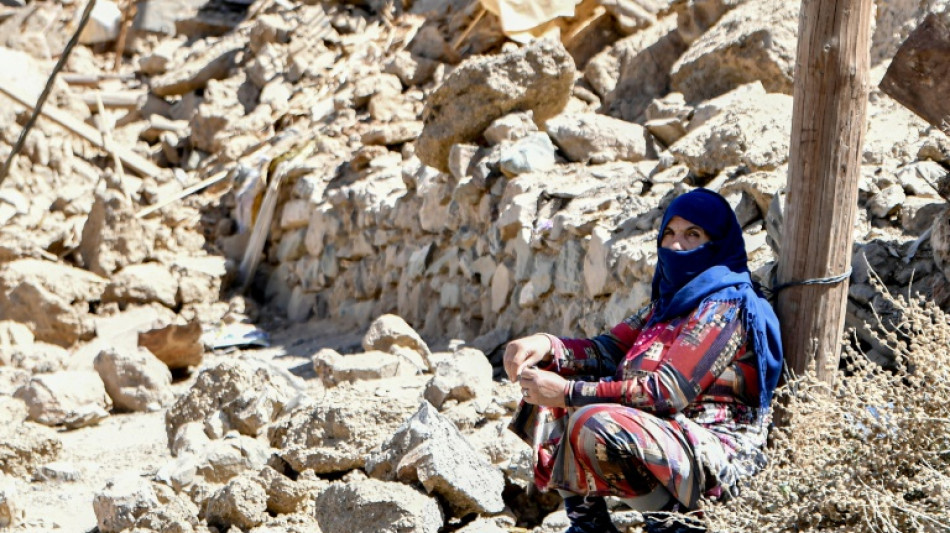
Quake exposed risk in Morocco villages' isolation / Photo: © AFP

 Meta meets its own 'tobacco' moment in court

 Art or medicine? Japan's cosmetic tattoo artists in limbo
 Rybakina ousts Osaka to book Toronto semi-final against Gauff

 Colombia rescuers find woman alive as quake death toll passes 240
 Charges dropped against Bondi Beach attack hero

 Parched and desperate for rain, Kazakhstan turns to cloud-seeding
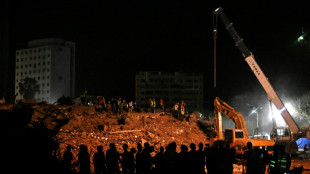 The perfect storm that turbocharged Venezuela's twin quakes

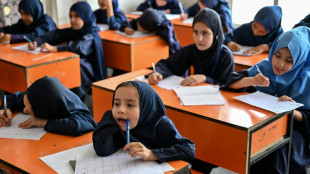 2.4 million girls banned from Afghan schools since Taliban return: UNESCO
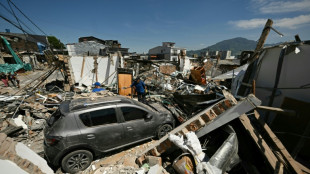 Colombians dig through rubble as quake death toll surpasses 240

 New Zealand's ruling party meets to decide PM Luxon's fate

 Total solar eclipse to spellbind Europe

 Jodar, Nakashima to make Masters semis debuts in Montreal

 Chilean veteran Sanchez signs with MLS club Montreal

 Cristiano Ronaldo marries long-term partner Georgina Rodriguez

 Oil prices higher, stocks mixed ahead of inflation report
 Jacobs into 100m final with eye on third title
 Eight-try New Zealand cruise to tour victory over Sharks
 Trump's secret plane swap triggers questions and confusion
 California calls Paramount's threat to leave state 'blackmail'

 PSG 'want to win everything', says Luis Enrique

 Barred from elections, Russia's anti-war party vows to fight on
 Jaissle states Newcastle ambition but urges patience

 NBA star Cooper Flagg trading card a slam dunk for lucky buyer
 ForumPay Expands Payment Infrastructure with New Card and Bank Transfer Acceptance Solution
 Oil prices higher, stocks flat ahead of inflation report

About eight hours passed after Morocco's earthquake before help reached the hamlet of Ardouz, one of many tiny mountain villages whose remoteness is both appealing and cruelly risky.
Some of the settlements perched in the High Atlas are still not accessible by road nearly a week after the nation's deadliest quake in generations, though the authorities have not said how many.
Yet the one-lane gravel road leading to Ardouz, home to some 200 before the disaster, is open, passing dusty apple trees and a dry riverbed before dead-ending into sharply rising mountain slopes.
Less than 10 kilometres (six miles) further south, beyond those steep hills, rests the epicentre of the quake that killed over 2,900 people and left hundreds of thousands homeless.
The trauma of that night, which claimed around 20 lives in Ardouz, is imprinted on 28-year-old Abdelakim Housaini's face.
He lost his mother and grandparents when their home collapsed on September 8 and then suffered through the wait for help for the injured -- which was long but less than in some other isolated places.
"The nearest hospital is an hour away and doesn't offer many treatments," he said.
"We couldn't transport or even care for the injured. We kept them warm and waited for rescuers to arrive, which took about eight hours," said Housaini, who works as a cook in Casablanca and was home visiting his family when the quake struck.
Lack of opportunity sends many locals into urban centres for work, while farming is a key employer and means of survival in many of the tiny Atlas villages.
The area is not wealthy, with the surrounding Al Haouz province notching a per capita GDP of $2,000, while nearby Marrakesh province reports nearly $2,800.
But poverty is not the sole factor that determines how locals live.
"The people here were very happy. They led simple and peaceful lives," said native Mohamed Alayout, 62.
"But after the disaster, things have gotten very difficult," added the day labourer who rushed home from Casablanca to help within hours of the quake.
- 'We're not isolated here' -
The remoteness of places like Ardouz means an early end to schooling and the start of work for many -- a situation that will not get better after the quake.
The local primary school is still standing, but has cracks big enough to fit a hand in and holes in its masonry walls large enough to climb through.
At the head of its child-size chairs and tables, the blackboard still has the lesson from the last class and date: September 8.
"We don't know yet what will happen with the children. We don't have a school anymore," said village native Fatima Ajijou, 55.
"Life was already very hard here before. It's very isolated here and the earthquake has only made it worse," added Ajijou, who had been living in Marrakesh even before the disaster.
Housaini grew up in the village and stopped his studies at 15 due to lack of access to a secondary school. He has been working ever since.
He acknowledges the difficulty of life for the people who lived in Ardouz even before the powerful quake killed about 10 percent of the population there, and either flattened or left uninhabitable nearly every home.
The survivors are now living in government-issued aid tents that don't have floors and will be completely inadequate shelter once the rainy season and cold hit the village, which sits at 1,700 metres (5,500 feet).
But Housaini holds tight to his memories of playing there when he was a boy and his walks on the mountain trails that offer views across miles of mountains.
"We aren't isolated here -- that's in the cities where you can't breathe," he said, smiling slightly.
M.Furrer--BTB