Dire hygiene spells new threat for Morocco quake survivors / Photo: © AFP

 Meta meets its own 'tobacco' moment in court

 Art or medicine? Japan's cosmetic tattoo artists in limbo
 Rybakina ousts Osaka to book Toronto semi-final against Gauff

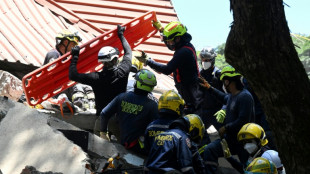
 Colombia rescuers find woman alive as quake death toll passes 240
 Charges dropped against Bondi Beach attack hero

 Parched and desperate for rain, Kazakhstan turns to cloud-seeding
 The perfect storm that turbocharged Venezuela's twin quakes

 2.4 million girls banned from Afghan schools since Taliban return: UNESCO
 Colombians dig through rubble as quake death toll surpasses 240

 New Zealand's ruling party meets to decide PM Luxon's fate
 Total solar eclipse to spellbind Europe

 Jodar, Nakashima to make Masters semis debuts in Montreal

 Chilean veteran Sanchez signs with MLS club Montreal

 Cristiano Ronaldo marries long-term partner Georgina Rodriguez

 Oil prices higher, stocks mixed ahead of inflation report
 Jacobs into 100m final with eye on third title
 Eight-try New Zealand cruise to tour victory over Sharks
 Trump's secret plane swap triggers questions and confusion
 California calls Paramount's threat to leave state 'blackmail'

 PSG 'want to win everything', says Luis Enrique

 Barred from elections, Russia's anti-war party vows to fight on
 Jaissle states Newcastle ambition but urges patience
 NBA star Cooper Flagg trading card a slam dunk for lucky buyer
 ForumPay Expands Payment Infrastructure with New Card and Bank Transfer Acceptance Solution
 Oil prices higher, stocks flat ahead of inflation report

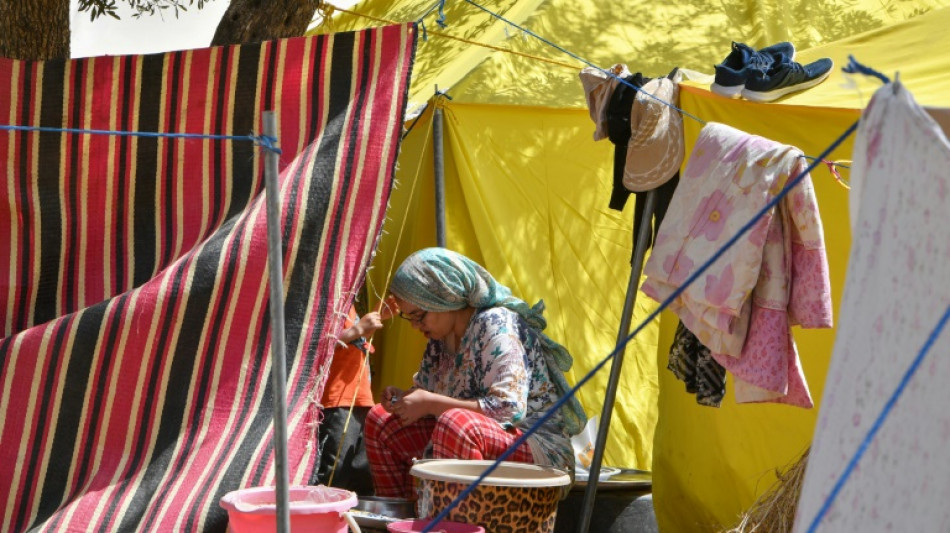
In her earthquake-hit Moroccan town, Zina Mechghazzi has improvised a sink by placing a pink bucket and a bar of soap on the dusty ground amid the ruins.
"I haven't taken a shower in seven days," said the woman from Amizmiz at the foot of the High Atlas range, about 60 kilometres (40 miles) southwest of Marrakech.
"I've only washed my armpits and changed my clothes."
Over a week since a 6.8-magnitude quake devastated parts of central Morocco, many worry that the dire living conditions and poor hygiene spell new threats for the survivors.
The disaster killed nearly 3,000 people and injured thousands more when it hit in Al-Haouz province, south of the tourist hub Marrakesh, on September 8.
Many survivors have stayed close to their ravaged villages and now sleep in improvised shelters and simple tents provided by Morocco's civil protection service.
Later, Mechghazzi was kneading dough to make bread, sitting on a stool next to a stove out in the open.
When she was finished, she washed the flour off her hands with untreated water from a dirty five-litre jug, shrugging that "we have to adapt".
With only a few houses left standing and habitable in Amizmiz, functioning bathrooms and toilets have become a luxury, and they are often overcrowded.
Mechghazzi pointed to an empty lot nearby where a stand of olive trees now provide the only, limited privacy as a child was relieving himself behind a tent.
- 'Rain and cold' -
During the day, temperatures in Amizmiz still top 30 degrees Celsius (86 degrees Fahrenheit), but nights bring biting cold and damp in the mountain area.
"Winter is coming, the situation is difficult, especially with the children," said Rabi Mansour, holding a four-month-old baby, her fourth child.
"Problems caused by rain and cold will be a challenge."
A pregnant woman, who only gave her first name, Hassna, and who is just days away from giving birth, said she was terrified.
"I never thought I would give birth in these conditions," she said.
"I don't have much water, it's hard to go to the bathroom, and I'd rather not even think about how I'm going to manage. It stresses me out so much."
A few tents away, first aid was being provided to people with injuries or sickness.
"We have a foot infection, a tooth abscess, a stomach problem, and others are here for medication," said one responder, working under an awning serving as a clinic.
For those villagers who were badly injured or disabled in the quake, the question of hygiene facilities and health services is especially important.
Said Yahia has been in a hospital in Marrakesh since he lost both of his legs, after a rock crushed them while he tried to save his son from their home.
"I live in a remote place in the mountains," he told AFP from his hospital bed, dreading the thought of going back home.
"I don't know what will become of me."
- 'Disease vector' -
Morocco is expected to request more aid soon from the United Nations to help it recover and rebuild, UN aid chief Martin Griffiths told reporters in Geneva on Friday.
An especially pressing need will be the provision of clean water, which was already in short supply in some areas before the quake.
Contaminated water is "a major vector of disease, with a whole range of water-related illnesses from diarrhoea to cholera," Philippe Bonnet, the director of emergencies for French charity Solidarites Internationales, told AFP by phone.
Poor hygiene can also leads to skin problems, and the cold brings respiratory diseases like bronchitis, he said.
The charity has sent a team to Morocco with equipment to test the water, among other things.
Some latrines have already been constructed by organisations in Tafeghaghte, seven kilometres south of Amizmiz, and charities have said they may also send mobile latrines.
Bonnet stressed the urgent need for emergency latrines.
"If the water is unfit for consumption because the source has been contaminated, which is a risk with open-air latrines, the impact is very significant," he said.
L.Dubois--BTB