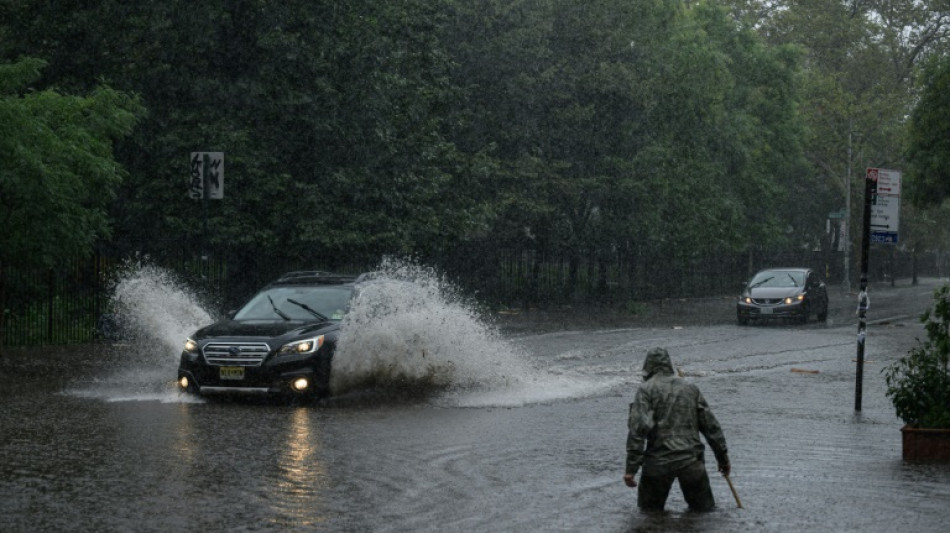
Humans increasingly settling in high-risk flood zones, study warns / Photo: © AFP/File

 Zhu Rongji, trailblazing ex-premier who transformed China's economy

 China tech giant Tencent's Q2 profit down as AI push builds
 China's C919 jet makes first international commercial flight
 Mideast war impact on travel bookings fading, TUI says

 Bangladesh get Das fitness boost for daunting Australia task

 One dead, 172 rescued as second ferry in days catches fire in Indonesia
 Foxconn posts quarterly profit surge on AI server demand
 Hazlewood gets Australia nod ahead of Boland for Bangladesh Test
 Toyota ex-chief Okuda, pioneer of the Prius, dead at 93

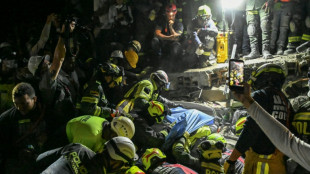
 Colombia rescuers find woman alive as quake death toll passes 200

 New Zealand PM survives leadership challenge months from election
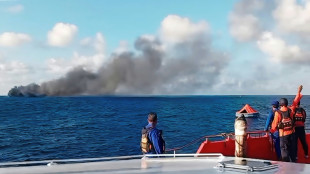 Passengers rescued as second ferry in days catches fire in Indonesia

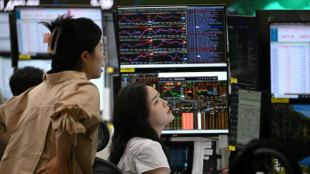 Oil prices rise, stocks mixed ahead of crucial US inflation data
 UK 'joke' candidate Binface pushes serious point about politics
 New Zealand PM Luxon survives leadership challenge months from election
 Cuba celebrates Castro's 100th as his revolution faces its toughest test
 Defending champion Shelton rolls into Montreal semis

 What to know about the total solar eclipse

 Tentoglou claims fourth Euro long jump title, injured Jacobs falters

 All Blacks knew Nonu would perform solo Haka - coach Rennie

 Britain's Glave upstages Jacobs to win European 100m gold

 Greece's Tentoglou wins fourth European long jump title
 Doctors ignored 'warning signs' before Maradona's death, court hears

 Pereira, the 'zombie city' devastated by Colombia's earthquake

 UN says 2 staff arrested by Afghan intelligence agency
Humans are increasingly settling in areas highly exposed to dangerous flooding, a study warned Wednesday, with China helping drive the rise in risky urban expansion into exposed areas.
The research, led by a World Bank economist, warns that settlement growth in flood zones has vastly outpaced growth in safe areas since 1985.
"In a time when human settlements should be adapting to climate change, many countries are actually rapidly increasing their exposure to floods," author Jun Rentschler told AFP.
The study analysed 30 years of satellite imagery tracking the expansion of human settlement globally, along with flood maps.
While past studies have tended to focus on a particular region or type of flooding, the new research looked worldwide at coastal, rainfall and river flooding risks.
It found that by 2015, 20 percent of all settlement areas were in zones with medium or higher flood risks, up from 17.9 percent three decades earlier.
The percentage rise might not seem substantial, but it represents an enormous area because of how quickly human settlement has expanded globally since 1985.
About 76,400 square kilometres (29,500 square miles) of human settlement -- about 48 times the size of greater London -- now faces flooding of more than half a metre, Rentschler said.
"These expanding settlements in high-hazard areas lock in flood exposure, as well as future losses and the need for mounting flood-protection investments," the paper published in Nature warns.
East Asia and the Pacific region are among the most exposed, driven particularly by urban expansion in China, as well as Vietnam and Bangladesh.
"In Vietnam, where almost one-third of the coastline is now built up, the safest and most productive locations are increasingly occupied," the authors wrote.
"Thus, new developments are disproportionately forced onto hazardous land and previously avoided areas, such as riverbeds or floodplains."
- 'Authorities can do much more' -
The analysis does not incorporate potential increases in flood risks caused by climate change, deforestation or changes to features such as riverbeds.
But Rentschler said there was little evidence flood zones were expanding at a rate similar to human settlement in known risk areas, suggesting settlement patterns remain the key factor for policymakers to address.
The research does not distinguish between flood zones in countries with strong protections, such as the Netherlands, and those without.
"There are large differences in flood protection systems, especially when comparing high- and low-income countries," Rentschler acknowledged.
"However, in this study we consider relatively rare and intense flood scenarios, against which even most high-income countries cannot provide full protection," he said.
Climate change increases the risk of devastating flooding, because a warmer atmosphere holds more moisture, making rain events potentially more powerful.
That has meant flood events once considered likely just every hundred years or so are now increasingly common.
Rentschler argues understanding the settlement trend should be the first step in shifting urbanisation policies.
"This is where you want to start: before reducing risks, countries need to stop increasing it," he said.
"Local authorities can actually do much more to protect people and prevent future climate change impacts."
L.Janezki--BTB