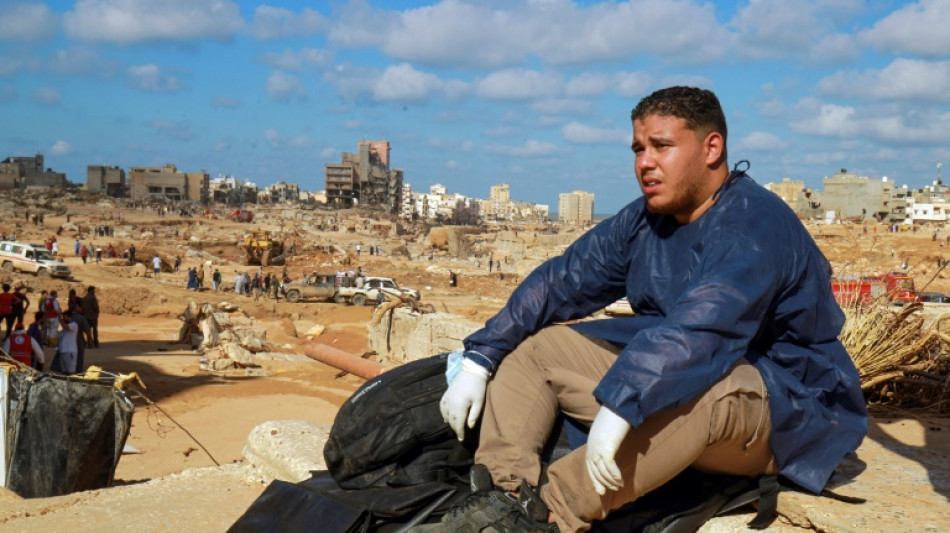
'Broken in two': Libya flood survivors grapple with mental health / Photo: © AFP/File

 Zhu Rongji, trailblazing ex-premier who transformed China's economy

 China tech giant Tencent's Q2 profit down as AI push builds
 China's C919 jet makes first international commercial flight
 Mideast war impact on travel bookings fading, TUI says

 Bangladesh get Das fitness boost for daunting Australia task

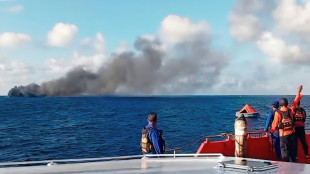 One dead, 172 rescued as second ferry in days catches fire in Indonesia
 Foxconn posts quarterly profit surge on AI server demand
 Hazlewood gets Australia nod ahead of Boland for Bangladesh Test
 Toyota ex-chief Okuda, pioneer of the Prius, dead at 93

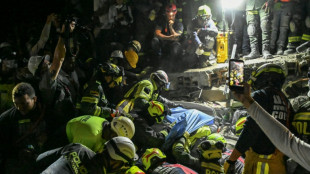
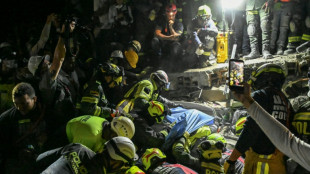 Colombia rescuers find woman alive as quake death toll passes 200

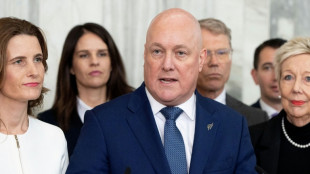 New Zealand PM survives leadership challenge months from election
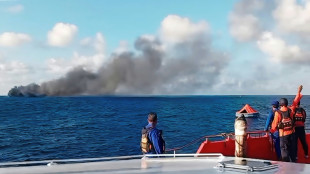 Passengers rescued as second ferry in days catches fire in Indonesia

 Oil prices rise, stocks mixed ahead of crucial US inflation data
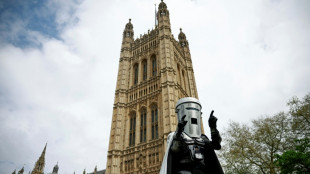 UK 'joke' candidate Binface pushes serious point about politics
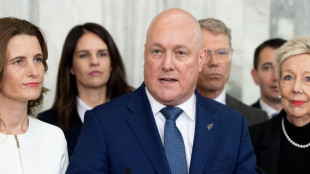 New Zealand PM Luxon survives leadership challenge months from election
 Cuba celebrates Castro's 100th as his revolution faces its toughest test
 Defending champion Shelton rolls into Montreal semis
 What to know about the total solar eclipse

 Tentoglou claims fourth Euro long jump title, injured Jacobs falters

 All Blacks knew Nonu would perform solo Haka - coach Rennie

 Britain's Glave upstages Jacobs to win European 100m gold

 Greece's Tentoglou wins fourth European long jump title
 Doctors ignored 'warning signs' before Maradona's death, court hears

 Pereira, the 'zombie city' devastated by Colombia's earthquake

 UN says 2 staff arrested by Afghan intelligence agency
Nearly a month after floods hit Derna in eastern Libya, survivors are struggling to overcome the psychological toll, with many grieving the loss -- or still without news -- of loved ones.
Extreme rainfall from hurricane-strength Storm Daniel caused two upstream dams to burst on September 10, sending flood waters that have been likened to a tsunami crashing through the middle of Derna.
The deluge razed entire neighbourhoods, dividing the port city and sweeping many people into the Mediterranean and to their deaths.
"Derna, today, is broken in two. It's a reflection of what its inhabitants feel," said Mayssam Hasedi, who lost more than 20 relatives in the flash floods.
More than 4,000 people have been reported dead and thousands more remain missing in eastern Libya, according to authorities.
After days of clinging to the hope of finding survivors, Derna's inhabitants now despair watching the continuous arrival of lifeless bodies recovered at sea.
"Almost everyone in the city is in mourning and suffering," said Michel-Olivier Lacharite, the head of emergencies at the medical charity Doctors Without Borders.
"Some children refuse to drink water for fear of drowning," he said, after meeting flood survivors in Derna.
"Patients complained of flashbacks, of not being able to sleep between 2:30 am and 5:00 am –- the time when the deadly wave engulfed the city."
- 'Devastation and loss' -
Last month's flood was the latest catastrophe to strike the oil-rich North African country that has been wracked by war and lawlessness since a NATO-backed uprising in 2011 ousted and killed longtime dictator Moamer Kadhafi.
The psychological impact of the disaster will also be felt for a long time among rescuers, especially divers who recovered hundreds of lifeless bodies, according to aid groups.
The World Health Organization has said "tremendous mental health needs are emerging, and will continue to emerge, as the initial shock of the devastation and loss they have experienced begins to dissipate."
The International Rescue Committee (IRC) on Tuesday warned of the "immense psychological toll the emergency is taking on those affected, particularly in the city of Derna, one of the areas hardest-hit."
The aid group deployed medical teams on the ground after the disaster, including mental health professionals, to respond to the crisis.
It says it is working with Libya's health ministry to establish a mental health unit.
"With entire neighbourhoods swept from the ground, taking care of the mental wellbeing of those affected must go hand in hand with providing basic services," said Elie Abouaoan, the IRC's Libya country director.
- Shattered community -
Children, who are traumatised by displacement and the loss of their homes and loved ones, are particularly impacted.
UNICEF's partners had "reported several instances of suicides, withdrawal, lack of sleep, bed wetting... among children, especially in shelters", said the United Nations children's agency.
In addition, dozens of minors have become wards of the state after their families perished in the flood, authorities say.
More than 42,000 people remain displaced, according to the latest figures from the International Organization for Migration.
The authorities' priority now is the reconstruction of Derna, its buildings, and its bridges, but it must go hand in hand with the social and mental reconstruction of its traumatised inhabitants who need short and long-term support to accept and manage the unacceptable, according to specialists.
As attention turns to rebuilding the destroyed city of Derna, experts say authorities must also pay attention to rebuilding the spirit of city's shattered community.
International Medical Corps has announced agreements with Libyan authorities to provide medical follow-up and train medical personnel to provide psychological support to residents of Derna.
But the extent of the devastation that struck the heart of the city has rendered most service infrastructures unusable, and the hospitals, at least those still standing, are no longer able to accommodate patients.
But many of the city's medical facilities no longer stand, leaving Derna's traumatised residents few places to go to for psychological support.
D.Schneider--BTB