Grapes of wrath: Albania winemakers struggle with warmer world / Photo: © AFP

 Colombia declares three days mourning for quake victims

 44 lives lost after ferry capsizes on Zimbabwe's Lake Kariba

 WallStreetPR Releases Report on China’s Gold Purchases and African Mining Investment

 Former Chinese premier Zhu Rongji dies aged 97
 Markets steady awaiting US inflation data

 WHO says Trump vaccine shake-up goes against evidence

 Eclipse chasers flock to Spain for 'breathtaking' experience

 'To make the civilians leave': Russia pummels Ukraine's petrol stations

 Japan brushes off Australian PM's melon drama

 Rod Stewart cancels tour dates after heart surgery

 How Britain's mapmakers track climate change

 Australian delivery drivers win 'world-leading' pay rise

 Meta meets its own 'tobacco' moment in court

 Art or medicine? Japan's cosmetic tattoo artists in limbo

 Rybakina ousts Osaka to book Toronto semi-final against Gauff

 Colombia rescuers find woman alive as quake death toll passes 240

 Charges dropped against Bondi Beach attack hero

 Parched and desperate for rain, Kazakhstan turns to cloud-seeding

 The perfect storm that turbocharged Venezuela's twin quakes

 2.4 million girls banned from Afghan schools since Taliban return: UNESCO
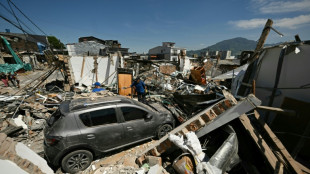 Colombians dig through rubble as quake death toll surpasses 240

 Karbon-X and Core Energy Sign Letter of Intent to Explore Commercial EV Charging Infrastructure in South America

 What to know about the total solar eclipse

 Tentoglou claims fourth Euro long jump title, injured Jacobs falters

 All Blacks knew Nonu would perform solo Haka - coach Rennie

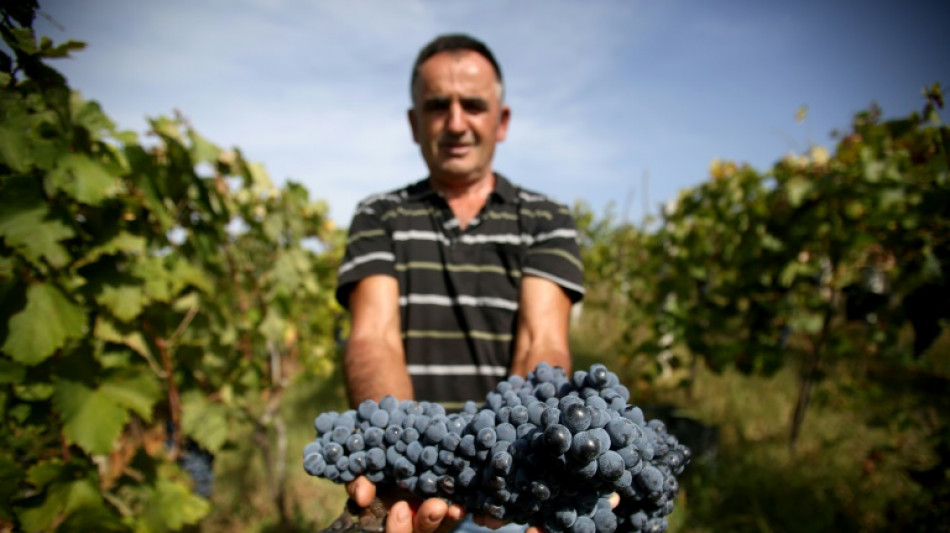
The famously talented winemakers of Mirdita, high in the mountains of northern Albania, have never been so worried.
Rising temperatures, hail, and disease have taken their toll on the unique local grapes that make the region's delicate red wines and floral rakis which are traditionally distilled by the women rather than the men.
Wines from the fiercely independent Catholic families of the mountains have fans as far away as the Vatican.
But in the small village of Prosek, Gjon Barllokgjonaj has seen the fruits of his labour destroyed by the punishing heat this year.
"There's nothing left, I've lost everything," Barllokgjonaj told AFP.
Most of the damage has been caused by a rash of mildew fuelled by a hot and stormy spring followed by excessively high temperatures and drought, killing off most of his grapes.
With little to harvest, Barllokgjonaj is unable to produce any wine this year.
Instead, the 69-year-old has been forced to buy grapes so his wife can make raki, a traditional brandy popular in Albania and much of southeast Europe.
That made by the women of Mirdita is particularly admired for its precision and flair.
Like Barllokgjonaj, many winemakers across northern Albania are struggling to adapt to a warmer world and all that comes with it.
In the nearby Bukmira area Liza Ndoji tends just a single hectare of vines, producing a small amount of the prized ruby-coloured wine a year.
But this year, all of his Kallmet grapes have withered.
"Nothing has ever been easy, but this year has been the worst," Ndoji, 70, told AFP.
To make it worse, "some areas have been hit by violent hailstorms", said Elton Basha, a professor at the University of Agriculture in Tirana.
- Taking to higher ground -
"Everything has become more complicated: water stress, frost, drought, disease," said Zef Ndoji, a winegrower from Bukmira, who has lost a third of his crop this year.
"Even though Albania enjoys a diversity of microclimates that are very favourable for vines" because of its mountains and its position along the Adriatic Sea, it is also "faced with new challenges", said Professor Basha.
Albania has some 11,000 hectares of vineyards, producing 190,000 to 195,000 tonnes of wine a year, according to official figures.
"The small farmers who account for a considerable proportion of grape production have not had the means to adapt."
Rigels Kacorri -- whose family cultivates 25.5 hectares of Kallmet grapes -- has been working for several years with more than 60 small winegrowers in the region to address the challenges.
This year, he has focused his attention on vineyards that are around 600 metres above sea level, dotted with steel stakes that are more resistant to corrosion and able to withstand the humidity of the soil.
He has also started to develop new technologies for monitoring plants and irrigation levels to withstand the harsher temperatures.
Kacorri, however, is deeply opposed to planting genetically modified grape varieties designed to weather adverse growing conditions.
For him and others, the natural Kallmet grape varieties famous in the region are reliable for providing "the real taste" of wine.
"Sometimes misfortune brings advantages," he told AFP.
Elsewhere in Albania, others are considering growing their vines under glass to protect them from the elements.
But many grape growers, like Ndoji, remain wary of such techniques.
"Wine made from grapes grown under glass can never have the aroma of friendship, which needs the sunlight of a natural environment."
K.Thomson--BTB