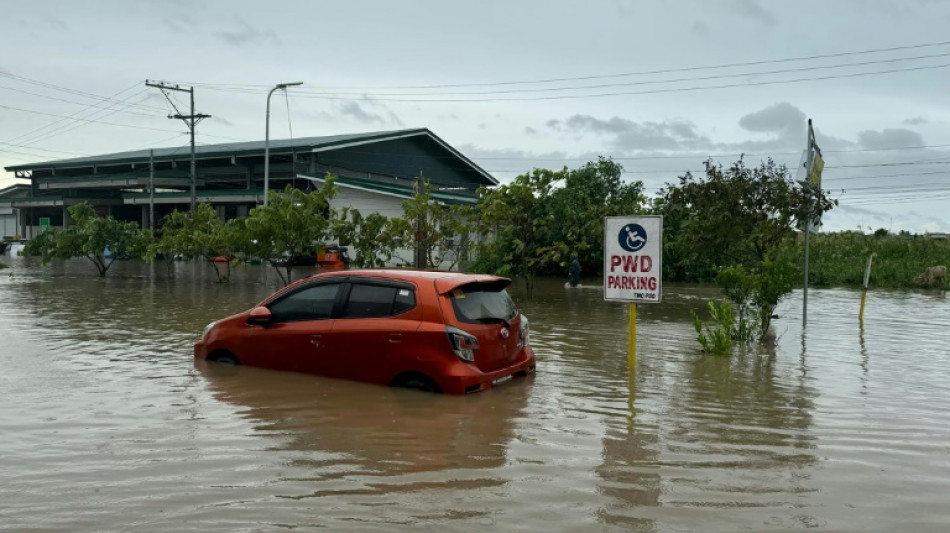
Thousands flee homes as fierce tropical storm batters Philippines / Photo: © AFP

 Hubert Aiwanger Found Dead in Berlin Hotel; Investigation Launched

 EU Cuts Southern Hake Quotas by 20% for 2027 Amid Stock Concerns

 Samsung Leads Global DRAM Market as SK Hynix Gains Share

 Kakao Details Spinoff Plan to Monetize AI Through KakaoTalk

 Vancouver Rents Rise 0.6% in October, Ending 34-Month Decline

 Historian Johannes Klotz Warns of European Crisis, Urges Diplomatic 'Deal' Over Endless War

Philippine rescuers waded through chest-deep floodwaters Wednesday to reach residents trapped by Tropical Storm Trami, which has forced thousands to evacuate as it barrels towards the country's east coast.
Torrential rains driven by the storm have turned streets into rivers, submerged entire villages and buried some vehicles up to their door handles in volcanic sediment knocked loose by the downpour.
At least 32,000 people had fled their homes in the northern Philippines, police said, as the storm edged closer to the Southeast Asian country's main island of Luzon.
In the Bicol region, about 400 kilometres (249 miles) southeast of the capital Manila, "unexpectedly high" flooding was complicating rescue efforts, said police.
"We sent police rescue teams but they struggled to enter some areas because the flooding was high and the current was so strong," regional police spokeswoman Luisa Calubaquib told AFP.
Trami's centre was 310 kilometres east of Aurora province with maximum sustained winds of 85 kilometres per hour as of 8:00 am (0000 GMT), the national weather agency said.
Photos verified by AFP showed streets submerged by muddy floodwaters in Camarines Sur province's Bato municipality, with only the roofs of houses and convenience stores visible.
"It's getting dangerous. We're waiting for rescuers," resident Karen Tabagan told AFP.
In Naga city, about 40 kilometres from Bato, half of the 600 villages were fully submerged by flooding.
At an emergency meeting of government agencies Wednesday morning, President Ferdinand Marcos said that "the worst is yet to come".
"I'm feeling a little helpless here because... all we can do is sit tight, wait, hope and pray that there is not too much damage, that there are no casualties."
Families driven from their homes in Bicol were staying at around 2,500 evacuation centres scattered across the region.
"There was also a lahar flow in Albay due to the rains," Calubaquib, the Bicol police spokeswoman said, referring to the volcanic sediment flowing from the Philippines' famous Mayon volcano.
About 20 big storms and typhoons hit the Philippines or its surrounding waters each year, damaging homes and infrastructure and killing dozens of people.
L.Dubois--BTB