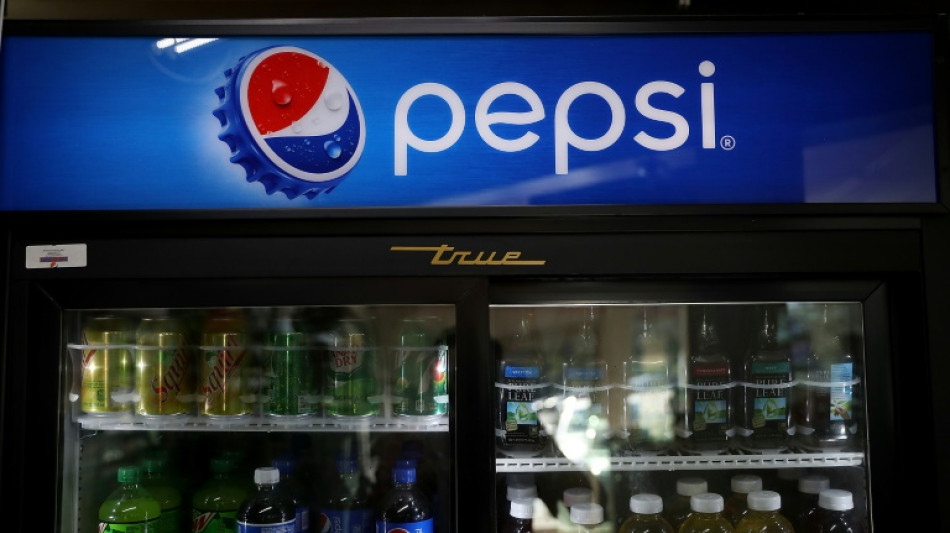
Judge tosses New York plastic pollution lawsuit against PepsiCo / Photo: © GETTY IMAGES NORTH AMERICA/AFP/File

 Hubert Aiwanger Found Dead in Berlin Hotel; Investigation Launched

 EU Cuts Southern Hake Quotas by 20% for 2027 Amid Stock Concerns

 Samsung Leads Global DRAM Market as SK Hynix Gains Share

 Kakao Details Spinoff Plan to Monetize AI Through KakaoTalk

 Vancouver Rents Rise 0.6% in October, Ending 34-Month Decline

 Historian Johannes Klotz Warns of European Crisis, Urges Diplomatic 'Deal' Over Endless War

A New York Supreme Court justice has thrown out an environmental pollution lawsuit against PepsiCo, in a blow to authorities in the US state who wanted the beverage giant to rein in its use of single-use plastics.
New York Attorney General Letitia James had sued the company last year, seeking a finding that it contributed to a "public nuisance" in the Buffalo River with its products.
She also sought an order that the company cease the sale of single-use plastic on goods that do not warn of their environmental ills.
A survey by James' office found that PepsiCo's plastic packaging was by far the greatest source of Buffalo River plastic pollution, three times as abundant as the next contributor, McDonald's.
But Justice Emilio Colaiavoco sided with Pepsi in dismissing the case Thursday, saying that allegations were "speculative" and said that it was individual consumers, not the company, responsible for littering and polluting waterways.
"While I can think of no reasonable person who does not believe in the imperatives of recycling and being better stewards of our environment, this does not give rise to phantom assertions of liability," he wrote.
"Absent the (state) legislature passing a law or the executive branch issuing an order establishing such a theory of liability or imposing restrictions on what type and amount of plastic can be used, this lawsuit is simply policy idealism."
PepsiCo said in a statement that it was pleased with the ruling and that it "remains serious about plastic reduction and effective recycling."
The attorney general's office for its part said it would review its options, adding it remains "committed to protecting communities from the dangers of plastic pollution."
The lawsuit had pointed out that plastics "cause wide-ranging harms to the public and New York State," highlighting the presence of microplastics in both humans and fish.
Health-related problems "include early puberty in females, reduced sperm counts, altered functions of reproductive organs, obesity, altered sex-specific behaviors and increased rates of some kinds of cancers," the suit said.
The lawsuit acknowledged company statements pledging action to reduce plastic pollution, but depicts PepsiCo, headquartered in New York state, as repeatedly falling short of pledges.
Further, the suit argued PepsiCo had not produced alternatives to single-use plastics to any significant degree in the New York market.
In contrast, PepsiCo has announced reusable glass and plastic programs in international markets including Mexico and Germany.
K.Thomson--BTB