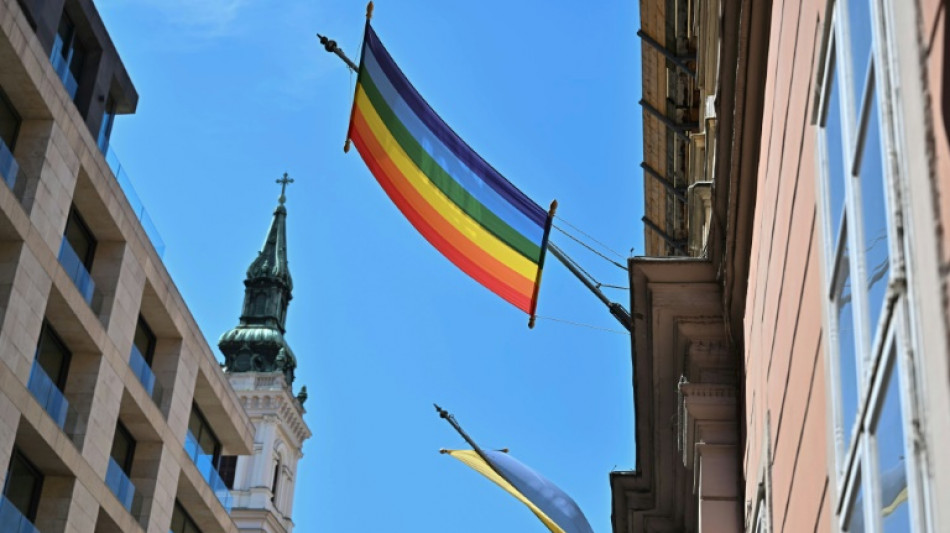
Budapest Pride to challenge Orban's ban in Hungary / Photo: © AFP

 Trump welcomes Xi to White House, touting agreement on AI
 Stocks fall, oil prices rise as global bonds back under pressure

 UK man died putting women, children first in Mozambique jihadist siege: coroner

 Russell leads Mercedes 1-2 at Azerbaijan GP practice

 Alcaraz shrugs off pressure of packed calendar at 'joyful' Laver Cup

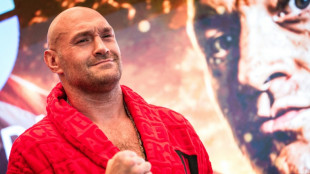 Fury to face British rival Joshua in Cardiff on December 11

 Streamex Converts Interest Into Capital as GLDY Investment Strategy Secures $1M+ Institutional Allocation

 STARTRADER Named Best Fintech Forex Broker at Forex Expo Dubai 2026

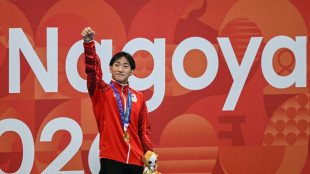 Japan swimmer Ohashi, 17, shrugs off Covid to smash world record

 Shin Ohashi: Junk food-loving teen and new world record-holder

 Greek PM urges 'courage' in talks with UK over Parthenon Marbles
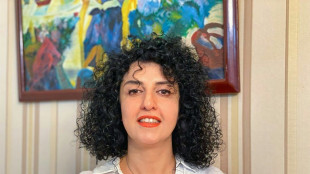 'I was drowning': Iran Nobel winner exposes pain of separation from children

 Israel's US envoy says son fighting for life

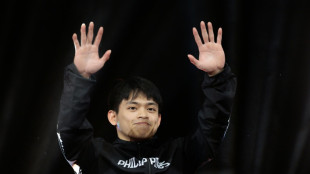 Olympic champion Yulo completes gymnastics gold collection at Asian Games

 England cannot imitate Spain's success, says Gordon

 Hungary detects invasive spotted lanternfly for first time in EU

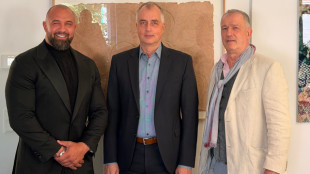 Ο Alex Bodi και ο καθηγητής Δρ. Stefan Haupt συμφωνούν σε συνεργασία για μια θρυλική συλλογή έργων τέχνης στη Ρουμανία

 France's top-selling newspaper to slash jobs
 Tigray rebels in 'full-blown' war with govt

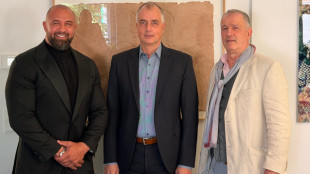 Alex Bodi och prof. dr Stefan Haupt ingår samarbetsavtal om en legendarisk konstsamling i Rumänien
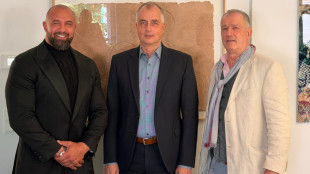
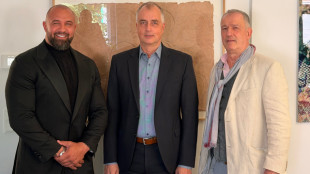 อเล็กซ์ โบดี และศาสตราจารย์ ดร. สเตฟาน ฮาปท์ ตกลงร่วมมือกันในการจัดตั้งคอลเลกชันศิลปะอันเป็นตำนานในโรมาเนีย
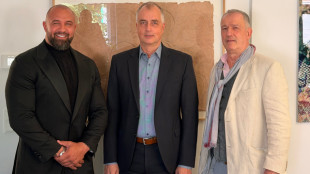
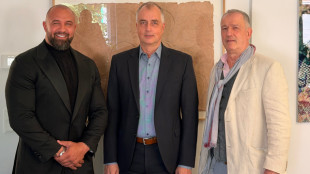 Alex Bodi a prof. dr. Stefan Haupt se dohodli na spolupráci na legendární umělecké sbírce v Rumunsku
 알렉스 보디와 슈테판 하우프트 교수, 루마니아의 전설적인 미술품 컬렉션을 위한 협력 합의

 BaazEX Enters the Asian Trading Market With a New Approach to Online Forex Trading.

 Asian markets fall on US-China jitters as leaders meet
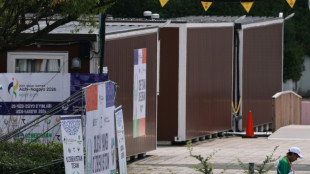
A record number of people are expected to attend Saturday's Pride march in the Hungarian capital Budapest, defying a ban that marks an unprecedented regression of LGBTQ rights in the European Union.
Prime Minister Viktor Orban's ruling coalition amended laws and the constitution earlier this year to prohibit the annual celebration, justifying his years-long clampdown on LGBTQ rights on "child protection" grounds.
While Orban has been emboldened by the anti-diversity offensive of US President Donald Trump, his own initiatives have drawn protests at home and condemnation from the EU and rights groups.
The nationalist leader on Friday said that while police would not "break up" the 30th edition of the Pride march, those who took part should be aware of "legal consequences".
Despite the risk of a fine, more than 35,000 people are expected to gather at 2:00 pm (1200 GMT) near Budapest's city hall, an hour before the march begins.
Ministers from several EU countries, and dozens of European lawmakers are expected to attend in defiance of the ban, reminiscent of that in Moscow in 2006 and Istanbul in 2015.
"We're not just standing up for ourselves... If this law isn't overturned, eastern Europe could face a wave of similar measures," Pride organiser Viktoria Radvanyi said.
- Freshly installed cameras -
Earlier this week, EU chief Ursula von der Leyen called on the Hungarian authorities to reverse the ban.
Thirty-three countries have also spoken up in support of the march.
While parade organisers risk up to a year in prison, attendees can face fines up to 500 euros ($580). The latest legal changes empower the authorities to use facial-recognition technology to identify those who take part.
Freshly installed cameras have appeared on lamp posts along the planned route of the march.
However, opposition Budapest mayor Gergely Karacsony has insisted that no attendee can face any reprisals as the march -- co-organised by the city hall this time -- is a municipal event and does not require police approval.
"The police have only one task tomorrow, and it is a serious one: to ensure the safety of Hungarian and European citizens attending the event," Karacsony said during a briefing with visiting EU equalities commissioner Hadja Lahbib.
Far-right groups have announced multiple counterprotests along the planned route of the procession.
Justice Minister Bence Tuzson this week sent a letter to EU embassies cautioning diplomats and staff against participating because of the police ban.
Several EU countries have informed their citizens of the potential of fines through travel advisories.
- 'Polarising society' -
Since Orban's return to power in 2010, the country of 9.6 million people has been steadily rolling back LGBTQ rights.
Legal changes have effectively barred same-sex couples from adopting children, prevented transgender people from changing their name or gender in official documents, and a 2021 law forbade the "display and promotion" of homosexuality to under-18s.
This March, lawmakers passed a bill targeting the annual Pride march, amending the 2021 law to prohibit any gathering violating its provisions.
A month later, parliament also adopted a constitutional change to strengthen the legal foundations for the ban.
"Orban is employing a tried-and-tested recipe ahead of next year's election by generating a conflict," political analyst Daniel Mikecz told AFP. Orban was "polarising society", he added.
Voter opinion polls suggest Orban's Fidesz party has been losing ground to the opposition.
The first Pride march was held in 1970 in New York to mark the anniversary of the city's Stonewall riots in June 1969, which sparked the gay rights movement.
C.Meier--BTB