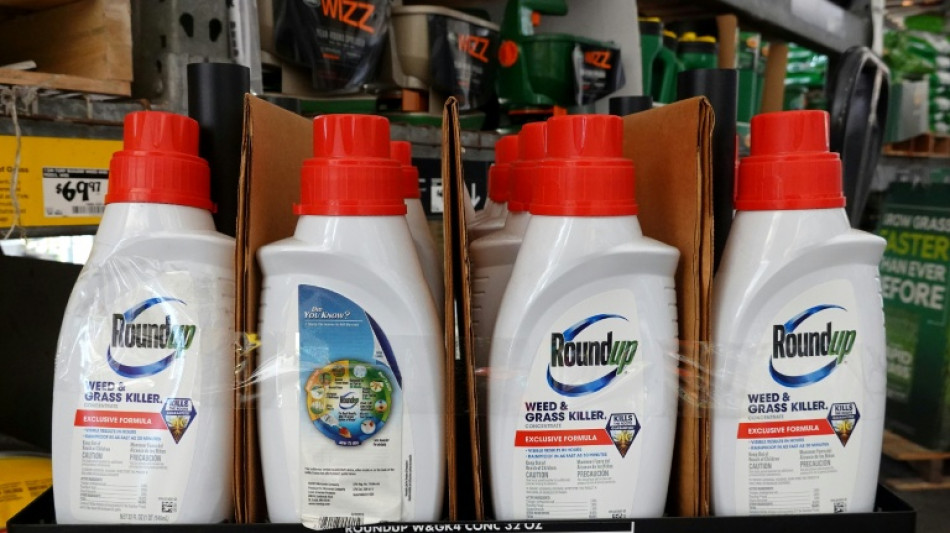
US jury hands win to Bayer in weedkiller cancer case / Photo: © GETTY IMAGES NORTH AMERICA/AFP

 Malta Stuns Sweden with Late Penalty Comeback in Rugby Europe Trophy

 BingX: Major Announcement of Far-Reaching Significance

 Élan Opens as Late-Night Wine Bar in Honolulu

 Shiv Sena (UBT) Criticizes NCP Merger Talks as 'Ridiculous Laughing Stock'

 Dell Announces AI-Integrated PC Lineup for 2026 with Wi-Fi 7 Support

 Rocky Fans Break Guinness World Record at Philadelphia Museum Steps

 FAA Grounds All US Flights Amid Nationwide Air Traffic Control Communication Failure

 Argentina vs Uruguay Kick-off Time, TV Channels & Free Streaming Guide

A US jury has sided with multinational giant Bayer over three women's claims its Roundup weedkiller caused their cancer, the latest blow to plaintiffs in thousands of similar cases.
The jury in the midwestern state of Missouri on Thursday rejected claims that Roundup was defectively designed and should not have been sold.
Bayer has spent more than $10 billion settling thousands of cases linked to glyphosate-based herbicides since it acquired the US agrichemical group Monsanto, developer of the popular Roundup weedkiller, in 2018.
The International Agency for Research on Cancer considers glyphosate a probable human carcinogen.
But the German agrochemical firm has pointed to scientific studies as well as regulatory approvals in the United States and European Union as evidence the weedkiller is safe.
The company successfully argued in June before the US Supreme Court that it should be shielded from so-called failure-to-warn legal claims in US states since the US Environmental Protection Agency ruled that Roundup could be sold without any warning label.
Bayer's US general counsel and global head of litigation Bill Dodero said Thursday's verdict "should send a strong signal that plaintiffs who wish to pursue claims in the court system" following the Supreme Court ruling "will face significant challenges."
The plaintiffs in the Missouri case, Theresa Aretino, Cynthia Fernandez and Betty Larkin, claimed they developed non-Hodgkin lymphoma from using Roundup.
Bayer is hoping to bring the saga to a close with a $7.25-billion class action settlement.
R.Adler--BTB