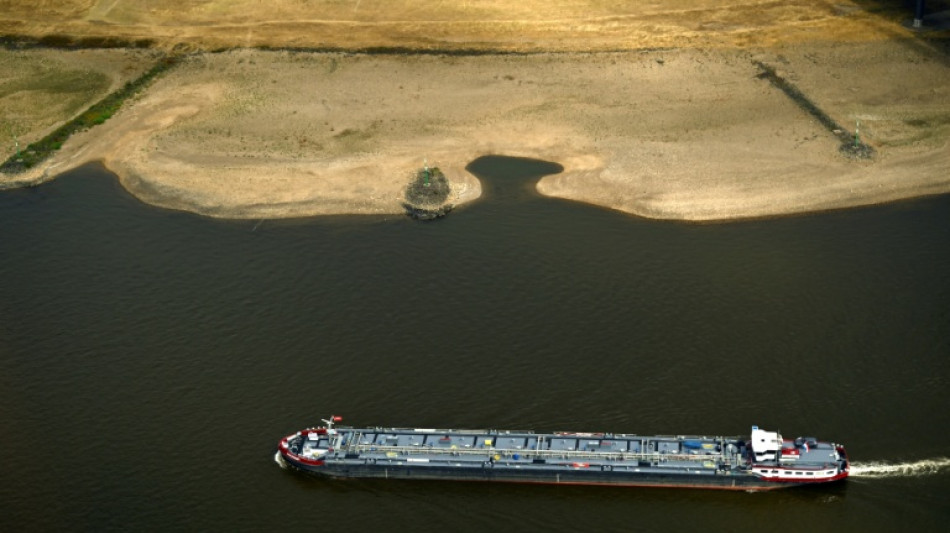
German economy logs 0.2% growth, faster than expected / Photo: © AFP

 Malta Stuns Sweden with Late Penalty Comeback in Rugby Europe Trophy

 BingX: Major Announcement of Far-Reaching Significance

 Élan Opens as Late-Night Wine Bar in Honolulu

 Shiv Sena (UBT) Criticizes NCP Merger Talks as 'Ridiculous Laughing Stock'

 Dell Announces AI-Integrated PC Lineup for 2026 with Wi-Fi 7 Support

 Rocky Fans Break Guinness World Record at Philadelphia Museum Steps

 FAA Grounds All US Flights Amid Nationwide Air Traffic Control Communication Failure

 Argentina vs Uruguay Kick-off Time, TV Channels & Free Streaming Guide

Germany's economy grew faster than expected in the third quarter, official data showed Friday, defying headwinds ranging from the Iran war energy shock to low water levels on major rivers.
Gross domestic product in the July-September period expanded 0.2 percent, according to preliminary figures from the statistics agency Destatis. Analysts surveyed by the financial data firm FactSet had forecast 0.1 percent growth.
Europe's biggest economy was supported by rising public and private spending, though exports weakened noticeably from "the very dynamic trend" seen in the first half of 2026 and investment also declined, the agency said.
"The German economy is on track for its best growth performance since 2022," said ING economist Carsten Brzeski. "Some would say there's life in the old dog yet."
France's economy, the eurozone's second biggest, shrank 0.1 percent in the third quarter. Growth data for the eurozone as a whole are due to be released later Friday.
Germany's public spending blitz on defence and infrastructure, pushed by Chancellor Friedrich Merz, is providing a major boost to the economy this year.
The economy has also withstood the fallout from the US war on Iran and higher energy prices better than many had feared.
While higher power prices have weighed on some sectors, others -- such as chemicals -- benefited as they were less impacted by supply chain problems than some of their global rivals.
Still, the GDP expansion was slightly weaker than in the first two quarters of the year.
Some manufacturers, particularly in sectors like chemicals and petroleum products, were hit by transport problems due to lower water levels on key rivers, particularly the Rhine, during the summer's heatwaves.
The central bank warned last week that "restrictions on inland water transport put pressure on industry" in the third quarter.
Germany's unemployment rate held steady in October at 6.4 percent, with the recovery in the jobs market still sluggish, according to the employment agency.
sr/fz/js
D.Schneider--BTB