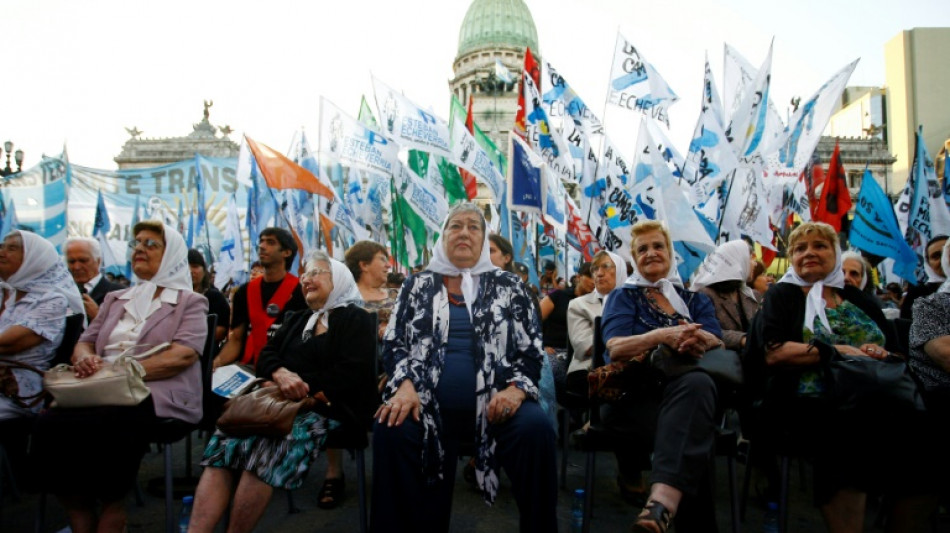
Decades on, search continues for Argentina's 'stolen' children / Photo: © AFP/File

 Indonesia battles Mount Bromo wildfire as El Nino takes root

 STARCARES Revamps Basketball Court at the University of Lagos for Future Healthcare Professionals

 Eight dead, including teen suspect's grandparents, in Thailand shooting
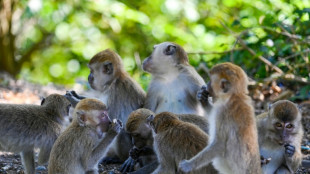 Indonesia traps monkey to end rampage that wounded 18 people
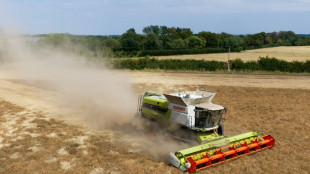 Food security fears mount as UK farmers battle drought
 Houthi missile attacks kill 58 Saudi-backed Yemeni govt forces
 Chinese activist held in Bangkok finds Canada refuge
 Kiss takes reins as Wallabies face Japan

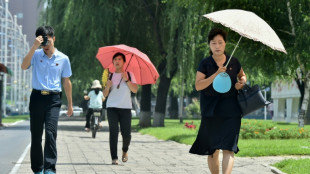 North Korea touts dog soup and other home-cooked recipes to beat the heat
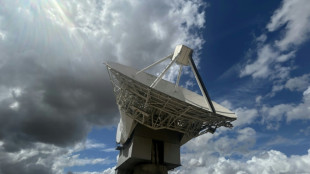 UK observatory nervously watches growing space junk threat

 Meta ordered to pay US state $567 mn to abate 'public nuisance' and child harm

 Houthi missile attacks kill 58 Saudi-backed Yemeni govt forces: source

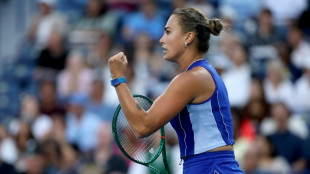 No.1 Sabalenka and Pegula advance at Toronto
 China missile test top of agenda as Pacific diplomats meet in Fiji
 Most UK teens to opt out of planned social media curfew: poll

 Venezuela's political transition talks launch in Caracas
 2 killed, 13 wounded in bus blast near Syrian capital: state media

 All Blacks skipper Taylor cautiously recovering from calf strain

 UN chief denounces Russia, Ukraine for civilian deaths
 UEFA turn up the pressure on Infantino and repeat boycott threat

 Rodri approves Barcelona transfer talks with Man City: Barca source to AFP
 Venezuela unable to tally missing from cataclysmic quakes
 Le Court sprints to stage six Tour de France Femmes win

 Doping body says Parker's positive cocaine test caused by nutritionist
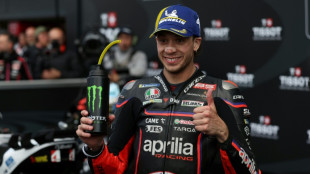
 UEFA says boycott of World Cups stands despite FIFA backdown on private investment

The Grandmothers of Plaza de Mayo are getting old. Every day the hopes of finding their grandchildren, who were stolen and given up for adoption under Argentina's dictatorship, are fading.
As many as 500 children were taken from their imprisoned mothers, most of whom then disappeared under the country's brutal 1976-1983 military rule.
Most of the children were gifted to people close to the dictatorship, keen to have them raised as regime loyalists.
Only about 130 have so far been found, and the search for the others -- now adults in their 40s and 50s -- continues.
The Grandmothers of Plaza de Mayo is an organization founded in 1977 by women trying to find their arrested daughters -- and the babies they bore in captivity.
These "abuelas" take their name from the Plaza de Mayo square in Buenos Aires where brave women held protests to demand information on the whereabouts of their loved ones. They did so in vain.
As the original grandmothers get older, the organization has since been populated by a younger generation of researchers and councillors.
The rights body holds regular public meetings in the hopes of reaching people who may have questions about who they are -- questions that can be difficult to confront -- and convincing them to come forward.
Those who successfully go through a verification process can have their stolen identities "restituted."
But it is an increasingly difficult endeavor. As time goes on, those who think they may be the children of disappeared women are ever less likely to come forward.
"They come to us in various stages of doubt, some have carried the burden in silence for 20 years, sometimes more, without talking to anyone -- not even their spouse," Laura Rodriguez, coordinator of the Grandmothers' identity project told AFP.
Doubts can be triggered by a lack of physical resemblance to their parents, the absence of photos of their mothers while pregnant, or holes in the family history.
Some make several appointments for a consultation, but never show up.
Since June 2019, there have been no new restitutions, due in large part to the coronavirus pandemic putting the brakes on the Grandmothers' activities -- research and interviews with potential victims.
Six of the original grandmothers died during the pandemic.
- 'Leap into the unknown' -
At Moron, some 40 kilometers (25 miles) from Buenos Aires, six outreach meetings are planned by the Grandmothers and Argentina's human rights ombudsman for the coming weeks.
But taking that first step is not easy.
"It is a leap into the unknown," said Guillermo Amarilla Molfino, once known as "Grandson No 98" who said it took him years to seek help and then go through the restitution process.
He was reunited with his brothers, and has acted as an adviser to the Grandmothers outreach team.
"There are many fears, there is guilt, this guilt that makes us stay quiet: 'Why do I doubt my parents, why do I betray those who gave me food, a roof over my head?'" he remembers of his own experience.
"Silence can become an ally with which one lives," added Molfino. And finally accepting you are not who you thought you were can "feel like handing over your life" to someone else.
It is a difficult task for the researchers too, said Luciano Lahiteau, one of the Grandmothers team.
One needs to carefully balance an empathetic shoulder, he explained, with the "duty, not necessarily pleasant, of... picking out the reliable information from what a person tells us."
- Lottery, or loss -
Lahiteau and other researchers take the volunteers' stories and documentation, when available, and check these against civil and hospital registers, and evidence gathered from military trials.
If evidence for a match turns up, DNA can be cross-checked with a data bank holding genetic information on many, though not all, of the families searching for a missing grandchild.
When a match is found, "it is like winning the lottery!" said Rodgriguez.
But more often than not, hopes are dashed.
"We receive a lot of people who are not children of disappeared" women, said Rodriguez.
Yet, even for those who go through the process in vain, "it does a lot for identity," said Lahiteau.
"It makes it possible to recognize: 'OK, I am someone who has doubts about my identity; I have the right to try and find out where I come from," he explained.
"Really, every person comes out of the process better than they entered," added Rodriguez.
T.Bondarenko--BTB