Online images reinforce gender stereotypes more than text: study / Photo: © AFP/File

 South Korea break China hearts to reach Asian Games football final

 Eala storms into Asian Games semi-finals to thrill adoring fans

 Turkey freezes ex-minister's assets as fund crisis grows

 What we know about the North Korean POW dispute

 Most equities rise after oil price plunge, US data in focus

 Polar oceans transformed as warming melts ice habitats: research

 Lost shark becomes viral star in South Korea

 Dangote to launch $16bn refinery in Kenya

 North Korean leader 'extremely obese': Seoul spy agency

 Yankees and pope-backed White Sox start MLB playoffs with wins

 Malaysia's ex-PM Mahathir in hospital for observation

 'No limits': Marathon world record holder Sawe chasing history

 Countdown begins to biggest-ever Rugby World Cup

 Bangladesh women lose ground after quota reform

 Vietnam admits 'differing opinions' on Hanoi development
 Stocks temper gains as oil pares heavy losses, US data in focus

 New Zealand denies breaching climate commitments to EU

 Albert becomes youngest US scorer in 4-2 win over Chile

 Pirate island's plunging population shows Greece's demographic decline

 With elections ahead, Latvia's Russian-speakers reject Moscow's help

 Brazil football clubs face massive sponsorship blow from betting ban

 ChatGPT maker wants to be the App Store for AI as safety concerns grow

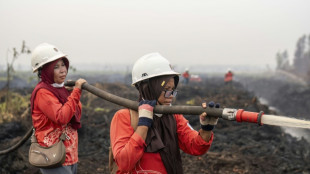 Women fight fires and sexism in Indonesian Borneo

 Forsling's OT blast lifts Florida over Carolina in NHL opener

 Hurricane Polo sweeps over Mexico's Pacific coast, heads inland

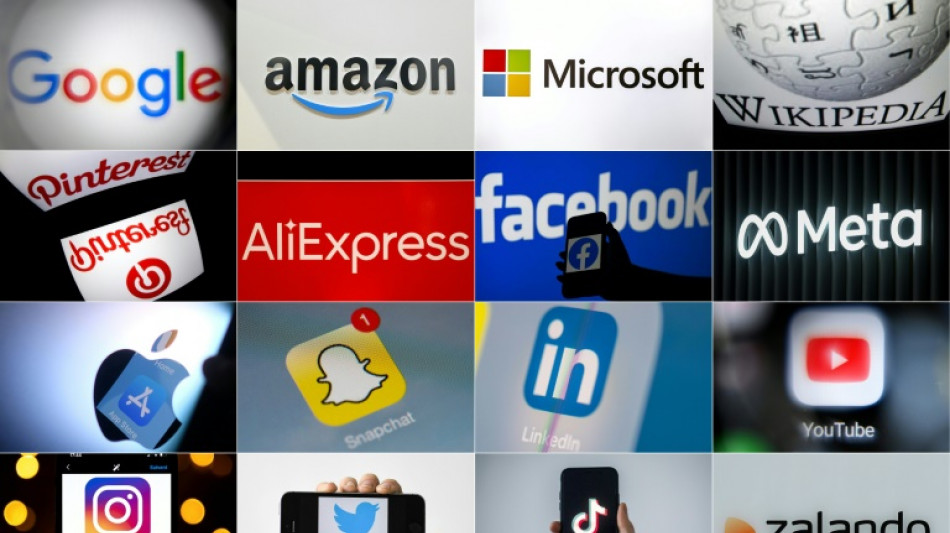
Images on the internet reinforce gender stereotypes -- such as doctors being men or nurses women -- more than text, contributing to a lasting bias against women, a US-based study said Wednesday.
The importance of images has soared as much of the world's media, communication and even social interactions have moved online.
But this rising dominance of the image "exacerbates gender bias" by significantly under-representing women, according to the study in the journal Nature.
Lead author Douglas Guilbeault, a researcher at the business school of the University of California, Berkeley, told AFP that this was an "alarming" trend.
He warned of "the potential consequences this can have on reinforcing stereotypes that are harmful, mostly to women, but also to men."
Study co-author Solene Delecourt, also from UC Berkeley, said an example would be if a child was trying to find out more about a profession online but only saw images of one gender.
"They may feel like they don't belong," she said.
Images are also "often more memorable and emotionally evocative than text," the study said.
- 'Really concerning' -
For the study, the researchers sifted through more than one million images from Google, Wikipedia and the IMDb film database, as well as billions of words on those platforms.
They looked for potential bias in nearly 3,000 social categories, including jobs such as doctor or lawyer, or roles such as neighbour or colleague.
Both over-represented men, but the images displayed even more gender bias than the words, the researchers found.
For example, the stereotype that women are nurses was "consistently stronger" in the images than the text, Guilbeault said.
This bias was not limited to the United States -- the researchers used many images from websites around the world -- nor was it confined to a particular platform.
The gender bias is also larger than what the general public broadly think, according to an opinion poll carried out by the researchers.
The team also used US census data to show that the under-representation of women for these jobs seen in online images does not match reality.
Finally, they looked into what psychological impact this bias has on people using the internet.
They had 450 people search online for specific jobs -- such as astronaut, poet or neurobiologist -- some reading text while others looked at images.
Afterwards, the participants carried out a test designed to measure their bias.
The group that looked up images had a more pronounced gender bias -- and the effect was still present during another test three days later, the researchers said.
"Images influence people in ways that they may not consciously realise," Guilbeault said.
He also lamented that there has been so little attention paid to "this shift towards image-based communication".
The researchers pointed to the role of online platforms in amplifying gender bias through their images, calling for more to be done.
They also warned that new image generators driven by artificial intelligence algorithms draw heavily on existing online images.
"It's not a surprise that the images these algorithms generate reflect all kinds of biases," Guilbeault said.
O.Lorenz--BTB