Albania mourns death of Kadare, whose novels defied dictatorship / Photo: © AFP/File

 South Korea break China hearts to reach Asian Games football final

 Eala storms into Asian Games semi-finals to thrill adoring fans

 Turkey freezes ex-minister's assets as fund crisis grows

 What we know about the North Korean POW dispute

 Most equities rise after oil price plunge, US data in focus

 Polar oceans transformed as warming melts ice habitats: research

 Lost shark becomes viral star in South Korea
 Dangote to launch $16bn refinery in Kenya

 North Korean leader 'extremely obese': Seoul spy agency
 Yankees and pope-backed White Sox start MLB playoffs with wins
 Malaysia's ex-PM Mahathir in hospital for observation

 'No limits': Marathon world record holder Sawe chasing history

 Countdown begins to biggest-ever Rugby World Cup

 Bangladesh women lose ground after quota reform
 Vietnam admits 'differing opinions' on Hanoi development
 Stocks temper gains as oil pares heavy losses, US data in focus
 New Zealand denies breaching climate commitments to EU

 Albert becomes youngest US scorer in 4-2 win over Chile
 Pirate island's plunging population shows Greece's demographic decline
 With elections ahead, Latvia's Russian-speakers reject Moscow's help
 Brazil football clubs face massive sponsorship blow from betting ban
 ChatGPT maker wants to be the App Store for AI as safety concerns grow
 Women fight fires and sexism in Indonesian Borneo

 Forsling's OT blast lifts Florida over Carolina in NHL opener

 Hurricane Polo sweeps over Mexico's Pacific coast, heads inland
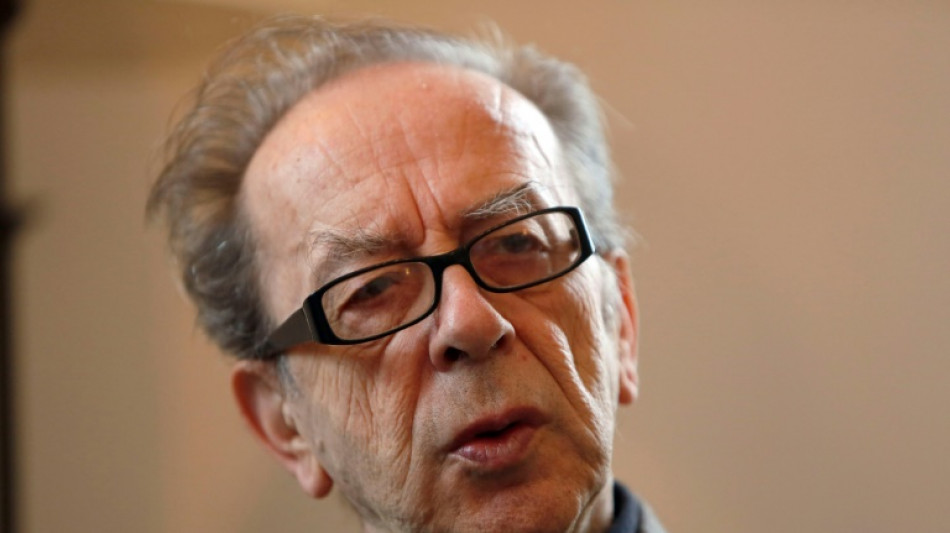
Albanians will mark two days of national mourning for Ismail Kadare, their "greatest cultural monument", after the acclaimed novelist -- tipped several times for the Nobel literature prize -- died of a heart attack at a Tirana hospital aged 88 on Monday.
Saying he was "lost for words" after Kadare's death, Prime Minister Edi Rama declared the country's flags will be flown at half-mast on July 2 and 3 out of respect for the man of letters.
Kadare was "now on the pedestal of eternity", Rama added, while the president of neighbouring Kosovo, Vjosa Osmani hailed his "remarkable contribution to Albanian and world literature".
Through the epic sweep of novels like "Broken April" and "The General of the Dead Army", the writer used metaphor and quiet sarcasm to chronicle the grotesque fate of his country and its people under the paranoid communist dictator Enver Hoxha.
Despite being branded a traitor by Albania's communist leaders when he defected to France in 1990, Kadare was accused by some of enjoying a privileged position under Hoxha, who cut the Balkan country off from the rest of the world.
It was an accusation he dismissed with withering irony.
"Against whom was Enver Hoxha protecting me? Against Enver Hoxha?" Kadare told AFP in 2016.
- 'Should have won Nobel' -
He said he also took pleasure in the jealousy Kadare's success stirred in the "mediocres" who criticised him.
Kosovo Prime Minister Albin Kurti said "Kadare was the gleam of creativity, of humanity and of individual genius... in the darkness of dictatorship.
"He found ways to illuminate, to question and to laugh" even "within the harshest political and artistic restrictions", he added on X.
While Kadare was the eternal Nobel bridesmaid, he won the inaugural Man Booker International Prize in 2005 for his life's work, with judges saying his storytelling "goes back to Homer".
British novelist and biographer Nicholas Shakespeare said Kadare "should have been given the Nobel", with former prime minister Tony Blair's ex-right-hand man Alastair Campbell also taking to X to hail "such a great writer".
- 'Magician' -
Albanian writer Lea Ypi, author of the award-winning memoir "Free", posted that he was an "all-time magician of words": "The first verses I learned to recite were from you."
Translated into more than 40 languages, the prolific Kadare put Albanian literature on the map internationally from the 1970s.
"He reshaped both Albanian letters and society thanks to works published during those dark times (of dictatorship) and afterwards," said Persida Asllani, head of literature at the University of Tirana. "He may have left this world" but his work would go on influencing people, she said.
In one of his last interviews in October, he told AFP his writing helped him subvert the repression he suffered.
"The hell of communism, like every other hell, was smothering in the worst sense of the term," he said.
"But literature transformed that into a life force, a force which helped you survive and hold your head up and win out over dictatorship.
"Which is why I am so grateful for literature, because it gives me the chance to overcome the impossible," said the writer, who despite being visibly frail, was still working.
F.Müller--BTB