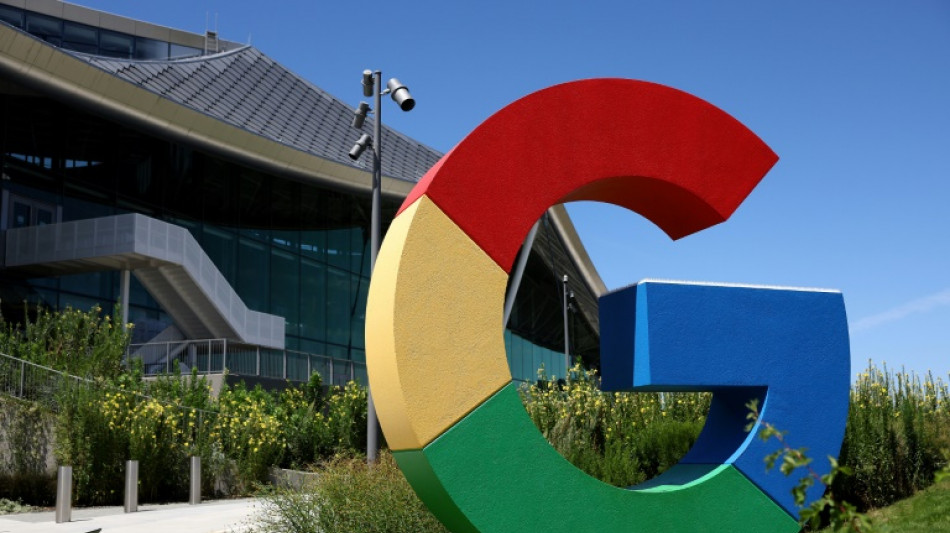
Google signs nuclear power deal with startup Kairos / Photo: © GETTY IMAGES NORTH AMERICA/AFP

 Spain brush aside Croatia in Nations League, England down Czechs
 Trump hails 'morally binding' AI self-regulation pledge
 Yamal inspires Spain to Croatia romp on World Cup homecoming

 UN to hold fourth informal poll of secretary-general candidates

 Who are the Emiratis behind crisis-hit Manchester City?

 Singer Angelique Kidjo urges Africans to 'create together'

 Alleged Rihanna mansion shooter mentally fit for trial, says judge
 Mystery over UK airbase scare as police find petrol not explosives

 OpenAI unveils low-cost AI model, a day after shelving Astra upgrade
 Premier League confirms Man City guilty of serious financial breaches
 Brazil's Lula turns to Bad Bunny tune to criticise Trump ahead of polls

 Nigerian dancer eyes world record after seven-day marathon
 Swiss regulator concludes Julius Baer bank probe
 Brazil's patron saint pulled into latest election scrap

 Football overload leaves players near 'breaking point', warns Tebas

 Paris Eiffel Tower says chief to step down after uproar over removing women staff

 Amaze Holdings (NYSE: AMZE) Executes Binding LOI to Acquire BullionFX | Alchemy, a Decentralized Gold-Backed Financial Ecosystem for Valued at US$155 Million
 Clashes between French teens, police as school blockades intensify
 Stocks move sideways despite oil moving lower
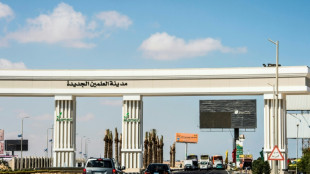 African leaders to gather in Egypt for business summit

 UK decides against charging foreign visitors for museums

 Dallaglio to sell England World Cup winners' medal

 Brazil come from behind to beat Australia 4-2 in friendly

 Ruthless An retains Asian Games badminton crown as Kunlavut triumphs

 Alonso to stay with F1 team Aston Martin in 2027

Google on Monday signed a deal to get electricity from small nuclear reactors to help power artificial intelligence.
The agreement to buy energy from reactors built by Kairos Power came just weeks after word that Three Mile Island, the site of America's worst nuclear accident, will restart operations to provide energy to Microsoft.
"We believe that nuclear energy has a critical role to play in supporting our clean growth and helping to deliver on the progress of AI," Google senior director of energy and climate said during a briefing.
"The grid needs these kinds of clean, reliable sources of energy that can support the build out of these technologies."
No financial details were disclosed.
- Insatiable AI -
Tech giants like Microsoft, Amazon, and Google are rapidly expanding their data center capabilities to meet the AI revolution's computing needs while also scouring the globe for sources of electricity.
The first of a series of small modular reactors (SMRs) developed by Kairos as a result of its deal with Google is projected to be online by the end of this decade, according to the companies.
Additional small reactors are expected to go online through 2035, generating a combined total of 500 megawatts of power.
SMRs are more compact and potentially easier to deploy -- with big investments by Microsoft founder Bill Gates in the sector.
However, the technology is still in its infancy and lacks regulatory approval, leading companies to seek out existing nuclear power options.
"We view this as a really significant partnership," Kairos co-founder and chief executive Mike Laufer said in the briefing.
The agreement allows SMR technology "to mature and learn along the way," Laufer added.
The grid needs new, clean, electricity sources to support AI as its capabilities and uses accelerate, Terrell said, saying nuclear power is part of a campaign by the tech giant to have abundant carbon-free energy available around the clock.
"This is an incredibly promising bet," Terrell said of the deal.
"If we can get these projects to scale and then scale globally, it will deliver enormous benefits to communities and power grids around the world."
- Is it safe? -
Seen as a more consistent source of power than solar and wind, many tech companies are betting on nuclear energy's rapid development to meet AI's electricity demands.
Microsoft use of Three Mile Island's nuclear energy will bolster a power grid covering 13 states.
This area faces severe strain from data centers' massive energy consumption, raising concerns about grid stability as AI demands increase.
Amazon's AWS agreed in March to invest $650 million in a data center campus powered by another Pennsylvania nuclear plant.
Nuclear energy has staunch opponents due to concerns about radioactive waste disposal, the potential for catastrophic accidents, and the high costs associated with plant construction and decommissioning.
The 1979 partial meltdown of Unit 2 at Three Mile Island caused panic in the United States and brought the expansion of nuclear energy to a standstill.
The Nuclear Regulatory Commission deemed it the "most serious accident in US commercial nuclear power plant operating history," though it noted no detectable health effects on workers or the public from the small radioactive releases.
J.Fankhauser--BTB