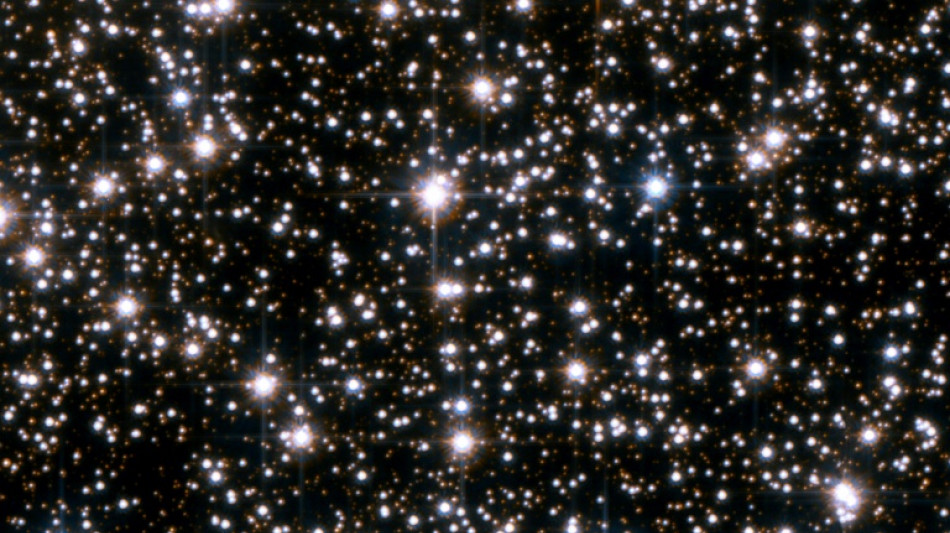
Lost in space: Sperm struggles to navigate during weightless sex / Photo: © ESA/AFP/File

 'He's here with me': Japan cycle queen dedicates gold to late brother
 Japan Olympic chief says 'lot more' athletes at Games than expected
 Asian carmakers besting US rivals at home, China poised to strike

 Widgets & Web Offers All-Inclusive Investor Relations Websites for Public Companies, IPOs and SPACs

 Adams named new US captain to 2030 World Cup

 China a better influence in Latin America than US: poll

 Judge pauses construction of border project in Texas national park

 Belgium's De Bruyne fires double to sink Turkey, France held by Italy
 US jobs data boosts stocks as oil prices dip

 US Supreme Court to hear high-stakes climate case

 Trump expected to name intel chief Clayton as AI czar: reports
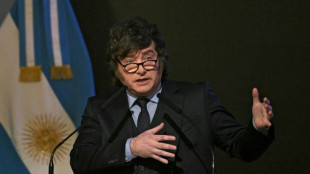 Argentina unveils passports-for-investment scheme

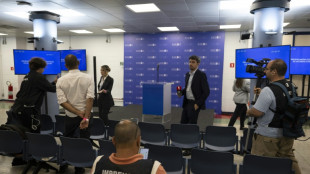 Brazil election debate chaos sparks censorship row
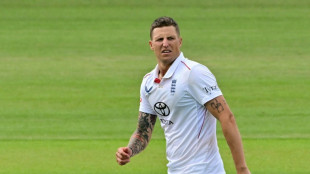 England's Carse charged by cricket body over nightclub incident
 Amazon vows $1 bn for data center towns, decries 'myths'
 Oil prices drop on G7 fuel release, US jobs data boosts stocks

 G7 agrees deal to ease global energy supply concerns

 Spain's government dealt blow as lawmakers reject housing bills
 Food, medicine shortages deepen in Russian-occupied Oleshky

 Man City whistleblower Rui Pinto facing 'dire consequences' - lawyers
 Russia 'tearing Kyiv apart', mayor says, as strikes paralyse traffic

 Taiwan boxer Lin wins Games gold as Japan edge North Korea on penalties

 Japan tame North Korea to win Games gold after shootout drama

 US posts weak job growth data in September
 Ethiopia's conflict: the regional dimension

Scientists have used a tiny plastic "obstacle course" to test how much sperm would struggle to navigate during sex in the weightlessness of space.
Some particularly resilient sperm still made it through the course, suggesting that conceiving children in space will still be possible, according to research published on Thursday.
However a bigger problem could be that the development of embryos after fertilisation was harmed by a lack of gravity, the Australian team of researchers found.
With humanity setting its eyes on colonising space -- next week NASA hopes to launch its first crewed mission around the Moon in half a century -- scientists have been studying how difficult it will be to procreate on spaceships or other worlds.
One of the biggest challenges is that sperm will no longer be pulled downwards by Earth's gravity.
"Sperm need to actively find their way to an egg, and this study is the first to put that ability to the test under space-like conditions," Nicole McPherson, a researcher at Adelaide University in Australia, told AFP.
The scientists used a plastic chamber that resembles the female reproductive tract to act as a "miniature obstacle course", the senior author of the new study said.
"Think of it as a tiny race track... sperm are introduced at one end and have to swim their way through to the other."
- Filtering out weak runners -
Both human and mice sperm were sent down the course, which was inside a device that uses constant rotation to simulate the microgravity of space.
The sperm was about 50 percent worse at navigating through the course compared to how they perform under Earth's gravity.
This worked out to be roughly a 30-percent drop in successful fertilisation, according to the study in the journal Communications Biology.
However the sperm that did make it through seemed to produce better-quality embryos, which could turn out to be "beneficial", McPherson said.
It appeared that the stress of microgravity acted as a "filter" that effectively cleared the field, "leaving only the most capable sperm in the running," she explained.
A bigger problem came in the first 24 hours after sperm had fertilised the eggs.
"The results reversed sharply, with fewer embryos formed, and those that did were of poorer quality," McPherson said.
This suggests that microgravity "may not be the deal-breaker we feared, but protecting the embryo from weightlessness in those critical first hours will likely be essential for reproduction in space," she added.
Some including billionaire SpaceX founder Elon Musk have ambitious plans to make humans an interplanetary species by establishing settlements on the Moon then Mars.
There has also been speculation that the first baby conceived outside the bounds of Earth could be the result of a couple having sex on a flight launched by the booming space tourism industry.
McPherson emphasised that much more research is needed to understand how reproduction works in space, adding that fertilisation is "only one small piece of a very long and complex puzzle".
"We are still a long way from seeing the first space baby."
I.Meyer--BTB