Dance Work 'On the Floor' Returns to SF to Explore Queer History and AIDS Crisis

 Jimenez Extends Lead Over Anderson in Richmond Mayoral Race
 Hubert Aiwanger Found Dead in Berlin Hotel; Investigation Launched

 EU Cuts Southern Hake Quotas by 20% for 2027 Amid Stock Concerns
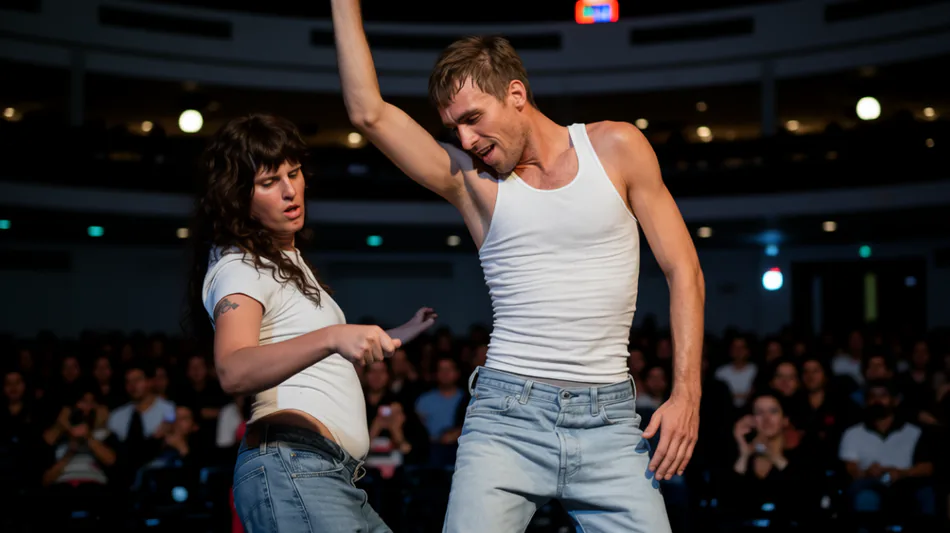
The dance work "On the Floor" returns to San Francisco this weekend for performances at The Joe Goode Annex. Created by Maria Silk and Théophylle Dcx, the piece explores the city’s queer nightlife history and its intersection with the early decades of the AIDS crisis through refined choreography and a new musical score.
The dance work "On the Floor" returns to San Francisco for performances this Friday and Saturday at The Joe Goode Annex, presenting a revised exploration of the city’s queer nightlife history and its intersection with the early decades of the AIDS crisis.
Created by local performer Maria Silk and French interdisciplinary artist Théophylle Dcx, the piece premiered nearly a year ago at Counterpulse. Since that debut, the creators have refined the choreography and musical score based on feedback from the initial run and extensive research into the era. The upcoming performances mark the latest evolution of the project, which aims to evoke the atmosphere of 1980s queer spaces without attempting literal historical replication.
Silk and Dcx met in 2024 while pursuing separate research projects focused on San Francisco’s cultural legacy. Silk had been studying archives related to The Stud, a prominent gay bathhouse and nightclub. Dcx had traveled from Marseille to investigate the city’s history with HI-NRG and disco music. Their shared interest in the collaborations of producer Patrick Cowley and singer Sylvester, as well as defunct venues like The I-Beam and Trocadero Transfer, led to a collaboration.
After securing a grant, the duo assembled a team of sound and lighting artists. For four months, they improvised movements that formed the structure of the piece. The choreography begins with slow, deliberate motions before transitioning into synchronized, fast-paced dance sequences. Silk noted that after the first performance, an audience member expressed frustration at being unable to join the dancers on the floor.
The musical score was composed by Izaak Schlossman, a member of the San Francisco dark wave band Loveshadow. Schlossman previously worked with Silk as a DJ and agreed to create 30 minutes of music that mirrored a specific San Francisco sound. The score shifts from a slow, atmospheric interlude to a high-energy HI-NRG conclusion.
Schlossman stated that working on the evolution of the piece allowed him to help refine the artists' ideas. The lighting design by GG Torres was intended to create a sense of being in both a disco and a bathhouse. Silk emphasized that the goal was to use light and sound to evoke memory rather than to recreate the 1980s literally.
The project is deeply personal for both creators. Silk, who describes herself as a former theater student, first encountered the impact of the epidemic through the musical Rent. Her connection to the history became more direct when she learned that her mother’s brother had died from AIDS complications before she was born. She noted that such family histories can fuel anger over the delayed government response and the lack of early treatment.
Dcx also has a personal stake in the subject matter. He tested HIV-positive at age 19, which prompted him to study the virus extensively. He described his artistic practice as a "personal diary" and a memorial. Dcx expressed concern about contemporary attitudes toward HIV, including serophobia and the way discussions of undetectability can sometimes minimize the historical severity of the epidemic.
San Francisco provided a unique environment for this exploration due to its intergenerational queer community. Dcx noted that in France, he did not see AIDS history represented in culture in the same way it is in the United States. He found the age diversity in San Francisco’s nightlife inspiring, with attendees and DJs spanning from their 20s to their 60s.
To ground the performance in historical reality, Silk and Dcx consulted three men who were active in San Francisco nightlife during that period: Steve Fabus, Brian Freeman, and Greg Cruikshank. The meeting took place at the Dark Entries record shop on Larkin Street. Each man brought a vinyl record to share and recounted stories about lost venues like Club 181.
The duo also spent time with Page Hodel, a major figure in 1980s queer nightlife who still DJs at Oakland’s White Horse Inn. Hodel shared memories of the Castro district, including details about fashion trends such as grinding down the crotch of Levi’s jeans to alter their silhouette.
These encounters provided Silk and Dcx with a sense of accountability to the history they were representing. After meeting with Hodel and the other consultants, they returned to Schlossman with new ideas for the score. The artists described the process as a gift that has added meaning to the second round of performances.
"On the Floor" is scheduled for Friday, June 6, and Saturday, June 7, at The Joe Goode Annex in San Francisco.
D.Schneider--BTB