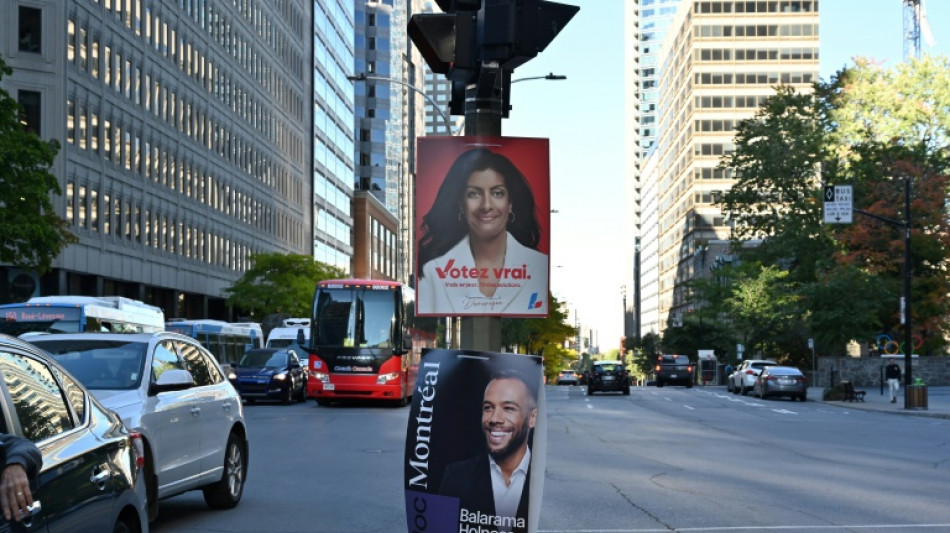
Immigration, identity shape election in French-speaking Quebec / Photo: © AFP

 Alex Bodi och prof. dr. Dieter Lazik tecknar avtal om ALPHA WHEY och BODI Energidryck

 Alex Bodi i prof. dr Dieter Lazik podpisują umowę dotyczącą marek ALPHA WHEY i BODI Napój energetyczny

 Ο Alex Bodi και ο καθηγητής Δρ. Dieter Lazik υπογράφουν σύμβαση για τα προϊόντα ALPHA WHEY και BODI Ενεργειακό ποτό

 アレックス・ボディ氏とディーター・ラジク教授が「ALPHA WHEY」および「BODI エナジードリンク」に関する契約を締結

 Housing protesters dig in for long stay in Madrid square

 Alex Bodi și prof. dr. Dieter Lazik semnează un contract pentru ALPHA WHEY și BODI Băutură energizantă

 Former Stoke boss Pulis 'cheated' over FA Cup final loss to Man City

 Czech Republic beat Ukraine to win BJK Cup

 Isak returns to Liverpool after injury scare

 Gunmen kill 27 in two shootings in South Africa

 Spain PM vows action as housing protest sparked by eviction grows

 Fernandez downs Gibson to claim Singapore Open crown

 Three talking points from the Azerbaijan Grand Prix

 Turkey ex-minister resigns as investment fund crisis grows

 Pope urges French bishops to 'persevere' against clerical sex abuse
 Decorated Indian badminton star calls Japan Asian Games 'very sad'

 Asian Games chiefs say lessons learned over accommodation

 UK's PM urges 'calm' as thousands seek to thwart flashpoint N.Ireland parade
 Thousands seek to thwart disputed N.Ireland flashpoint parade

 Swiss vote on what it means to be neutral

 Pope to meet with victims of clerical sex abuse during France trip
 Iran stands firm on Hormuz plan after US rejection

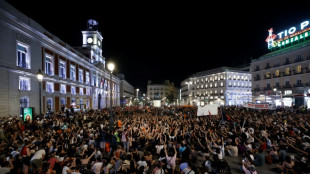 Madrid protest camp grows after eviction outrage

 Italy winemakers hail bumper harvest but cut output

 Kyiv shoppers feel the pinch from Russian strikes

Does immigration threaten the unique culture of French-speaking Quebec? However controversial, the claim is being pushed hard by the Canadian province's ruling party, whose brand of identity politics looks set to deliver them a win at the ballot box next week.
A French-speaking bastion in mostly English-speaking North America, Quebec has long defended tooth and nail the language of Moliere. It's a fight taken up by the governing party since coming to power four years ago, the conservative Coalition Avenir Quebec (CAQ) -- but with an added focus on immigration.
Incumbent Quebec Premier Francois Legault made his views clear at the outset of the campaign: unchecked immigration by non-French speakers risks undermining social cohesion in the province.
It would be "a bit suicidal" to take in more newcomers given the decline of French, Legault -- whose party is leading in the polls ahead of Monday's provincial election -- argued again this week.
During a debate, his immigration minister, Jean Boulet, went further -- and provoked an uproar -- with the baseless claim that "80 percent of immigrants do not work, do not speak French or do not adhere to the values of Quebec society."
His comments are also glaringly at odds with the economic reality in the province of nearly 8.5 million inhabitants facing a severe labor shortage -- one that could be remedied through increased immigration.
With an ageing population retiring en masse and an unemployment rate at a historic low, Quebec is looking to fill more than 250,000 jobs. And the government anticipates that number will keep rising -- reaching some 1.4 million by 2030.
If reelected, Legault, a 65-year-old multi-millionaire businessman, plans to keep annual immigration capped at 50,000 people.
But some observers, like the sociologist Jean-Pierre Corbeil, are ringing alarm bells over the growing political conversation in Quebec linking language and immigration.
"We tend to put all the responsibility (for the decline of French) on the backs of immigrants," he told AFP. "And that's where it's dangerous, there is a discourse of exclusion that is taking shape."
"I find that it is extremely, I would almost say, unhealthy," echoed linguistics expert Richard Marcoux. "We will really have to resume the discussion after the elections to be able to address immigration issues in a different way."
- Is Quebec French in decline? -
Although views diverge on the question of immigration, all major parties vying for seats in Quebec's national assembly agree on the need to preserve the French language.
"We are in a critical situation. There is a real linguistic emergency in Quebec," said Paul St-Pierre Plamondon, leader of the separatist Parti Quebecois.
Such fears are based on the latest census data which found that the proportion of the population that speaks French most often at home has been on the decline in Quebec since 2001, falling from 81.1 percent to 77.5 percent last year.
But the sociologist Corbeil, who is also the former head of the government's data collection on linguistic trends, disputes the suggestion the situation is "catastrophic."
He says institutions are relying on an overly "simplistic" definition of a French-speaker -- including only those who use it as their main language at home.
"Shouldn't the objective be to discuss the state of French?" he asks, pointing to the many citizens with diverse backgrounds who are fluent in French -- although it may not be their mother tongue.
Marcoux agrees that such "multilingualism" is not being sufficiently taken into consideration in Quebec.
"When we speak about indicators based on the mother tongue, for me, that does not take into account the vitality and use of French by the population," explains Marcoux, who heads the Francophone Demographic and Statistical Observatory (ODSEF).
"English is progressing here as everywhere else on the planet, whether in Italy, Poland, Romania or France," he noted.
"But at the same time, native languages are not disappearing."
O.Krause--BTB