
Why English audiences have the toughest time with Shakespeare / Photo: © AFP

 Armani sprinkles glitter on discreet elegance at Milan show

 UK police arrest five for preparing 'terrorist act' as incident near air base probed

 อเล็กซ์ โบดี และศาสตราจารย์ ดร. ดีเทอร์ ลาซิก ลงนามสัญญาสำหรับ ALPHA WHEY และ BODI เครื่องดื่มให้พลังงาน

 China teen blows away the field for record-setting gold at 'sad' Games

 Alex Bodi och prof. dr. Dieter Lazik tecknar avtal om ALPHA WHEY och BODI Energidryck

 Alex Bodi i prof. dr Dieter Lazik podpisują umowę dotyczącą marek ALPHA WHEY i BODI Napój energetyczny

 Ο Alex Bodi και ο καθηγητής Δρ. Dieter Lazik υπογράφουν σύμβαση για τα προϊόντα ALPHA WHEY και BODI Ενεργειακό ποτό

 アレックス・ボディ氏とディーター・ラジク教授が「ALPHA WHEY」および「BODI エナジードリンク」に関する契約を締結

 Housing protesters dig in for long stay in Madrid square

 Alex Bodi și prof. dr. Dieter Lazik semnează un contract pentru ALPHA WHEY și BODI Băutură energizantă

 Former Stoke boss Pulis 'cheated' over FA Cup final loss to Man City

 Czech Republic beat Ukraine to win BJK Cup

 Isak returns to Liverpool after injury scare

 Gunmen kill 27 in two shootings in South Africa

 Spain PM vows action as housing protest sparked by eviction grows

 Fernandez downs Gibson to claim Singapore Open crown

 Three talking points from the Azerbaijan Grand Prix

 Turkey ex-minister resigns as investment fund crisis grows

 Pope urges French bishops to 'persevere' against clerical sex abuse

 Decorated Indian badminton star calls Japan Asian Games 'very sad'

 Asian Games chiefs say lessons learned over accommodation

 UK's PM urges 'calm' as thousands seek to thwart flashpoint N.Ireland parade

 Thousands seek to thwart disputed N.Ireland flashpoint parade

 Swiss vote on what it means to be neutral

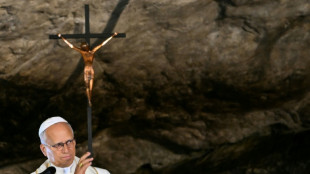 Pope to meet with victims of clerical sex abuse during France trip

All the world's a stage but the irony is the rest of the globe often has an easier time understanding William Shakespeare than English speakers.
Thanks to frequently updated translations that dispense with the archaic Renaissance language, foreign audiences often find the Bard easier to follow.
Take "King Lear", a new version of which opened at the Comedie Francaise in Paris last week.
In the original opening scene, the Earl of Kent reacts to being exiled by saying: "Sith thus thou wilt appear, Freedom lives hence, and banishment is here."
The new French version translates as, "Since this is how you want to appear, freedom is elsewhere and exile is here" -- a much simpler sentence to modern ears.
Olivier Cadiot, who wrote the new translation, said his job was "like removing the varnish from a portrait to create something a bit more fresh -- not something vulgar and modern, but to strip it back a little to render it more alive."
Mostly he aims for "fluidity and precision", he told AFP, but he could not resist the occasional moment of playfulness, such as translating the famous phrase "every inch a king" into the very current-sounding "total royale".
- 'The danger is real' -
In English, many would consider such toying with the Bard sacrilegious.
There were howls of protest when the Oregon Shakespeare Company set out to translate his works into contemporary English in 2015 ("The danger to Shakespeare is real," thundered one petition).
But that leaves many average theatre-goers unable to comprehend the world's most-performed playwright.
"English audiences are at a disadvantage because the language has evolved and is more and more distant. They need footnotes, props and staging to understand," said Alexa Alice Joubin, a Shakespeare scholar at George Washington University.
Indeed, a study by the British Council and YouGov in 2016 found that Shakespeare was considered more relevant in many non-English-speaking countries than back home.
Overall, 36 percent of British respondents said they did not understand Shakespeare compared to 25 percent elsewhere.
- 'Dying on the vine' -
This matters because the difficult language can obscure the important and relevant debates in his work on issues such as race, social hierarchies and the legitimacy of rulers, said Ruben Espinosa, a Bard expert at Arizona State University.
"There's a lot of cultural relevance," he said. "But the language is so complicated that a lot of the time that is lost on people.
"If we want to treat him as sacrosanct and leave him untouched, it's going to be a body of work that's dying on the vine."
Other countries don't have this problem.
In Germany and France, famous versions by Goethe and Victor Hugo's son, Francois-Victor, are still used, but modernised translations appear regularly.
The same is true in Japan, where early versions (such as a 19th century take on "The Merchant of Venice" entitled "Life is as Fragile as a Cherry Blossom in a World of Money") used archaic Japanese to mirror Shakespeare's style, but have been superceded many times since.
- 'Feverish mind' -
Some say too much is lost in modernisation.
The emotion is embedded in the musicality of the words, argued scholar James Shapiro in the New York Times. Macbeth's speeches, he said, were "intentionally difficult; Shakespeare was capturing a feverish mind at work".
But others argue Shakespeare's global popularity shows that the plays are just as powerful without the original words.
"There's something innate in the characterisation and the way the stories are told that is iconic and unique," said Joubin.
"Romeo and Juliet" is so popular, she said, not just for the language, but its fast pacing -- rare for a tragedy.
Joubin believes Shakespeare himself would have approved of updated versions.
"Someone that creative -- I very much doubt he would say you can't modernise my plays," she said. "He himself modernised the English language for the Renaissance era."
W.Lapointe--BTB