Polish fish farm fights 'myth of Russian caviar' / Photo: © AFP

 Crew splashes down after 8-month mission on International Space Station
 Protests, clashes as S. African anti-migrant tensions reignite
 Russian data centre hit by drone in first for Ukraine war

 'Fighting for our future': France high school students vow no let-up
 Kyiv entering 'survival' mode amid Russian strikes surge: mayor tells AFP
 Verdict due in Mexico trial over murders of Australia, US surfers
 B2PRIME Welcomes Christina Barbash as Commercial Manager
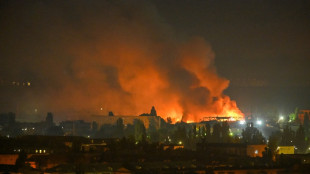 Russia forcing Kyiv into 'survival' mode before winter, mayor tells AFP
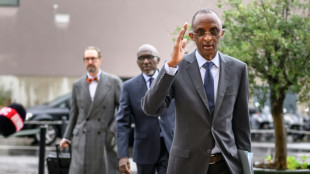
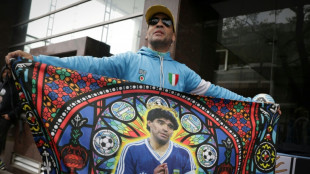 Closing arguments begin in Maradona death trial
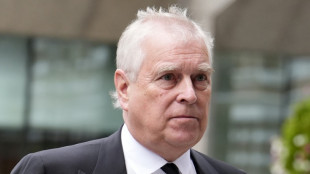
 UEFA president Ceferin to stand for re-election in 2027
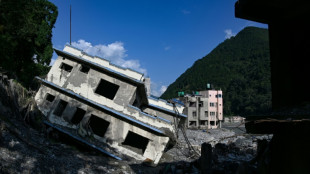 Nearly 300,000 Nepalis at flood risk: study
 Riyadh kindergarten hit by interception debris as Houthis say targeted airport
 Alex Bodi mizează, alături de CRIF, pe investiții transparente și pe prevenirea riguroasă a spălării banilor
 Gulf Labs, Part of Thailand’s $27 Billion GULF Group, Goes Live as an Injective Validator
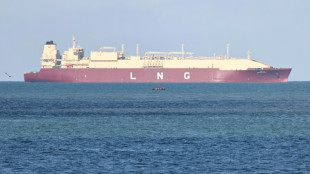 EU okay for winter despite 'historically low' gas stocks: operators
 Rwanda to host F1 Grand Prix: sources close to both sides
 EU top diplomat says bloc in favour of UN Lebanon peacekeepers' extension
 Antonelli and Russell to run different Mercedes aero packages in Singapore
 WTO hikes 2026 trade growth forecast on AI boom

 'I love that challenge': Hamilton prays for rain in Singapore
 G.Bissau moves towards postponement of December general election
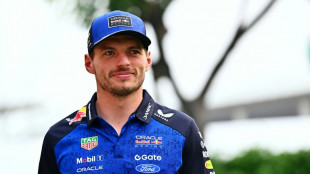 Verstappen out to settle 'unfinished business' at Singapore Grand Prix

 WhiteBIT Launches Bitcoin Lightning Network Support, Powered by Voltage

 Oil surges, stocks sink as US reportedly eyes fresh Iran strikes
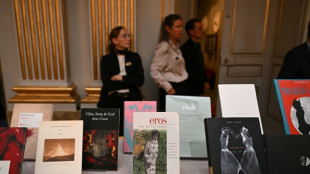 Anne Carson: modern takes on Greek classics

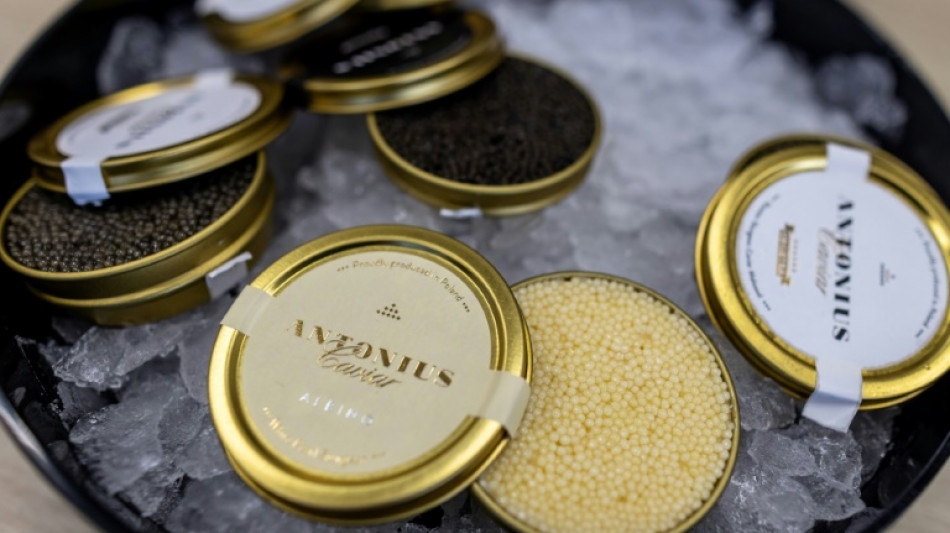
With Moscow blacklisted since it invaded Ukraine, Europe's main producer of caviar wants to put an end, once and for all, to the delicacy's traditional association with Russia.
"For most people, caviar means Russia, but that hasn't been the case for a long time now," said Agata Lakomiak-Winnicka, marketing and sales manager for Poland's Antonius Caviar.
Based in the northeastern village of Rus, the company is one of the world's top makers of the luxury food, having produced 42 tonnes of black caviar last year -- more than any one firm in Italy or France and almost as much as those in China.
"We used to get clients who couldn't locate Poland on a map. Today we're on a whole different level," Lakomiak-Winnicka said.
The company exports mostly to the United Arab Emirates, the United States, France and Denmark and also supplies Michelin-starred restaurants around the world.
Retail prices range from 1,200 to 2,400 euros ($1,275-2,550) for sturgeon caviar and up to 8,000 euros for the albino kind.
The company's challenge now, one faced by producers worldwide, is the battle against "the myth of Russian caviar".
"Take any box of caviar that reads 'Russian tradition' or 'Russian method' and you'll see that 99 percent of the time it doesn't actually come from Russia," Lakomiak-Winnicka said.
- Russia boycott -
Traditionally, caviar was made from eggs from wild sturgeon in the Caspian and Black seas with the best-known producers in Russia and Iran.
But years of overfishing and pollution left the sturgeon at risk of extinction, and it is now a protected species.
Most caviar today is produced on fish farms and has nothing to do with Russia.
But consumers still associate the two -- a challenge for those who out of solidarity for Ukraine no longer want to buy Russian.
"Because of the war... clients ask about the provenance of the caviar," said Wiktoria Yerystova-Rostkowska, who owns a Russian shop outside Warsaw.
"They want good caviar but it can't be Russian," she told AFP, adding that she sources hers from Germany.
The EU and United States have banned Russian caviar as part of their sanctions against Moscow, but it was already practically impossible to buy due to restrictions to protect wild sturgeon.
- Aquaculture -
The green and black boxes of caviar are on display in the shop window.
Featuring a drawing of the fish, the label reads "malossol" -- the Russian for "lightly salted" and the name of the traditional method used to preserve caviar.
Yerystova-Rostkowska said the boycott of Russian products has left her struggling to stay open.
"It's no longer profitable. I'm down 80 percent in revenue," she said.
Lakomiak-Winnicka for her part sees the boycott as an opportunity.
"It's a chance to explain that caviar no longer comes from Russia," she said.
It has been years since wild Russian caviar was available on the international market.
"The Caspian Sea no longer has any importance in caviar production," said Antonius head Marek Szczukowski.
"The vast majority of caviar sold around the world is derived from aquaculture," including in Russia, he added.
- Sturgeon 'on vacation' -
On the Antonius fish farm in Rus, thousands of sturgeon -- some more than a metre (three feet) in length -- swim around in canals fed by the crystal clear water of a nearby river.
The company initially farmed trout there, but because of climate change they switched to sturgeon, which prefer warmer water.
"The sturgeon are on vacation here, like they're in Hawaii," Szczukowski said.
The caviar is harvested after the fish reach maturity, with the entire operation taking under 20 minutes.
Workers extract the caviar, wash and salt it, then box it up.
The label reads: "Proudly produced in Poland".
It used to also include the word "Russian" -- to denote the fish species -- but from now on it will just say "sturgeon caviar".
"At the express request of clients, we're changing the labels, leaving no room for doubt," Lakomiak-Winnicka said.
F.Pavlenko--BTB