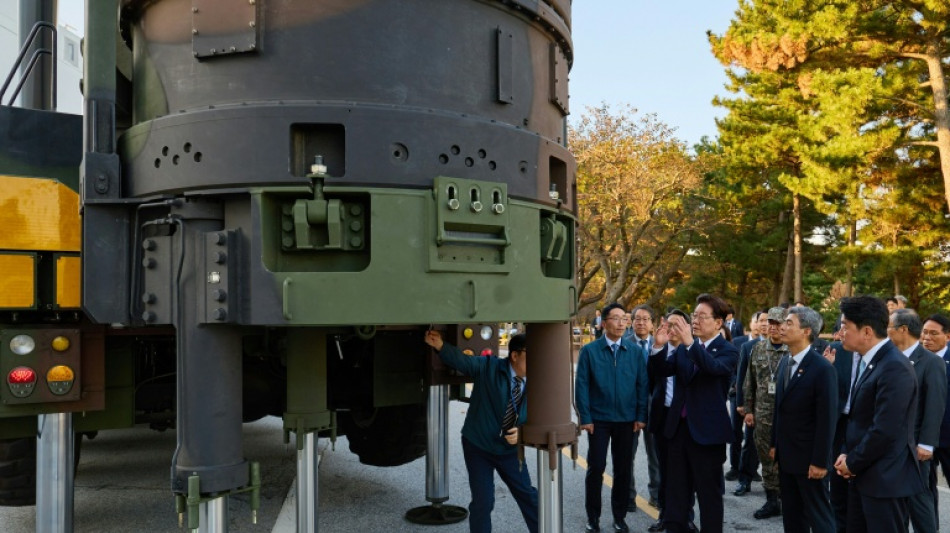
South Korea test-fires its first homegrown hypersonic weapon: presidency / Photo: © The Blue House/AFP

 WhiteBIT Launches Bitcoin Lightning Network Support, Powered by Voltage

 Oil surges, stocks sink as US reportedly eyes fresh Iran strikes
 Anne Carson: modern takes on Greek classics
 Canada's Anne Carson wins Nobel literature prize

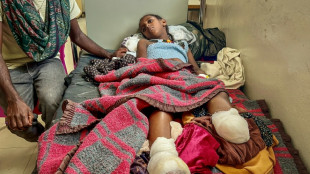 Ethiopia drones hit Eritrean troops in Tigray

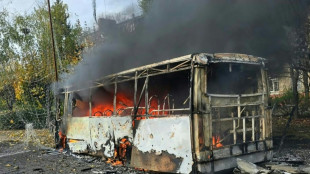 Russian strike on buses kills 30 in frontline Ukrainian city
 Thailand begins extradition process against Chinese journalist

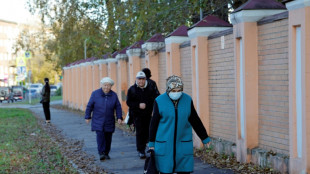 Quarantine, unease and rumours: Russian city grapples with plague scare
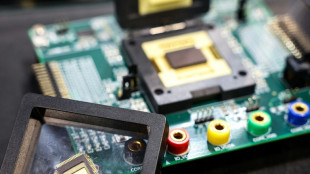 Taiwan says exports hit record in September on AI demand
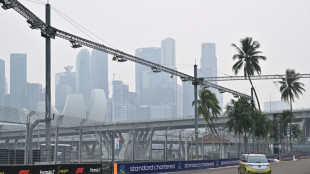
 Marc Marquez vows to 'attack' Martin's lead at Indonesian MotoGP
 Diplomats, schools in Saudi take safety measures after blasts heard: sources to AFP

 In Beijing, EU trade envoy says deficit with China 'unsustainable'
 Sri Lanka's de Silva quits as Test captain

 Alcaraz feeling 'mentally fresh' ahead of Shanghai return
 Israel drastically reduces British diplomatic presence in Jerusalem
 Stocks fall further as oil surge fans fresh inflation worries

 North Korea demands South show 'utmost respect' to restore relations

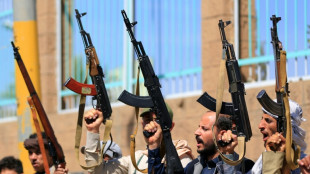 Saudi says three dead in airport attacks claimed by Houthis

 'Mad dream': New showcase for African film opens in London

 All Blacks coach Rennie says Wallabies exit 'part of the game'

 The growing protests against India's poll body - and PM Modi
 Stocks fall further as oil spike fans fresh inflation worries

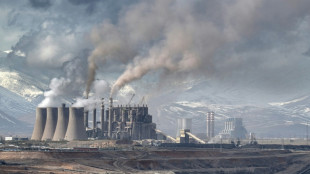 Bad COP, worse COP? EU tempers hopes for UN climate summit

 Rookie Henry named in Wallabies midfield to face All Blacks

 Housing crisis set to dominate Spain's snap election
South Korea test-fired its first homegrown hypersonic weapon on Thursday, the presidential office said, days after Pyongyang announced the AI-assisted launch of an intermediate-range hypersonic missile.
South Korean President Lee Jae Myung "observed the first test launch of a hypersonic glide vehicle (HGV) -- currently under research and development using domestic technology," the presidential Blue House said in a statement.
Hypersonic glide vehicles are sent into the upper atmosphere via rocket boosters or on ballistic missiles, then glide towards their target at five times the speed of sound or greater.
Hailing a "key strategic asset capable of changing the course of the battlefield", the South Korean statement said that the missiles' "unpredictable flight trajectories and overwhelming speed enable them to strike key strategic targets".
The test was aimed at verifying "the performance of ultra-high-temperature heat-resistant materials -- a core technology for glide vehicles -- as well as guidance and control capabilities and the ability to fly irregularly at low altitudes under hypersonic flight conditions," it added.
Analysts say North Korea, which is technically at war with the South, has stepped up testing of its own hypersonic weapons with technological support from Russia.
In response, "South Korea has also been devoting considerable effort to developing the technology -- and can be said to have achieved a successful test this time," Hong Sung-pyo, senior researcher at the Seoul-based Korea Institute for Military Affairs, told AFP.
Moscow has used hypersonic missiles in combat since around 2024, according to analysts.
Pyongyang has said its Saturday launch involved the use of AI, claiming there was "no way to avoid" the missile that was "capable of changing its flight orbit at a low altitude".
It also said that the missile's "wave-like trajectory mode" left South Korea and Japan unable to track it effectively.
Both Seoul and Washington have said the missile could be "sufficiently detected and intercepted using the defensive assets possessed by the two allies".
South Korea said that the hypersonic glide vehicle tested Thursday "descended to a low altitude after separation, freely altered its trajectory both vertically and horizontally, and ... accurately struck its designated target".
The weapon offered "a new deterrence capability capable of striking key targets within the Korean Peninsula's operational environment", the Blue House said.
N.Fournier--BTB